Field Correspondents Brian and Laura DeNault continue their wilderness adventures in search of bears and salmon runs, exploring rivers and deltas by tender during the shoulder season. Brian and Laura share more of their discoveries in this second article in the series.
We last saw the DeNaults in Thompson Sound located in the eastern Broughtons, experiencing the active salmon run and spotting a hungry bear along the beautiful Kakweiken River. After enjoying their memorable river excursion, they headed northwest to Bond Sound, off Tribune Channel, and accomplished the “tricky” anchorage near the head of the Ahta Estuary. Their report follows:
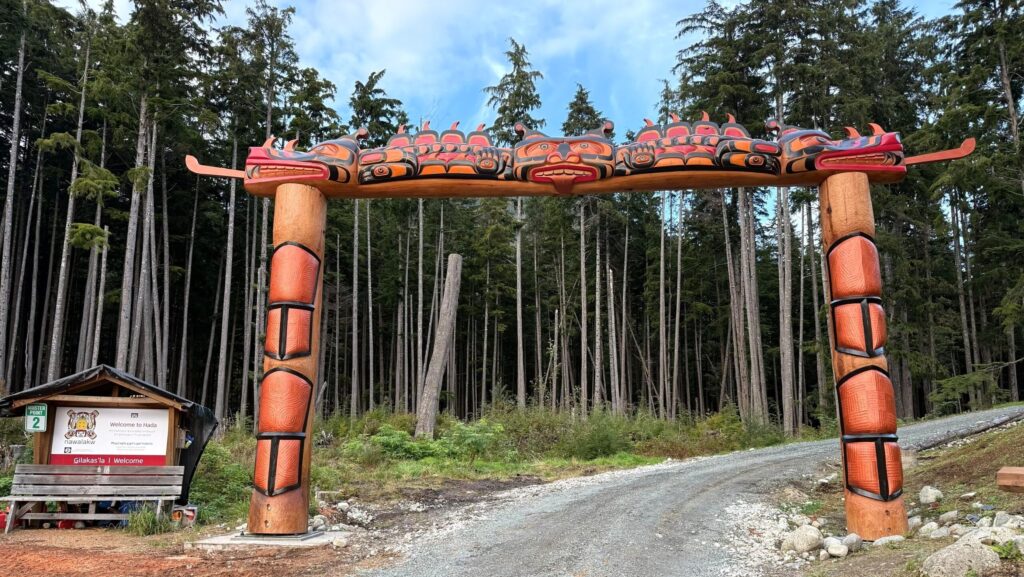
This anchorage is at the divide where the grassy shore becomes solid and rocky; the only area where the depth tapers gradually and evenly from the shoal, visible at low tide. Other areas at the head of Bond Sound drop off rapidly, with deep water close to shore. After anchoring, we took our tender to the dock of the Nawalakw Cultural Camp, a retreat for youth. Two tribal staff members quickly drove out onto the dock in their four-wheel wagon to talk with us. We asked them for permission to tour the property; since the camp was not in session at the time, they graciously permitted us to do so. The camp is for youth to learn their Kwak’wala language and culture, and to experience the natural environment. You can learn more about the camp at https://nawalakw.com/place/.
The next day we used our kayak to paddle up the Ahta Estuary that winds to the northwest through the Ahta Valley grassland, with both tall and short grasses. The sides of the estuary are hard-packed mud banks and there were several places less than a foot deep. We made a note in our log that the tide must be at least 14 feet to allow a kayak with a keel to pass. We saw less than a half-dozen pink salmon, noting that this estuary likely does not lead to a significant spawning area.
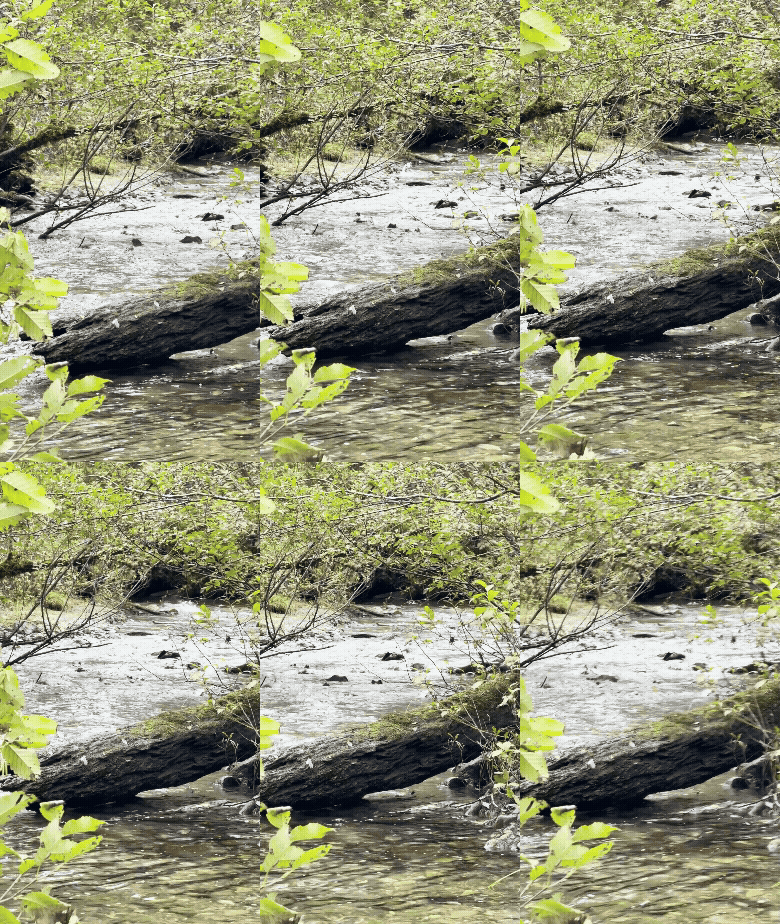
We paddled back to our boat to get our tender to explore the Ahta River. The river was clear and loaded with hundreds and probably thousands of pink salmon. A short distance upstream, the river divided into two forks that both tracked to the east, we explored both but quickly became too shallow. We stayed a while to watch the pink salmon struggle to get through such shallow gravel that their dorsal fins were clearly visible. Their drive to continue upstream is amazing. While the Ahta is beautiful, it was the shortest of our river cruises.
Satisfied with exploring the Tribune Channel area, the DeNaults cruised to Belleisle Sound off Kingcome Inlet in the northern reaches of the eastern Broughtons. On the way, they passed close to Lacy Falls; and as a telltale of the dry summer, there was virtually no water coming over the rock-faced wall. Their report of Belleisle Sound follows:
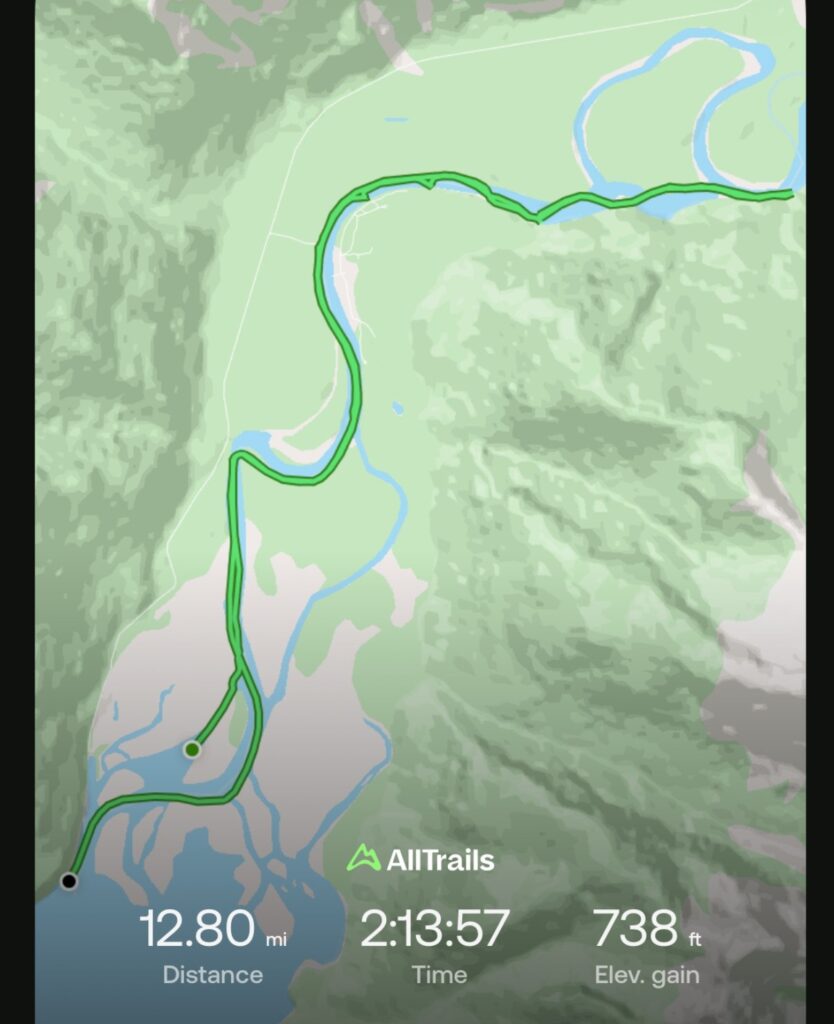
We spent three nights anchored in beautiful Belleisle Sound, this base of operation allowed us to use our 13-foot RIB tender for long trip explorations of the Wakeman and Kingcome Rivers. Each trip required a half-day, centered on high-tide. These are very large rivers that divide into many fingers where the river becomes an estuary as they reach the Sound. It takes a fair bit of trial and error to find an inlet that leads to the actual river.
We motored a good distance up the Wakeman River until it became less than a foot deep and too shallow to continue. We were surprised to see very few salmon, no bears, or anything that looked like a feeding area. Same story for the Kingcome River.
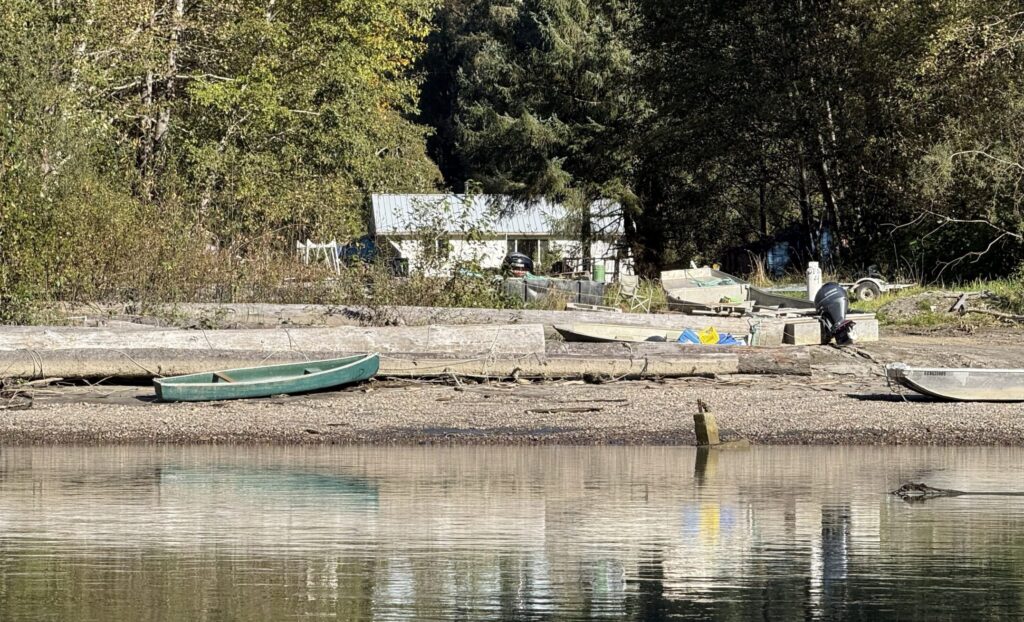
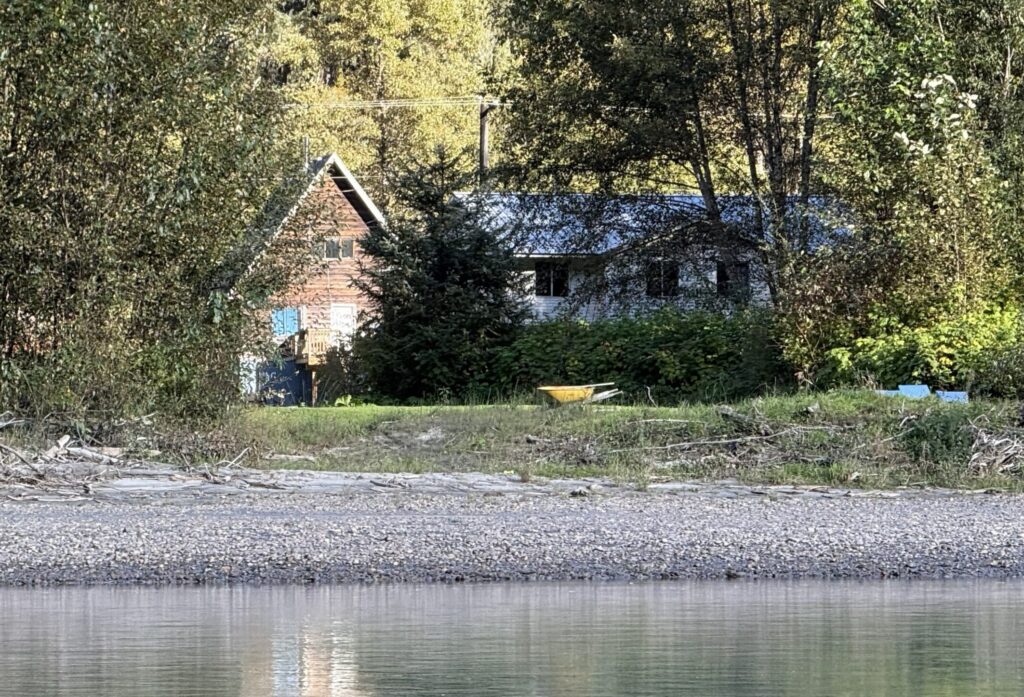
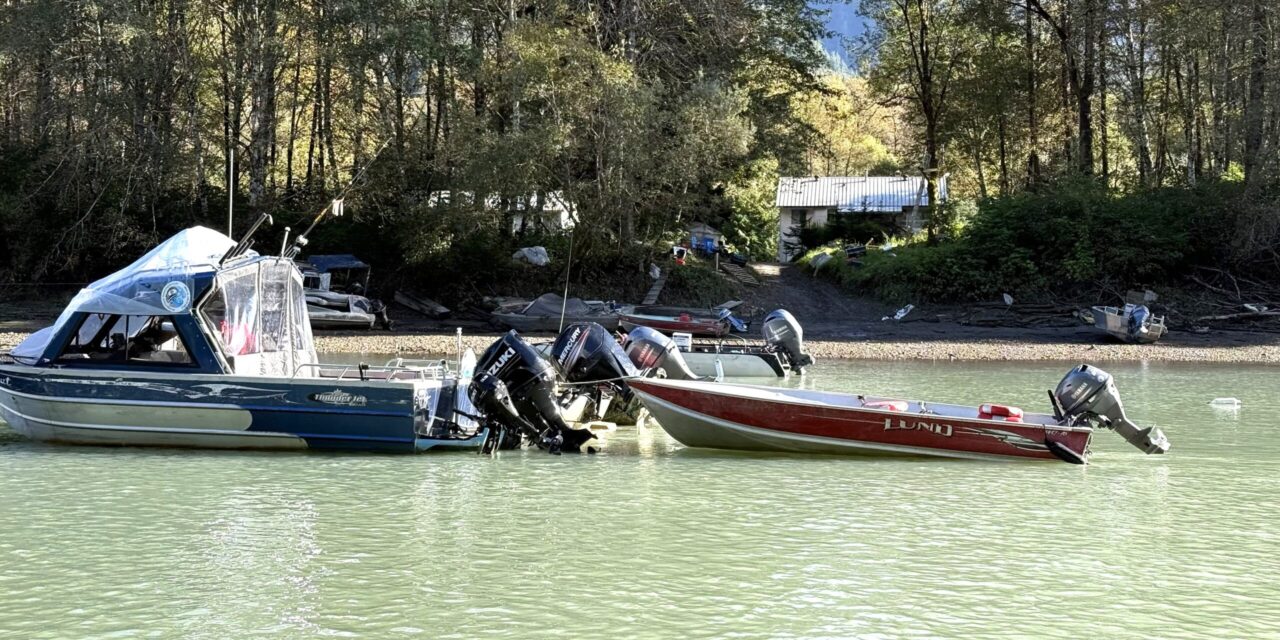
There was a big surprise, however, that we didn’t expect – a water taxi flew by us at full speed. We followed for at least two miles until it stopped at a village of about 80 people with significant housing in this very remote location. BC Hydro high-voltage lines span over the Kingcome River and many power boats were moored along the shore at the village.
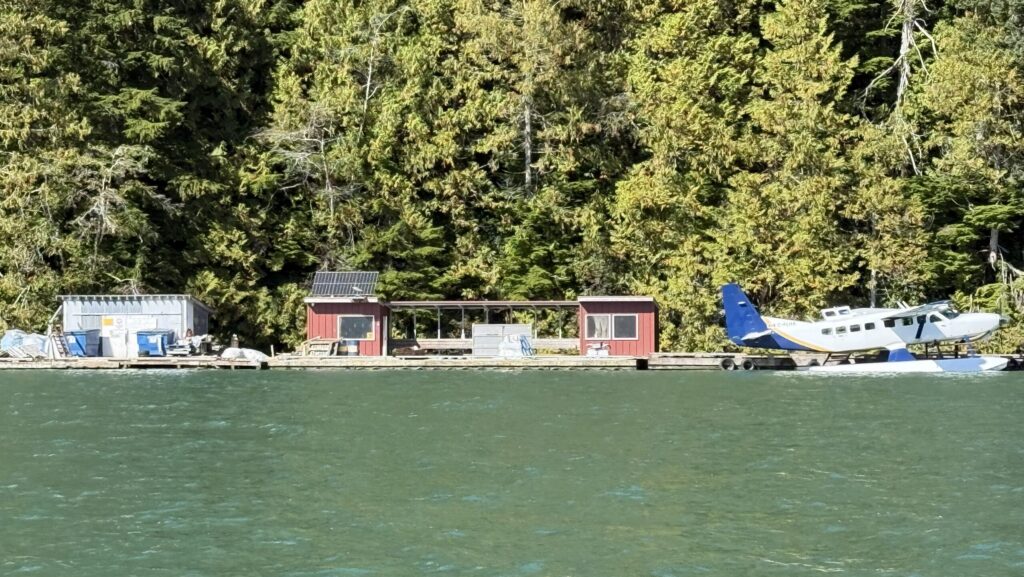
A government float in Kingcome Inlet serves as an aquatic “Bus Stop” for the residents to reach the village several miles up-river by water taxi. Depth of the water in Kingcome Inlet is deep up to the village and then becomes progressively shallower up-river from the village. We ventured 1.5 miles past the village and turned around in the fast-moving river at a tight turn.
To-date, the DeNaults have seen four bears and have concluded that the big rivers require motoring many miles to find salmon and bears, while the small rivers offer ponds and gravel spawning ground close the mouth and are more easily accessible. The DeNaults have shifted their focus and efforts on the smaller rivers as they continue their search for bears.
Article by: Brian & Laura DeNaualt
Waggoner Field Correspondents
Photos Credit: Brian & Laura DeNault