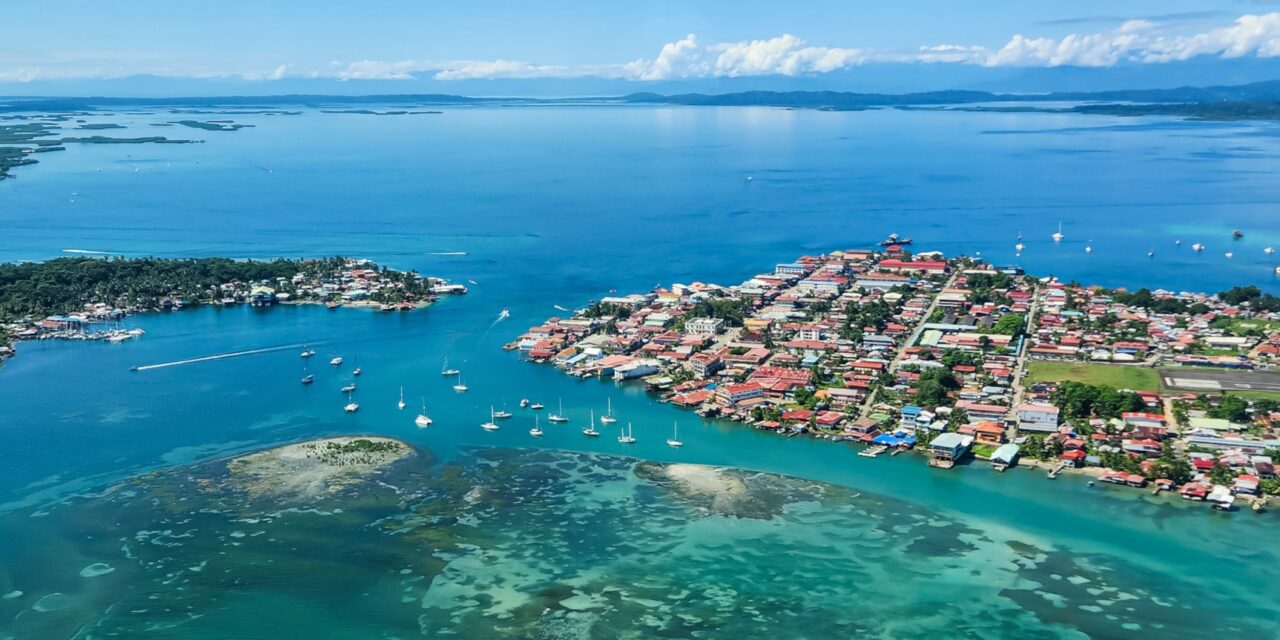
S/V One Ocean made it to Bocas Del Toro, Panama in early December, surfing in on an easterly wind and a string of squalls—right up to the channel entrance. Below is Jennifer’s account, relating their experience while clearing customs and a humorous story about mis-communications:
Normally I’m grateful for our electronics when entering new ports, and I was extra grateful this time. Where the chart showed channel markers, the real world showed absolutely nothing – phantom navigation buoys. The instructions said to call the port for updated information, but after several attempts on VHF and phone, the silence was profound. Same story for customs—everything online said to contact them 48 hours ahead. We tried, but to no avail.
So, I shifted into paperwork mode. Thank goodness the printer survived its projectile hurl from a locked cupboard during the Atlantic storm. Panama wanted everything in multiples: four copies of our Passports, four of the Crew Manifest, a copy of our Last Passport Stamp (which was tricky since Puerto Rico uses the ROAM app), and a Zarpe (a clearance for a boat leaving a port), which we didn’t have because the U.S. doesn’t issue them. Add in the cruising permit for Panama, and we had a full-blown administrative scavenger hunt on our hands.
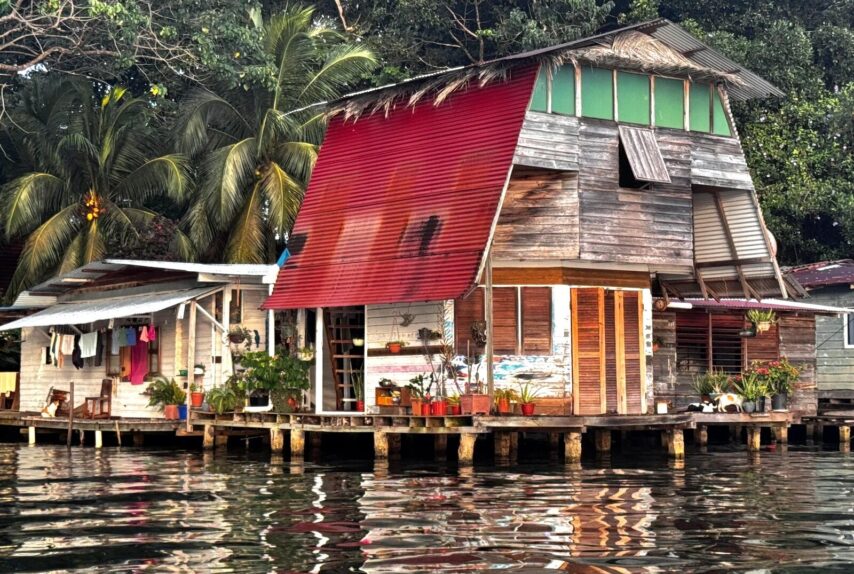
The instructions warned us that four officials from four departments would eventually board our boat to clear us in, and to keep our quarantine flag flying until then. It sounded like a logistical nightmare. We dropped anchor near the town of Bocas (a floating city with colorful homes on pilings) late Saturday afternoon. The anchorage was busy with Pangas zooming everywhere.
We hoisted our yellow flag and tried to call the Port Authority again, but the radio was quiet, too quiet. I even worried that maybe our radio had died. Thankfully, my brother John Dalton—now a local—sent me the marina manager’s number. He confirmed what no one else had, customs would open Monday at 9 a.m. And just like that, we were officially quarantined for the weekend.
After a week at sea, being anchored so close to town, smelling food drifting across the water, our morale was fragile. Tess looked up the quarantine rules and found a glorious loophole: boats in quarantine could order food to the vessel. A panga could deliver dinner to us. Hope returned. The crew was all in. The captain, slightly less so, already rattled from navigating buoy-less waters. I had been on the phone with my family and missed this development, but by the time I came up, pizzas were being ordered. I asked whether they could deliver margaritas too. Tess relayed the question. “Yes, of course,” the woman on the phone said. Perfect. Delivery fee, five dollars. Decision made.
An hour later, a panga with three men pulled up, handing over pizza box after pizza box. When Tess asked about the margaritas, they pointed at the boxes. We had ordered margarita pizzas—four family-sized margarita pizzas—in addition to the two family-sized pizzas we had already ordered. Six family-sized pizzas for four exhausted sailors. Thank goodness, the captain had already gone to bed, I knew he might not see the humor in it all!
We laughed until we cried, ate as much as we could, then started bagging and freezing pizza like doomsday preppers. Sunday morning—pizza for breakfast—we realized we’d anchored in a boat channel (which explained the non-stop pangas zipping by). We moved to a quieter bay, possibly named Solarte, a peaceful spot perfect for cleaning the boat, doing mountains of laundry, swimming, and decompressing. It was the quarantine retreat we didn’t know we needed.
Monday morning after more pizza for breakfast, we motored back to the busy anchorage to clear in. Three officials arrived (not four), cheerful and efficient despite the thunderstorm that delayed them. I had everything perfectly organized—copies, sticky notes, the whole works. They approved us and sent us to the airport office to finish the process.
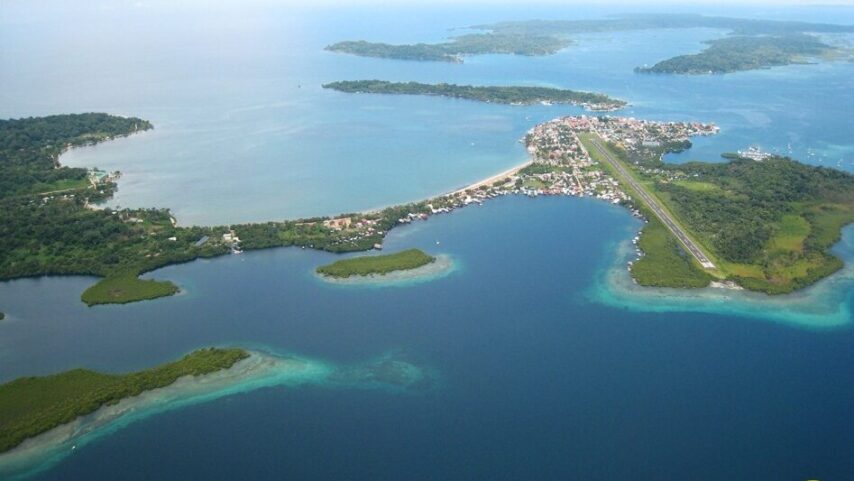
I thought they meant that we were clear and now we had to go in for the cruising permit. What they actually meant was customs. Thankfully, my brother John had just arrived into town. We met up with him. He took us to the airport, where we found out it was to clear customs and not for the boating permit. Ok, so maybe I missed a few things in Spanish about the process. To be fair, I was translating three people talking to me about official stuff! I had wondered why George (from the Port Authority) had said not to take down our quarantine flag! So, we had a couple of hours at customs where we were finally cleared in, but leaving us still needing a cruising permit.
We went for lunch with John, needing a break from all the paperwork and before dealing with the permit. By the time we finished lunch, a massive thunderstorm had rolled in for our walk to the Port Authority. Absolutely soaked and freezing cold from an air-conditioned office, Mark and I spent another couple of hours working on paperwork with a kind lady that spoke no English and very fast Spanish. I silently thanked every Spanish-speaking colleague I had worked with as I tried to keep up and sort out what she was telling us.
Hours later, we emerged freezing, soggy, and mentally done. The permit would be ready the next day. Back at s/v One Ocean, I changed into dry clothes, crawled into my bunk, and surrendered to a coma-level nap.
Takeaways
- Use marinas for their local knowledge.
- Arrive on a Monday.
- Bring alcohol. Bureaucratic survival juice.
- Be very, very clear when ordering margaritas.
Now onto figuring out the procedures and requirements for transiting the Panama Canal!
Update: Two days later, still no permit! We continued to wait for this administrative nightmare to be complete!
Header Photo: Sansa Airlines
House Photo: One Ocean Crew
Airport Aerial: Wikipedia