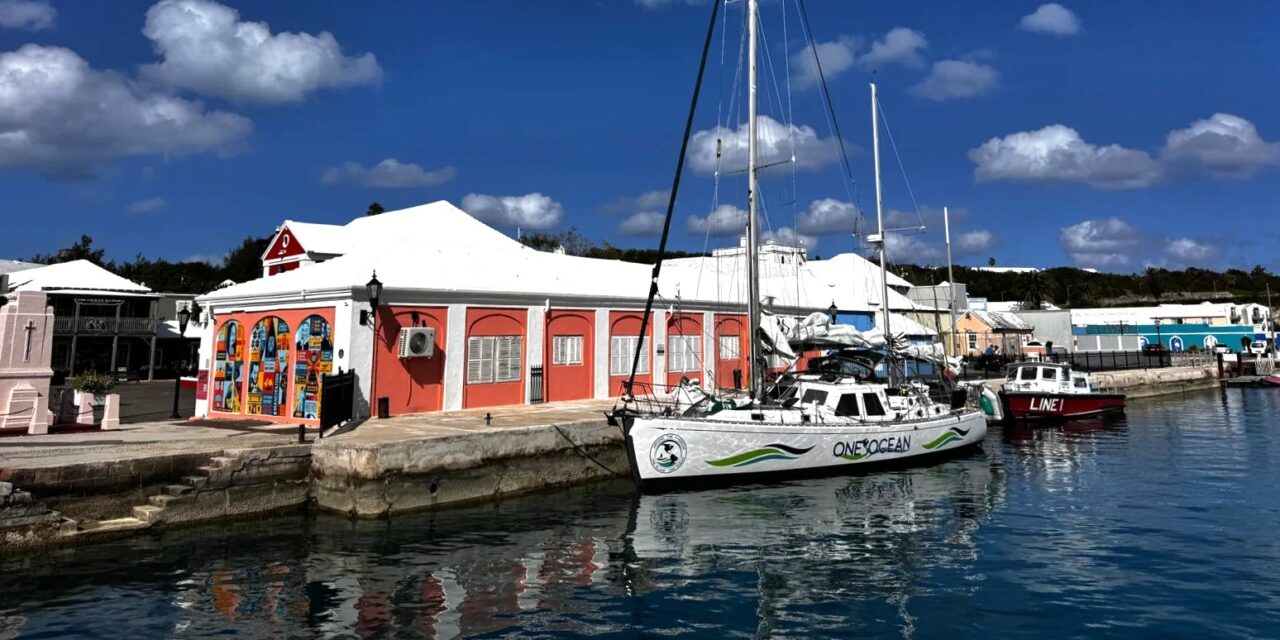
The following is an excerpt from the crew of One Ocean as they prepared for the approach of Hurricane Melissa and the aftermath.
We were at dinner at Wahoo’s in St. George’s, Bermuda celebrating repairs to damage sustained during our recent sail through severe storm conditions. Laughing and toasting with cold drinks in hand, I was savoring a pina colada, a treat I’d promised myself during the previous storm. It was at that dinner, mid-toast for the work we had accomplished on One Ocean, that I overheard someone at the next table mention a tropical storm forming into a hurricane. That night, lying in my bunk, I opened Windy App – our go-to tool for tracking wind, currents, and now hurricanes. Just south of Jamaica, there it was, a swirling mass of purple – a color I’ve learned to dread on that app.
Later that day Mike Beemer joined us in Bermuda and Tess Schornack caught a flight home that same evening, and Grace rejoined the crew. Soon, forecasts showed that Hurricane Melissa was headed straight for Bermuda. Everything we’d worked to repair on One Ocean came back down: sails, solar panels, anything with windage. Mark and I were grateful to have Mike back aboard, his enthusiasm was exactly what two storm-weary sailors needed to keep motivated.
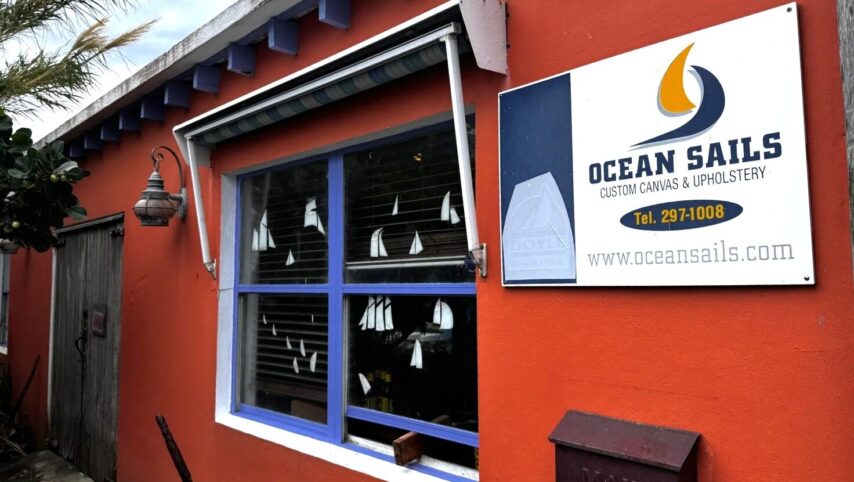
Steve, our canvas repair guy at Ocean Sails in Bermuda, suggested we take refuge in Stock’s Harbour, a couple nautical miles west of St. George’s, it’s shallow and protected from swell, though we’d still feel the wind. On Thursday, October 30th, Melissa was on track to pass about 130 miles east of Bermuda, close enough to bring hurricane-force winds.
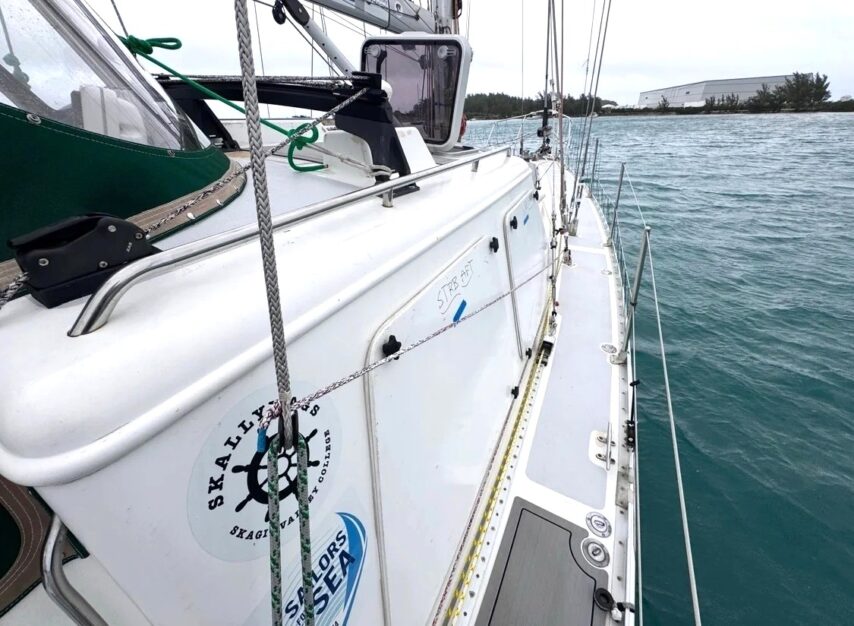
The town’s people worked on removing the harbor trellises from every park bench in the town square, unleashed and towed the dinghy dock away for safe storage, and cleared sewer drains. We finalized our preparations by stowing our sails, lashing down or removing everything on deck, and installing storm-boards over the windows. By afternoon, we had anchored in Stock’s Harbour. Our main anchor set south-southwest, ready for the shifting winds, and a secondary anchor to the west.
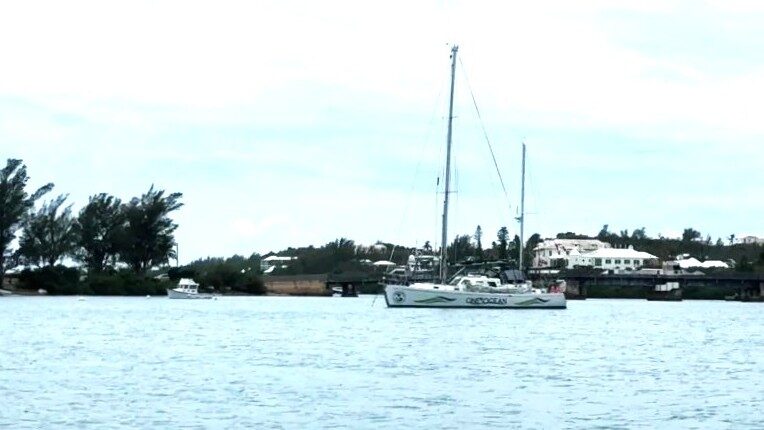
As the gusts built, a familiar dread crept in – the roar of wind, the whistle through every opening. This wasn’t like the Atlantic storm: no monstrous waves, warm air instead of freezing spray, but the sound – that unrelenting, rising growl – stirred something deep. Around midnight, the winds screamed past 70 knots. At 1 am a gust like a freight train slammed us. The gauge read 82 knots. I felt the movement in my feet, One Ocean had moved.
Mike shouted from the helm that the anchor had dragged 50 feet. He started the engine while I scrambled to the cockpit and switched on my headlamp to check out the secondary anchor which had caught and held. But now we were uncomfortably close to shore – “berry-picking distance,” as Mark likes to say. For hours, Mike kept the engine in gear, easing the strain on the anchor. The three of us stayed alert, speaking little, listening to the howling wind and watching the clock inch toward dawn.
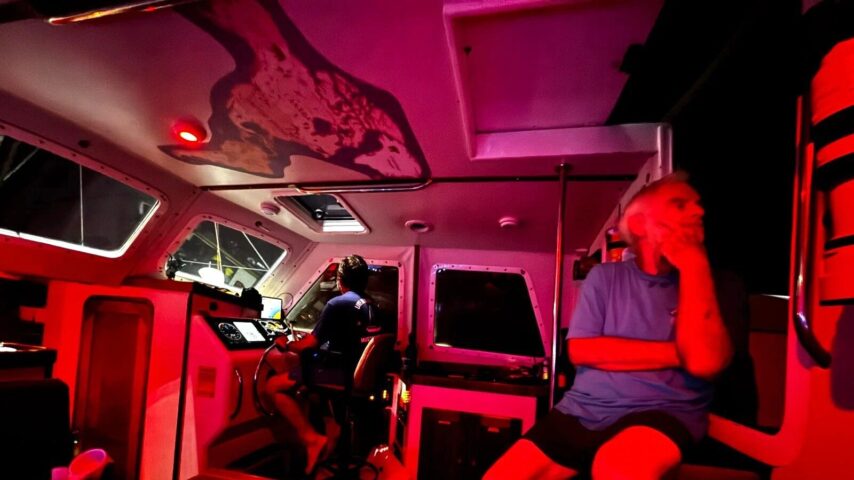
By morning, the winds had dropped to 30-40 knots, and light crept over the island. St. George’s was without power, but mostly intact. Halloween was delayed but not canceled, and life resumed as it always does here. Over the past weeks, we had dodged systems of shocking strength and documented water temperatures 20 degrees warmer than charted just a decade ago.
Article by Jennifer Dalton
Photos: Crew of One Ocean
Crew member and engineer Mike Beemer has returned home to Anacortes to be with his students and will rejoin One Ocean again later. Grace Dalton continues her studies at University of Victoria while sorting through the data One Ocean has collected and will be back on board again soon. Jon Elden, an experienced sailor with miles of offshore experience, joined the crew in Puerto Rico.
Departing Bermuda for Puerto Rico, the crew of One Ocean experienced fabulous sailing for about three days, then lumpy seas prior to their arrival at Puerto Rico. On November 12, the crew of One Ocean made another microSWIFT Buoy drop. The microSWIFT buoy provides real-time data on wave height, sea surface temperature, and buoy location. These small, GPS-equipped wave buoys are being deployed as part of the 2025-26 Around the Americas Expedition to help scientists monitor dynamic coastal and open ocean environments. Recorded temperatures from Bermuda to Puerto Rico have been 90.3 degrees Fahrenheit!
On November 25, the crew of One Ocean dropped an additional microSWIFT buoy. Andy Jessup, with the Applied Physics Lab at the University of Washington, has been studying the data collected throughout the journey of s/v One Ocean. Thanks to the crew of One Ocean enduring the Atlantic storms, data collected from the onboard infrared sensors provided ocean skin temperature at higher wind speeds than have ever been measured. You can learn more by watching Andy Jessup’s presentation on YouTube at https://www.youtube.com/live/qt1BItb-4EA