Jennifer’s account of surviving the October storms in the Atlantic is what fiction stories are made from, but her story is a non-fiction account of the crew’s survival. Her account is not meant to scare, but illustrate that experience, teamwork, and the human will to succeed can see us through the most difficult of circumstances.
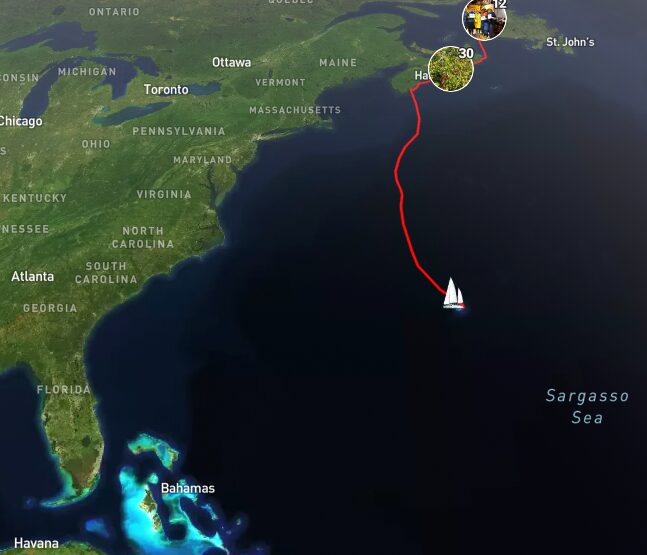
During our crossing from Lockeport, Nova Scotia to Bermuda, One Ocean and crew faced a storm that lasted 3 days with wind up to almost 70 knots and waves larger than our 48-foot ketch. This is a glimpse into what we faced in the Atlantic. After a week of repairs, healing from our bruises, and hurricane preparation upon reaching Bermuda, I finally had time to share with family and friends what we had endured.
The four of us — volunteer Charley, Tess, Mark, and me — have barely had time to process. In fact, it’s the first time I’ve been in my bunk in… I think three days. We are all safe, relatively unscathed, and somehow in good spirits for what we’ve been through. I’ve never been so focused in all my life as in these past 48 hours.
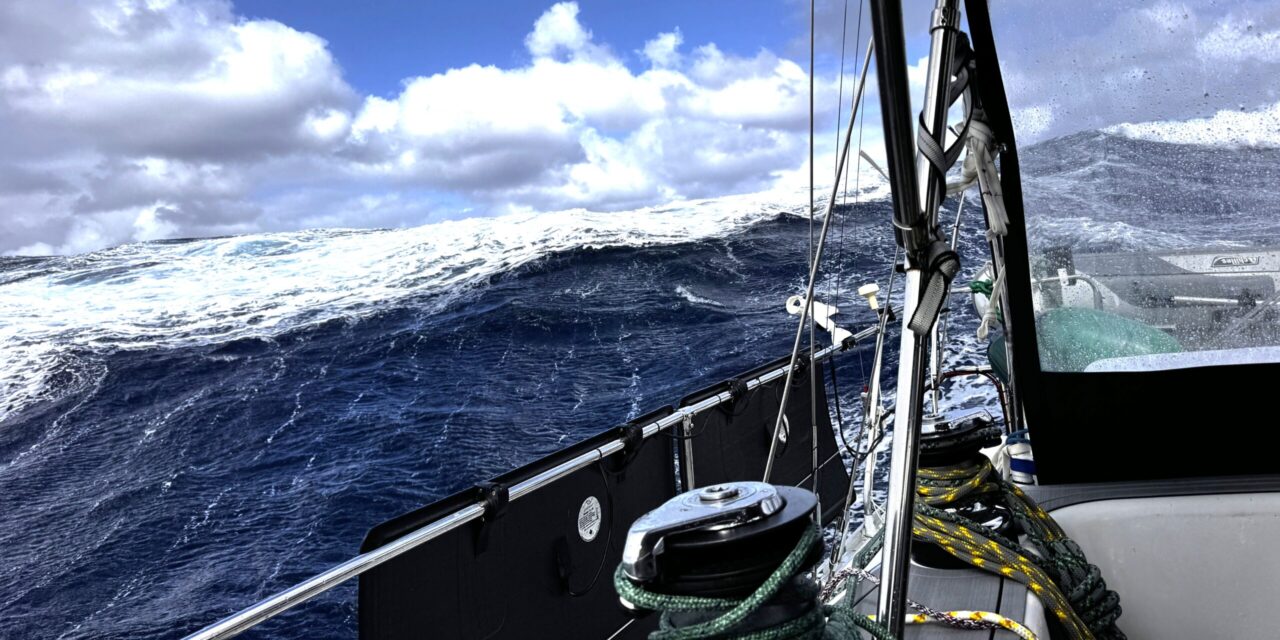
We got caught in the middle of a monster storm in the Atlantic Ocean. It moved quicker than expected — north and west of us — and we found ourselves in sustained winds over 50 mph. I think the highest we saw was 69 knots, but none of us have fully reviewed or processed it yet.
Mark and I hand-steered through a couple of nights, lightning circling us, rain pelting at our faces, as waves sent our 48-foot ketch surfing down their faces. Mark had been training me for difficult conditions and every word he had said played over and over in my mind. The exhaustion was bone-deep. My memory is foggy now; those nights were terrifying, but nothing compared to what came next.
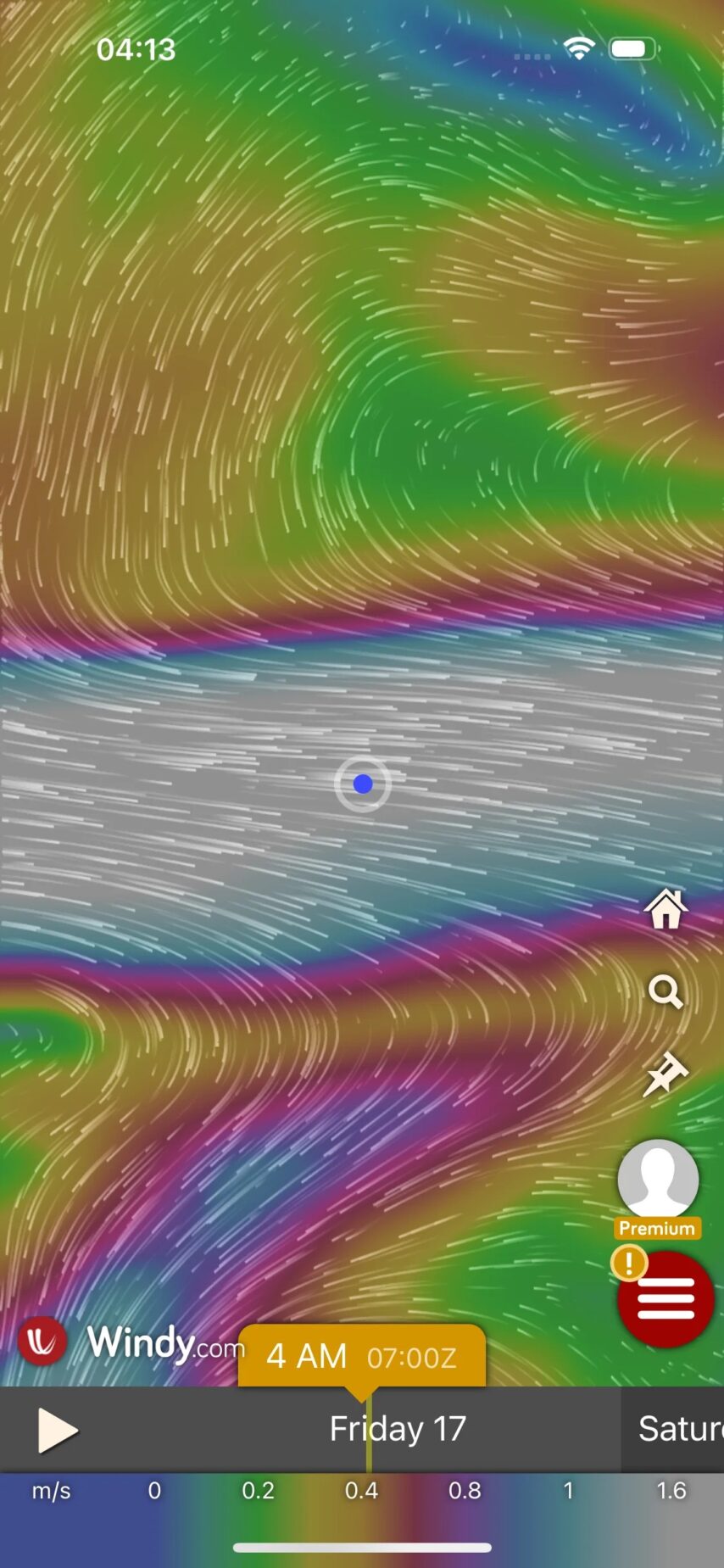
We crossed the Gulf Stream which was flowing east at 5 knots — with 50–60 knots of wind from the north (on our stern). It was an epic collision of colossal forces: wind, current, and sea. Captain Mark Schrader was at the helm when I clipped my harness by the cockpit door to relieve him. He was briefing me when we both turned to starboard — I’m not sure why, maybe the sound — and saw a monster wave coming at us from the side, not from astern like the others. The last thing Mark remembers is a wall of white crashing down on us. I saw his body fly above me as seawater engulfed everything. I reached out and grabbed his pant leg as we were both thrown over the port side. Somehow, I pulled myself back into the cockpit and, with all my strength, hauled him back in.
Mark’s head had taken a hit — his bell rung — and his glasses were gone. But we snapped back into action. The dodger, torn and flapping wildly, whipped around my face as Tess appeared from below, instantly grasping the urgency. Together, she and Mark tied off what was left of the dodger while I kept our bow pointed forward, staring down waves that felt like ocean cliffs.
When I finally caught a glimpse of the port side, my heart sank. The damage was severe — lifelines ripped apart, solar panels snapped in half, our dinghy barely hanging on by twisted steel. Inside One Ocean, the force of that wave had blown open locked cabinets, contents scattered everywhere and water flooded in through vents and doors. It was chaos.
Hours blurred together. My hands cramped from gripping the helm. Mark eventually relieved me so I could change into something dry, but when I noticed a long line dragging astern, I tethered and went to retrieve it. Two waves slammed into me, pinning me underwater. I felt myself being sucked off the stern — the lifeline scraping over my back. Somehow, I grabbed hold of something — I don’t even know what — and pulled myself back on board, gasping for air. Another wave hit. Our dinghy became a drogue, dragging in the water. I was able to crawl into the cockpit while Mark and Tess worked into the dark to rescue the dinghy. I steered for hours with my hands locked on the wheel and my arms burning.
Mark finally came to relieve me and miraculously, the wind decreased to 40-55 knots. We tried the autopilot and it worked. I was freezing, shaking violently when I finally went inside to change my soaked clothes and that’s when I saw the state inside of One Ocean. She had been shaken badly.
We took turns steering from inside as the night dragged on. The team pulled together like never before and we did it – we got through the worst of it. By morning, the wind eased to 30–40 knots. The waves still towered, but compared to the night before, it felt relatively calm.
Arrival in Bermuda. When we finally limped into Bermuda, Herb McCormick’s contact — Danny Greene— met us at the dock and immediately connected us with local tradespeople to fix our dinghy’s motor, to weld our lifelines and dinghy davits, and to repair the dodger. Thanks to them, we managed to fix everything critical aboard.
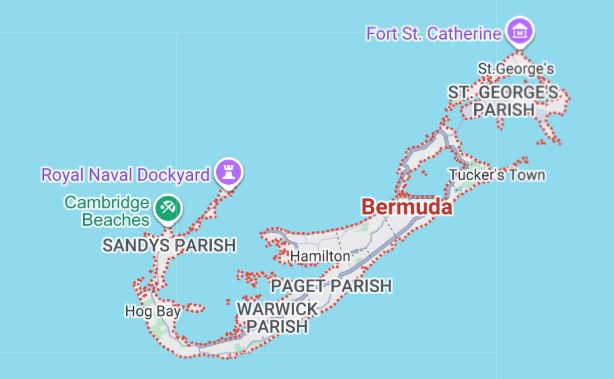
Now, as Hurricane Melissa bears down on Jamaica and is forecast to hit Bermuda later this week, we’re preparing once again — taking down sails, securing what’s left of our solar panels, and boarding up for safety.
Support the Journey. We’ve launched a Patreon Site to help support our ongoing education outreach as we continue our journey around North and South America. Join our crew at patreon.com/oneislandoneocean/gift — for just $5/month, you’ll get behind-the-scenes access to our navigation decisions and storm updates as we sail around North and South America. Your boating friends and family may also appreciate this as a Christmas gift! Thank you for your support and watch our social media sites for updates.
By Jennifer Dalton
s/v One Ocean
It Was a Dark and Stormy Night
Volunteer Charley, who previously retired from the Skagit Valey Marine Tech Center and served as a volunteer who worked to refit s/v One Ocean, joined the crew in Halifax Nova Scotia for the Atlantic sailing. Mike Beemer was off visiting family. An excerpt from Charley’s account of the storm follows:
All good sea tales start with “It was a dark and stormy night.” I know for certain the crew of One Ocean wished this tale would have none of those words. Unfortunately, it did.
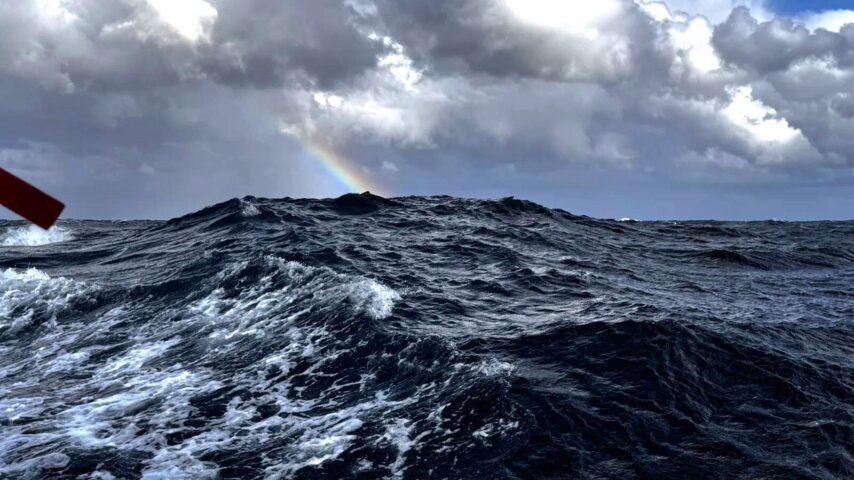
Tuesday October 14th, we departed Lockeport. Our destination is not clear but with a plan of frequent assessment of forecasts. The further west we moved down the coast of Nova Scotia the more variables were being considered in determining our destination. So many things to consider: the Bay of Fundy’s Tidal Flow, we were on the southwest edge of Nova Scotia, the tidal flow causing turbulent seas, George’s Bank with shallow depths and a significant depression to the south. Cape Cod, Newport and New York were all considered. Problems with systems moving north along the coast and potential delays were adding up.
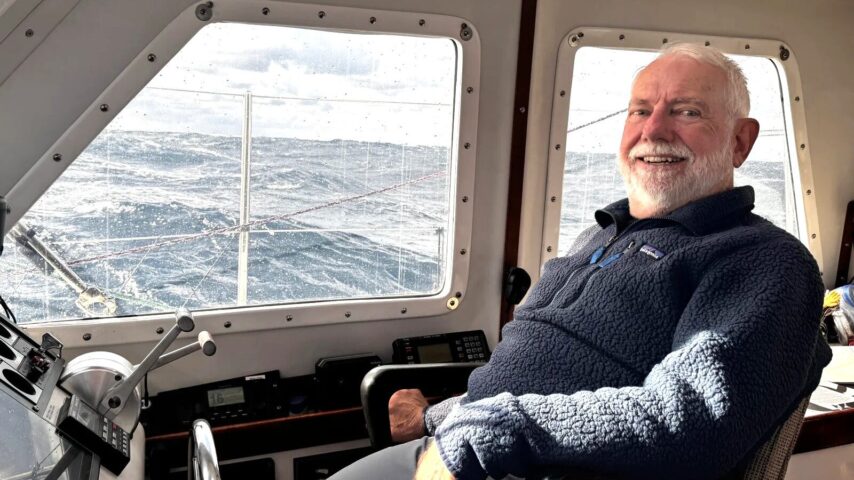
We monitored closely multiple weather forecasts. The consensus was that the depression was tracking east. We would skirt the west side of the depression and cross the Gulf Stream in a narrow spot setting our destination to Bermuda. It was becoming apparent that the storm was not tracking east as quickly as anticipated. We were on a collision course with a building system and Gulf Stream flowing north at 5 knots. On Friday, Oct 17 we neared the Gulf Stream. The swell height quickly built to 20-30 ft and the wind to 40 knots with higher gusts. I recall having a sense of awe in the energy unleashed in the moment. And could not anticipate it would double in a short period of time. We soon began seeing 40-50-foot following seas and sustained winds of 45 knots with gusts to 60 knots off our starboard quarter. I had not anticipated that I would be one who benefitted from resealed window frames and a reinforced pilot house.
Jenn and Mark spent hours on the more responsive outside helm to maintain our course as we surfed to 14 knots down 40-50 ft waves and climbed at 4 knots up the next wave. The stay sail and engine at low rpm balanced the ride and maintained good steerage. One Ocean was handling comfortably with wind and seas from our stern. Then a “monster wave” broke over us from the starboard. Mark was steering at the outside helm. Jenn had just clipped in to relieve him. Both were harnessed to the boat and preparing to switch as the wave broke. Jenn’s account above is a terrifying, true story of extreme courage.
You can read Charley’s full account HERE.
Photos and Illustrations: Crew of One Ocean