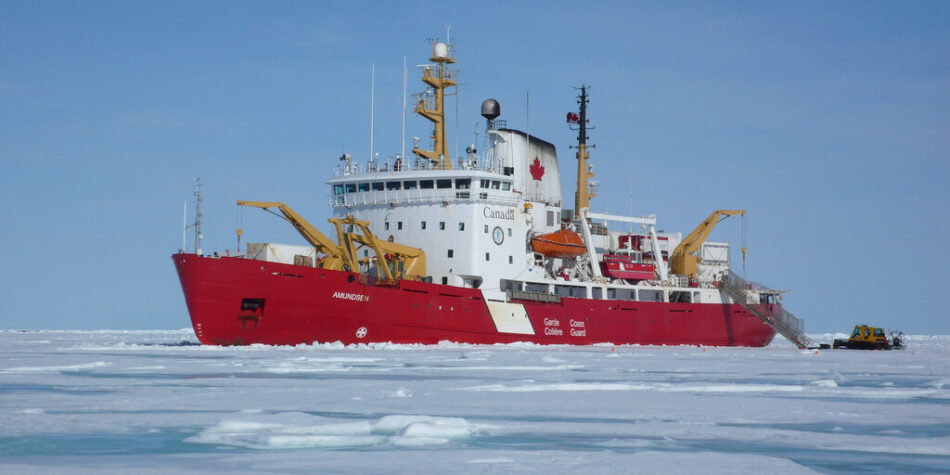
The Canadian Coast Guard Amundsen, Canada’s research icebreaker, recently completed a transit through the Northwest Passage via several circuits, with numerous stops in the Arctic for scientific research.
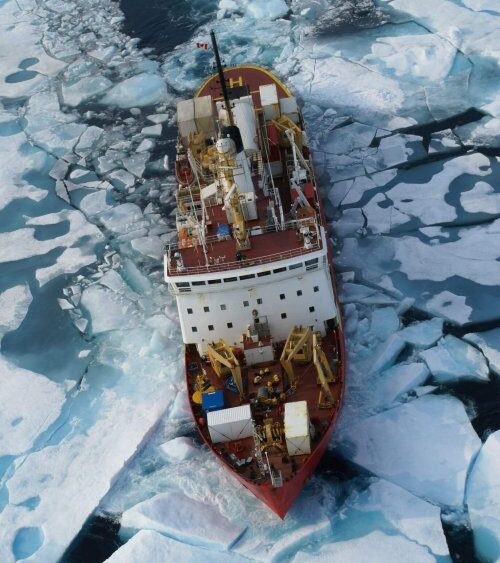
The Amundsen is 98.3 meters (322 ft.) long, with a beam of 19.5 meters (64 ft.), and a draught of 7.2 meters (24 ft.). She is powered by a diesel-electric system comprising of six Alco diesel engines and has a range of 35,000 nautical miles at 14 knots. The vessel normally carries 40 scientists and 40 crew members, including 3 engineers and 3 chefs. The crew consists of two Coast Guard teams for each shift, with a captain in charge.
The journey included a number of different routings through the Arctic, one of the last legs for Amundsen began at Resolute Bay in the Nunavut Territory of Canada, then southwest to Utqiagvik (formerly Barrow) in Alaska, then back east to Fox Basin situated north of Hudson Bay between Baffin Island and the Melville Peninsula in Nunavut Territory, before arriving back in the northeastern Province of Quebec.
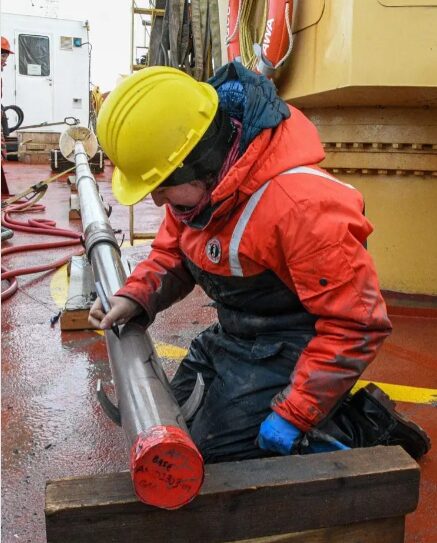
Scientists aboard the Amundsen collected water samples at various depths, studied oxide gases, collected methane measurements, gathered fish samples and organisms, and collected seafloor core samples. Data regarding marine mammal health and identification is also part of the scientific mission.
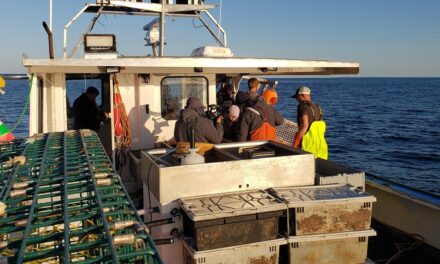
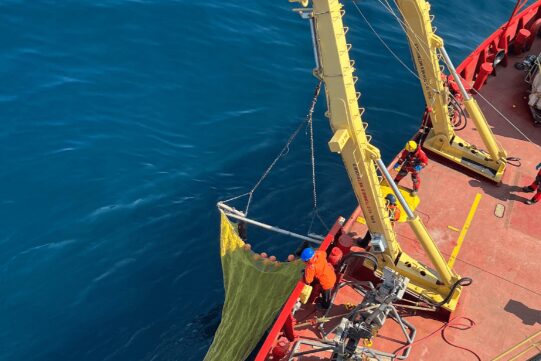
The Amundsen houses a large control room with numerous monitors and screens showing the makeup of the ocean floor – a mud bottom is preferred over a rocky bottom when collecting core samples. These core samples serve as time capsules filled with history providing a wealth of information. For collecting fish samples and sea organisms, a large crane and wench, located topside, is used to pick up nets and heavy boxes of samples that have been collected.
After the scientists arrive back home on shore, the raw data is processed and reports created to share the data with the scientific community. You can find research from CCGS Amundsen on the Amundsen Science website at https://amundsenscience.com.
Photos: CMOS (Canadian Meteorological
and Oceanographic Society)