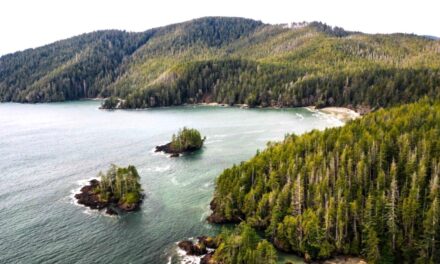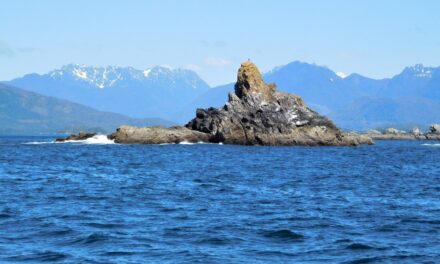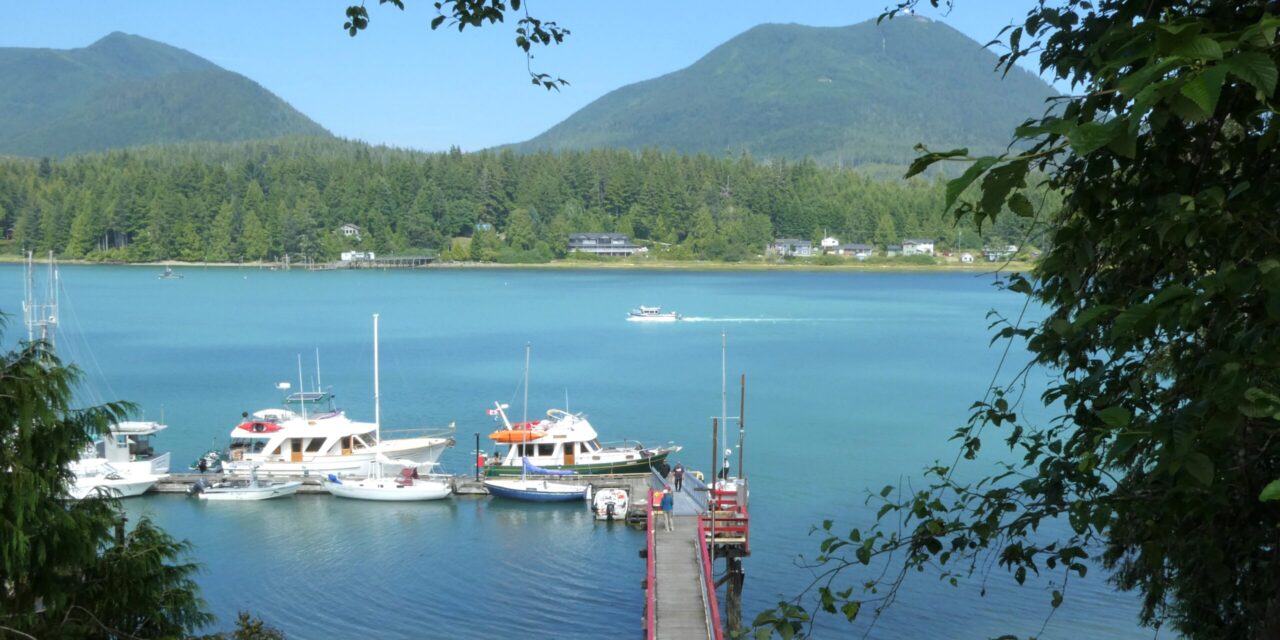
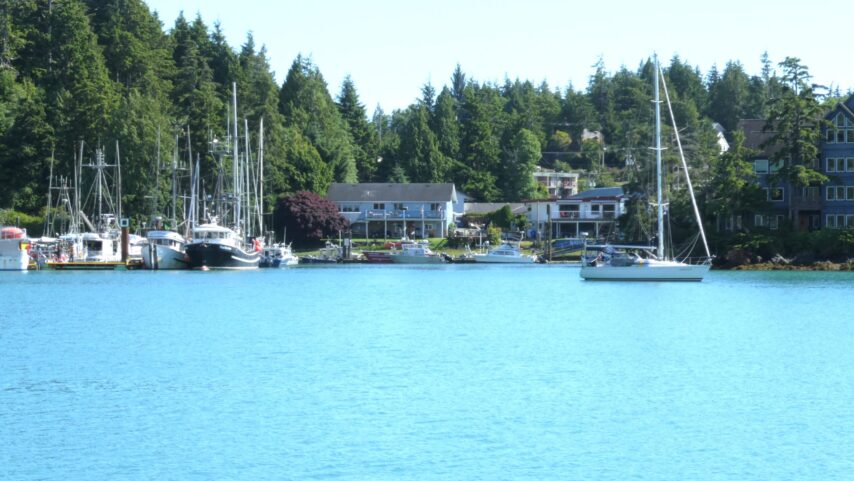
What’s with the tropical-looking waters in Barkley Sound? While cruising the West Coast of Vancouver Island gathering updates for the Waggoner Guide, we noticed the extraordinary tropical-looking blue water in Ucluelet Inlet and around the Broken Group islands. The waters looked milky blue, similar to glacial waters; were our eyes playing tricks on us with the sunlight?
We later learned that the phenomenon is due to a coccolithophore bloom and is happening more frequently since the warming of our oceans. Blooms occur when the surface of the water becomes very warm and nutrient depleted. Coccolithophores are a type of non-toxic algae bloom, or phytoplankton, with a sphere shape of calcium carbonate. The material is reflective with sunlight making the water appear blue/white. Most blooms start in bays or inlets with restricted circulation. The Department of Oceans and Fisheries recently reported that the turquoise waters of Barkley Sound can be seen from space.
Coccolithophores are not necessarily a bad thing, since they ingest carbon dioxide via sunlight (photosynthesis) to produce oxygen. When the bloom dies off, the calcium carbonate sinks to the bottom of the ocean, removing some of the carbon from the surface waters and fertilizing the ocean floor. The bloom also serves as a food source for a lot of organisms.
There are about 200 species of coccolithophores, and they are the most productive calcifying organisms on the planet; they cover themselves with a calcium carbonate shell called a coccosphere. It is believed that the coccosphere offers protection against predators, preventing phytoplankton death. Coccolithophores are of particular interest to those studying global climate change – as ocean acidity increases, coccoliths may become more important – Coccolithophores can help regulate the temperature of our oceans.
Photos: Lorena Landon