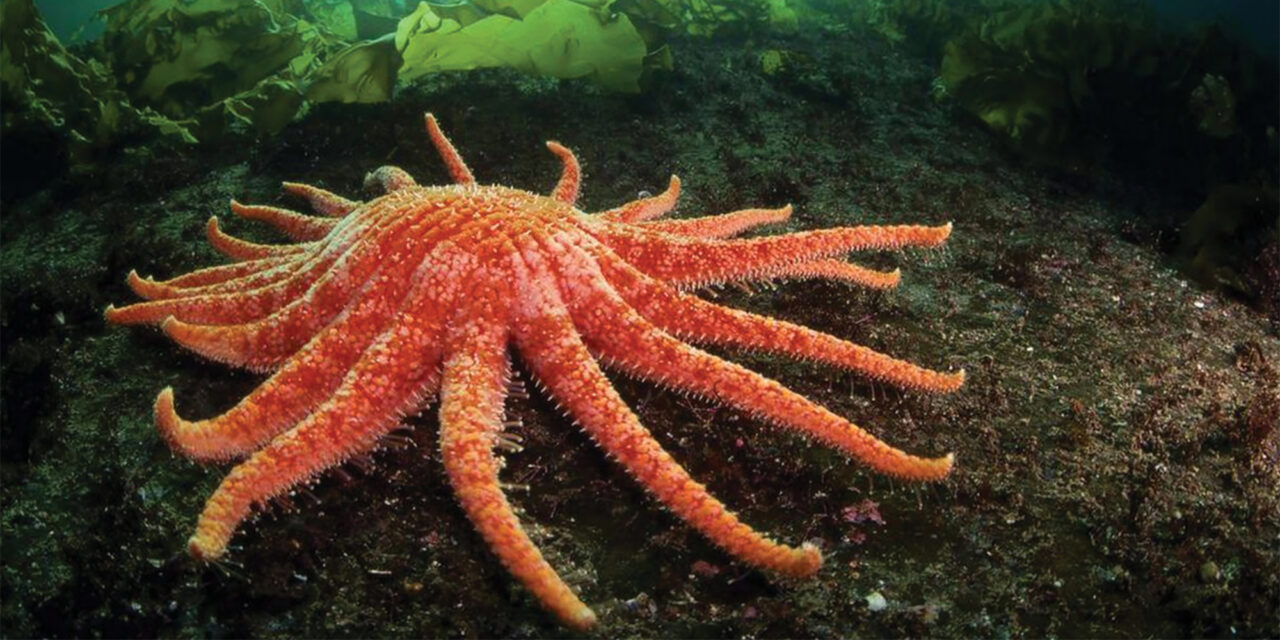
The cause of the horrible, unsightly wasting disease that has killed more than 5 billion sea stars off the Pacific Coast has been discovered, thanks to the efforts of scientists with the Hakai Institute in British Columbia.
The Hakai Institute under the umbrella of the Tula Foundation, located in beautiful Pruth Bay on Calvert Island, is an ecological observatory and research center recognized by the United Nations for East Pacific Ocean Science. Now after a decade of research to find the cause of the sea star wasting disease, ecologist Alyssa Gehman and scientist Melanie Prentice at the Institute have helped identify the cause.
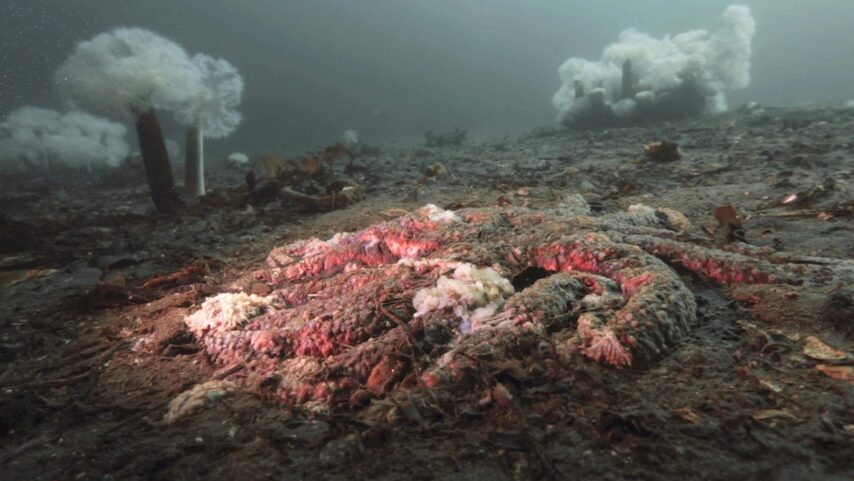
The culprit is a bacterium that also infects shellfish. The bacterium attacks the puffy arms of the sea stars, which causes lesions to grow and the arms of the sea star to fall off. It took years to find the culprit, as there were many false leads along the way. Early research hinted that the cause might be a virus, but it was later discovered that the densovirus was actually a normal resident inside healthy sea stars. Researchers were focused on studying tissue samples of dead sea stars, which no longer contained the bodily fluid that surround the organs. It wasn’t until later when the fluid was analyzed, that the bacteria Vibrio Pectenicida was found.
Now that scientists understand the cause, they have a better chance at helping sea stars to recover. According to Melanie Prentice, co-author of the study published in the journal Nature Ecology and Evolution, scientists could potentially test sea stars that are still healthy and relocate them, or breed them in captivity to later transplant them in various areas.
Disease ecologist Alyssa Gehman emphasizes the importance of recovery. With fewer sea stars, the sea urchin population has explored, which in turn have gobbled up 95% of the kelp forests in Northern California. Healthy sea stars help eat excess urchins, keeping the ecosystem in check. Researchers are hopeful the new findings will allow them to restore sea star populations and also help the recovery of kelp forests.
Header Photo: UW Friday Harbor Labs
Wasting Disease Photo: Grant Callegarie, Hakai Institute