Since the 1940s, U.S. immigration law has required all foreign travelers 14 years of age and older (with limited exceptions) who remain in the United States for 30 days or longer to register their presence in the United States and to be fingerprinted, if they were not already fingerprinted when applying for a U.S. visa.
In the spring of 2025, the U.S. government started to strictly enforce this requirement via an Executive Order (14159) by the current administration. The order directs the U.S. Department of Homeland Security to ensure that foreign visitors comply with their duty to register with the government under section 262 of the Immigration and Nationality Act.
Canadians who enter through land ports-of-entry and not required to obtain a visa to enter the United States are most affected by this new enforcement. Historically, Canadian citizens have enjoyed visa exemption and verbal inspection at land borders without formal documentation, the newly enforced requirements, however, directly impact this process. Many Canadians enjoy traveling to Florida, Arizona, and other destinations in the U.S. during the winter months, or have second homes in the U.S. where they live for an extended period of time.
Air travelers are usually registered upon entry at airports through the electronic Form I-94 admission record issued by U.S. Customs and Border Protection, but travelers crossing land borders and arriving by private boat don’t always get or fill out the form. Canadians and other non-U.S. citizens planning to travel by land or sea and who will be staying in the U.S. for more than 29 days are advised to fill out the provisional I-94 form online (you will receive a receipt) to help expedite the issuance process at the border. To obtain the final, legal-for-travel Form I-94, you will need to appear at a port of entry to complete the final steps in person, within 7 days of your provisional I-94. During the in-person process, you will complete an interview and be fingerprinted and receive a facial scan or photo. If approved, you will receive the official Form I-94. Those 18 years and older must carry and keep this evidence of registration in your personal possession at all times.
Canadian boaters can still use the ROAM App to report entering U.S. waters, but should also register for I-94 if remaining in the U.S. for 30 days or more. At this time, it appears that this Directive has not yet been shared with marine ports of call regarding procedures for recreational boaters. Mariners should ask about the latest requirements when clearing customs for extended stays in the U.S.
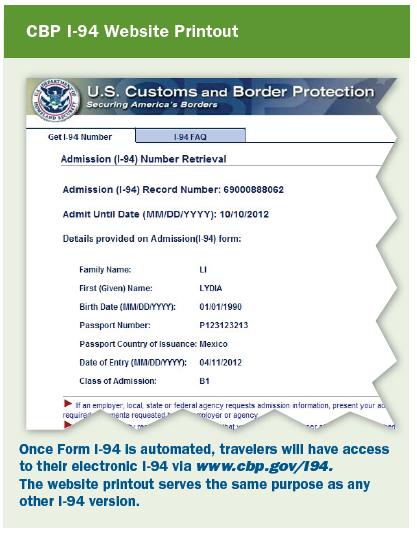
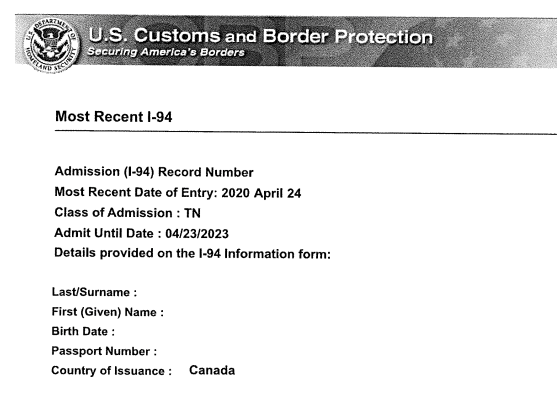
You will need a new I-94 Form each time you re-enter the U.S. for stays over 29 days. You should always check your “Admit Until Date” for your permitted stay. Those already in the U.S. who did not obtain an I-94, must fill out the newly established G-325R Form (Biographic Information) for registration in order to comply with the law. Parents and legal guardians of aliens below the age of 14 must ensure that registration has been made. Within 30 days of reaching his/her 14th birthday, all previously registered aliens must apply for re-registration and to be fingerprinted.
All admittance into the U.S. is determined by a CBP (Customs Border Patrol) Officer at a port of entry during the application for admission or I-94 permit. Travelers should be prepared to show the purpose and intent of travel. Each border guard may have a different set of questions; be honest and truthful.
Due to the recent enforcement of U.S. immigration law (including special exemptions), not all visitors and border agents are up to speed regarding the requirements, this has created some confusion and varied experiences for visitors crossing the border. To learn more about I-94 or to apply, go to https://i94.cbp.dhs.gov/home
Header Image: U.S. Customs
Form Images: CBP