Boaters who have cruised along the Washington and Oregon coasts and crossed the Columbia River bar to Astoria hold a special place in their hearts for this unique destination so rich in history.
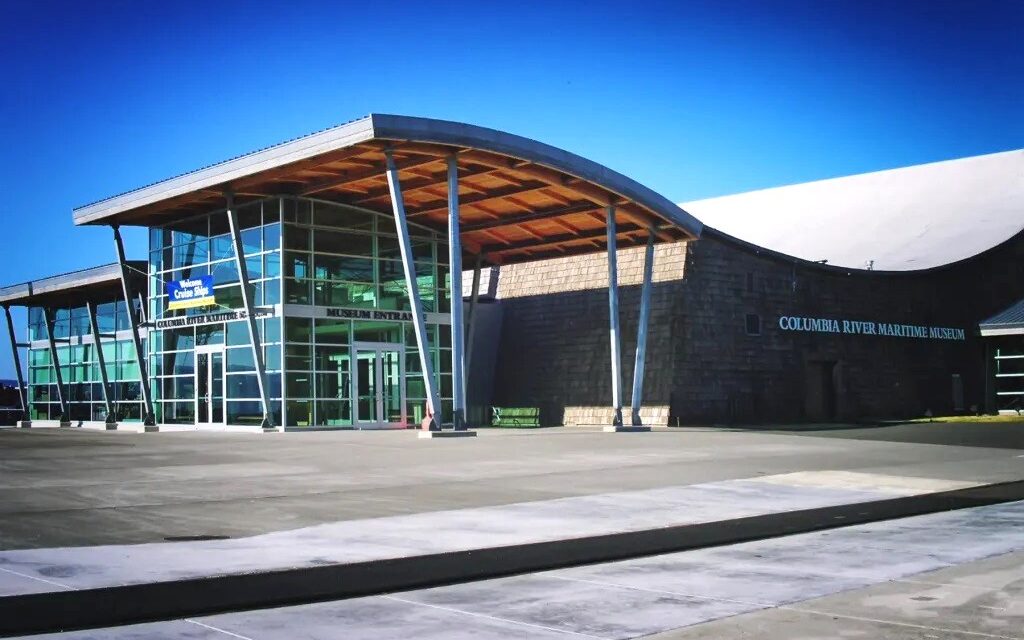
Astoria’s special place in history becomes evident when touring the city and visiting the Columbia River Maritime Museum (503-325-2323), housing maritime artifacts, exhibits, hands-on-activities, and fine art. The museum’s 13-acre campus features a 44-foot lifeboat, the authentic bridge of a WWII destroyer, the floating Lightship Columbia, and a variety of smaller craft. A 3D theater adds to the educational experience, along with a research center used by people from all over the world.
Did you know that the museum currently has two warehouses totaling nearly 26,000 square feet bursting with maritime history and artifacts that have not been accessible to the general public? All that will soon change as the museum prepares to launch a $30 million expansion, breaking ground this fall, 2024. The expansion will include a 24,500-square-foot Mariners Hall, new exhibits, and renovated exhibit spaces. The museum will also broaden its role in education, with a purpose-built classroom for the museum’s active education program. Classes are currently held in schools, public libraries, and senior centers.
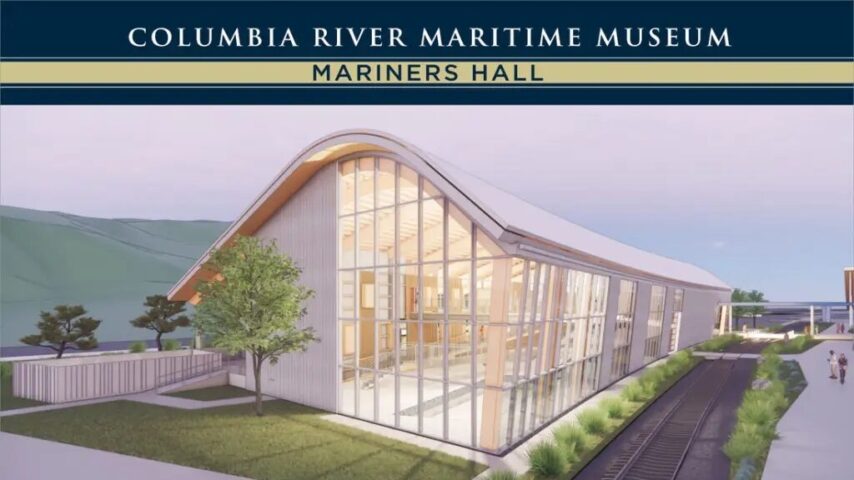
New exhibits will include the 45-foot yacht, the Merrimac launched in 1938, and the 52-foot steel-hulled U.S. Coast Guard lifeboat. Three fish boats, historic rowboats, lifeboats, a salmon tender built in 1902, a George Pocock 60-foot racing shell, an Axtell racer and more will also be added exhibits. Paintings, prints, engines, figureheads, and nameboards dating back to the 1800s will be coming out of storage.
Among the Maritime Museum’s Library holdings are Capt. James Cook’s journals, an original ship log from the 1770s fur-trade era, and Columbia River bar pilot logs dating back to 1918. Researchers also come to peruse the Lloyd’s Register of Ships, the official record of commercial ships dating from 1889. The library is considered one of the best maritime libraries on the West Coast.
The City’s Historic Background. Astoria is named for John Jacob Astor, an investor and entrepreneur, whose American Fur Company founded Fort Astoria and established a monopoly in the fur trade in the 1800s. Astoria grew as a port city near the mouth of the great Columbia River, which provided easy access to the interior. Astoria’s economy centered on fishing, fish processing, and lumber. In 1945, about 30 canneries could be found along the Columbia River.
Sites to Visit. In addition to visiting Astoria’s Columbia River Maritime Museum (open daily from 9:30am to 5pm), be sure to visit the Astoria Column, a 125-foot tower atop Coxcomb Hill. The inner circular staircase allows visitors to see panoramic views of the town, countryside, and the Columbia River. The tower was built in 1926, financed by the Great Northern Railway, and Vincent Astor a great-grandson of John Jacob Astor, to commemorate the role of the family business and the region’s early history.
You won’t want to miss visiting nearby Fort Clatsop, the replicated fort and log structure where the Lewis and Clark Expedition spent the winter of 1805-1806.
Whether you’re visiting Astoria by boat or car, one can’t help but gain a better appreciation of Astoria’s unique treasures and its role in maritime history.
Photo/Drawing: Columbia River Maritime Museum