
Recreational boaters and private aircraft pilots have something in common – concerns about the misuse of personal information that’s included with ADS-B and AIS position tracking.
ADS-B (Automatic Dependent Surveillance-Broadcast) for pilots and AIS (Automatic Identification System) for boaters are intended for safety navigation and collision avoidance. The recent abuse of these technologies has raised concerns among boaters and pilots, including access to one’s name and address, the levying of fees, and threatening lawsuits.
AOPA (Aircraft Owners and Pilots Association) has taken action with the support of Senator Ted Budd and Representative Bob Onder, active pilots themselves, serving in our Federal Government. Senate Bill 2175 and House Bill 4146 were introduced on June 26, 2025. The bill seeks to establish, among other items, the following:
- Prohibit the use of ADS-B data in the collection of fees from pilots/aircraft owners
- Clarify that ADS-B be used only for its intended purposes of air traffic safety and efficiency
- Expand to all federal, state, and local entities, a provision in the FAA Reauthorization Act of 2024 preventing investigations from being initiated based solely on ADS-B data.
Does this all sound familiar? AIS has been used to initiate letters and fees from Transport Canada to boaters that strayed into SRKW (Southern Resident Killer Whale) no-go zones or exceeded speed zone areas by using third-party AIS track information of a vessel. This historical track information comes from undisclosed sources, usually months after the incident. Unfortunately, this means that many boaters are turning off their AIS, which is intended for safety and collision avoidance.
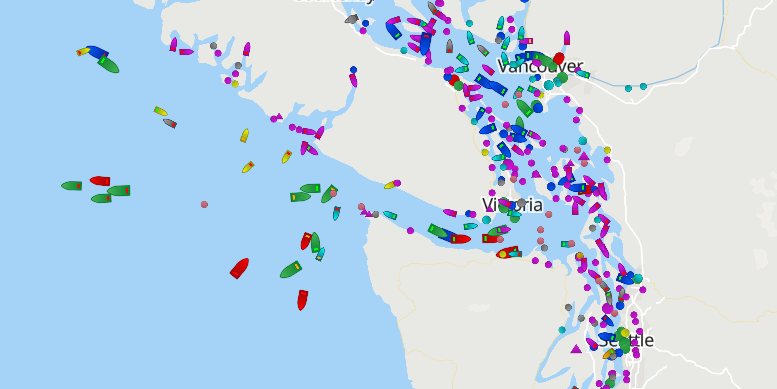
In addition to the misuse of private information such as name and address (unlike automobiles and RVs), other concerns include AIS/MMSI “spoofing,” the intentional manipulation of a vessel’s AIS device to deceive maritime authorities and other vessels for purposes of illegal fishing and drug running. What about boats for charter? Who is responsible? Races and regattas are affected too by AIS tracking as it relates to required distances from SRKWs.
Keeping our waters safe for navigation should be a top priority for every organization that has a stake in our oceans. Preventing collisions with the help of AIS promotes safety for humans and the environment by preventing unnecessary mishaps that result in fuel and oil spills. Initiatives that discourage boaters from using their AIS system create more danger and costly cleanup.
AIS, like ADS-B, electronically broadcasts information, that when linked to publicly accessible data, makes individual movements easily known to others. It’s imperative that the boating Industry stay ahead of the game by taking action against the misuse of AIS.
Conclusion. With more restricted areas on our seas and more fines being issued, boaters are now tending to turn off their AIS Transponder, an unfortunate situation that adds to the risk of collision, the very reason why AIS was developed in the first place.
Action Needed. It’s time to establish some rules and regulations to prevent the misuse of AIS data. Agencies like ABCMI (Association of British Columbia Marine Industries); Boating BC; Boat US; NMMA (National Marine Manufacturers Association); NMTA (Northwest Marine Trades Association); and RBAW (Recreational Boating Association of Washington) are encouraged to work together to protect the intended use of AIS, which affects all aspects of the boating industry.
Photo: Shutterstock
The following are links to other articles about AIS published by Waggoner:
https://waggonerguide.com/big-brother-and-ais/ and
https://waggonerguide.com/is-your-ais-programmed-and-operating-correctly/