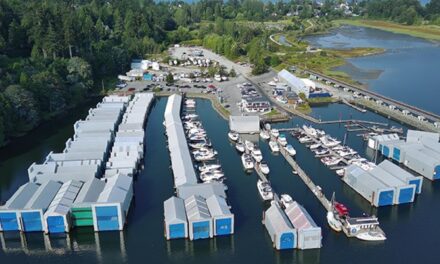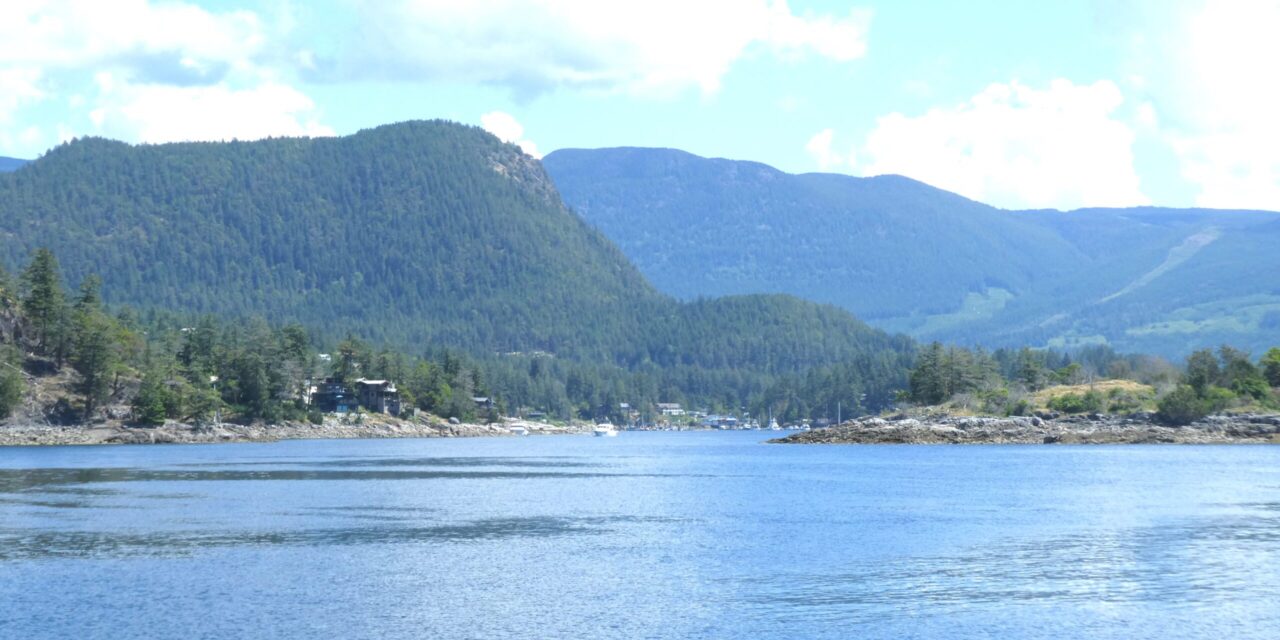
Pender Harbour located along the Sunshine Coast of British Columbia is now officially known as kalpilin. In June of 2023, seven geographical names were officially changed at the request of the shi’sha’lh First Nation, including Pender Harbour, formally known as kalpilin (kall-pay-leen) by Indigenous peoples. Around 1860, Captain George Richards had renamed the bay after one of his surveyors, Daniel Pender. Today, boaters, locals, and visitors will most likely start using both names interchangeably, at least for now. The shi’sha’lh word kalpilin takes its meaning from the concept of a ‘sheltered area’.
Kalpilin lies within the traditional territory of the Sechelt (shi’sha’lh) Nation. While there were other village sites between Roberts Creek and Jervis Inlet, kalpilin (Pender Harbour) had special significance. It is where four main tribes numbering in the thousands congregated during the winter months. The shi’sha’lh Nation built huge communal longhouses (up to 800 feet in length) with separate family compartments divided by cedar screens. These capable people made watertight baskets from spruce root, made blankets of mountain goat wool, and used stout nettle fiber for fishing line.
Early European settlers were likely those of the Catholic missionary who arrived with Father Leon Fouquet in 1859. He and his successor, Father Paul Durieu, began the controversial residential schools in an effort to convert the Natives, and the colonial government began allocating limited reserve lands to the Native peoples in order to open land for European settlement. The shi’sha’lh were taken off their prime land and placed on a small island at the entrance to Pender Harbour. Then in 1862, a severe smallpox epidemic nearly eliminated this previously thriving population. By 1876, the Native population went from thousands to around only 160 individuals.
Another early European settler was Charlie Irvine, who built a log trading post at his landing (Irvine Landing, still so named on the map). He sold his property in 1904 to Joe Gonsalves, a sailor and fisherman, who along with his extended family developed the European community. The family built a wharf, general store, post office, and a hotel/saloon at the head of the wharf. The Union Steamship Company made regular stops, which put Pender Harbour on the map and attracted boaters to the area. Summer homes were built around the harbour in the early 1900s. In August of 1930, Reverend Alan Greene, of Columbia Coast Hospital, helped organize the completion of the Garden Bay Hospital building, the building still stands today at the head of Pender Harbour.
Whether you say kalpilin, Pender Harbour, or use both names, the area remains a popular destination with a varied history that’s loved by many.