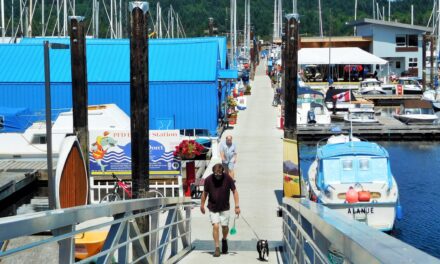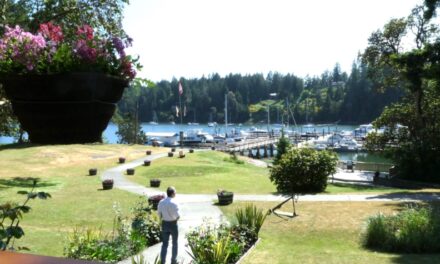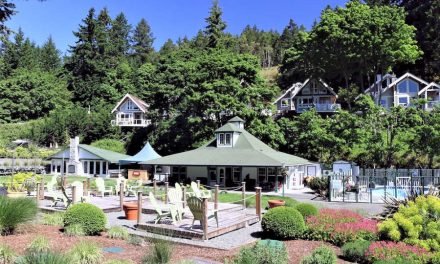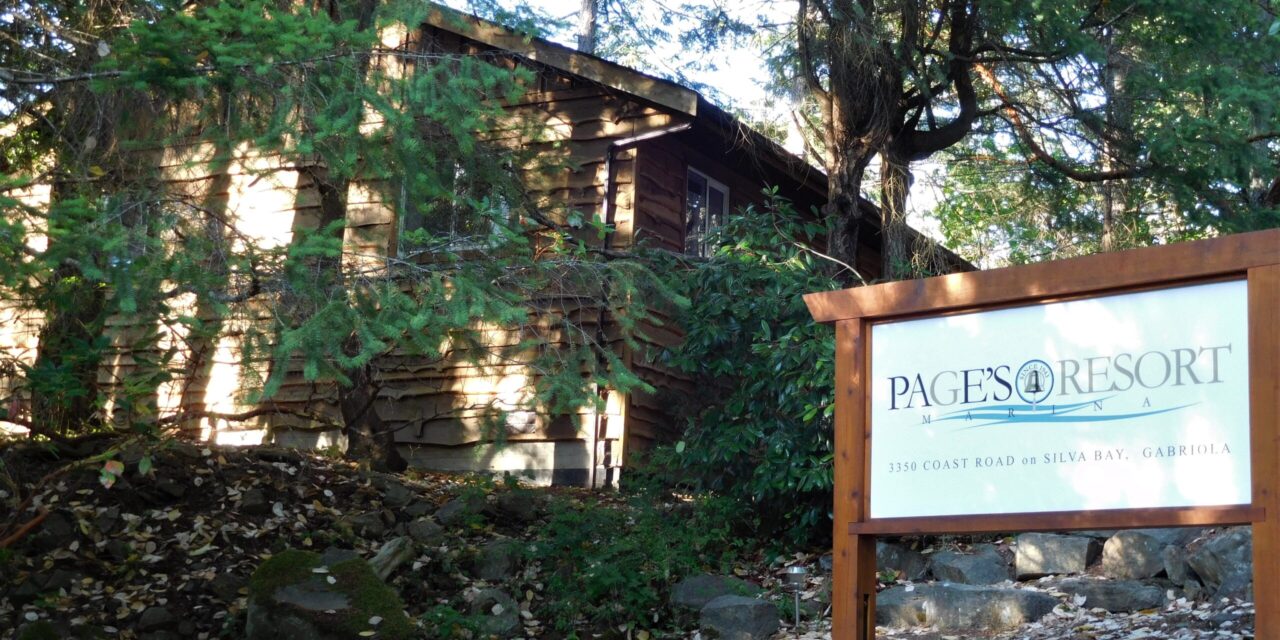
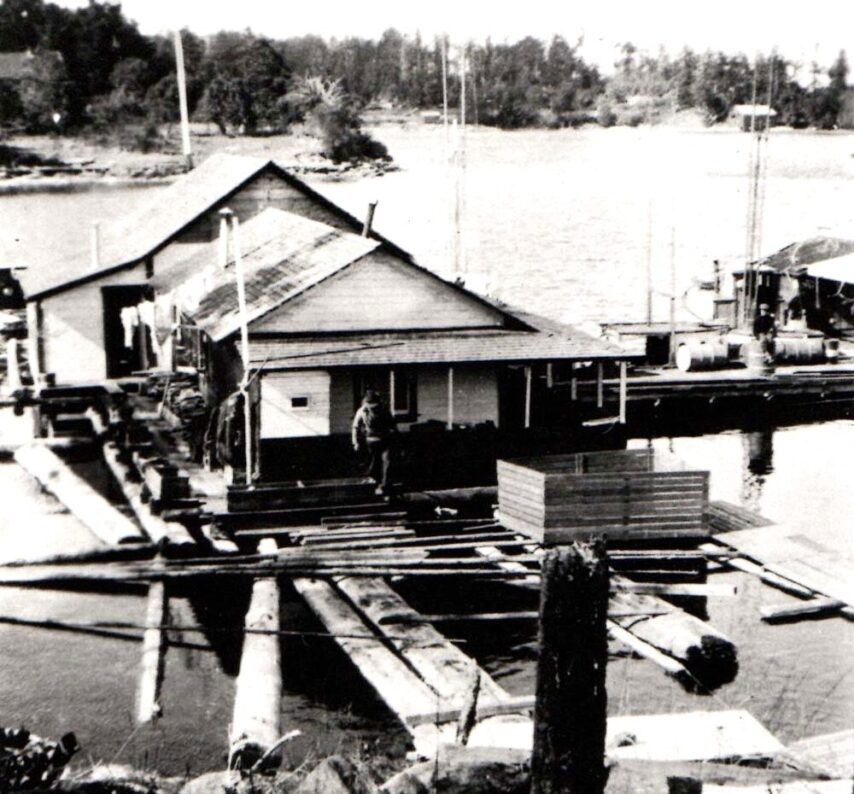
Did you know that Page’s Resort & Marina on Gabriola Island in British Columbia was a thriving fish camp nearly a century ago? The Koyama Fish Camp was operated on this site in beautiful Silva Bay by Kanshiro Koyama from the late 1920s until the war years, when he was forced to leave his business and property.
In 2020, 80 years after Kanshiro had left his home and business behind, Gloria Hatfield, the current owner of Pages Resort, received a phone call from Kanshiro Koyama’s son, Yosh Koyama. Yosh and his son Tim had found an article that Gloria (and Gloria’s mother Phyllis Reeve) had worked on with the Gabriola Museum and Historical Society about “The Japanese-Canadians of Silva Bay 1918-1942;” Yosh was eager to meet and tell the story of his father, Kanshiro Koyama – a hard-working man whose world was smashed, and the story of a son who confronted prejudice in both Japan and America.
Daniel “Yosh” Koyama provided many details about his father’s life, which are shared in part as follows.
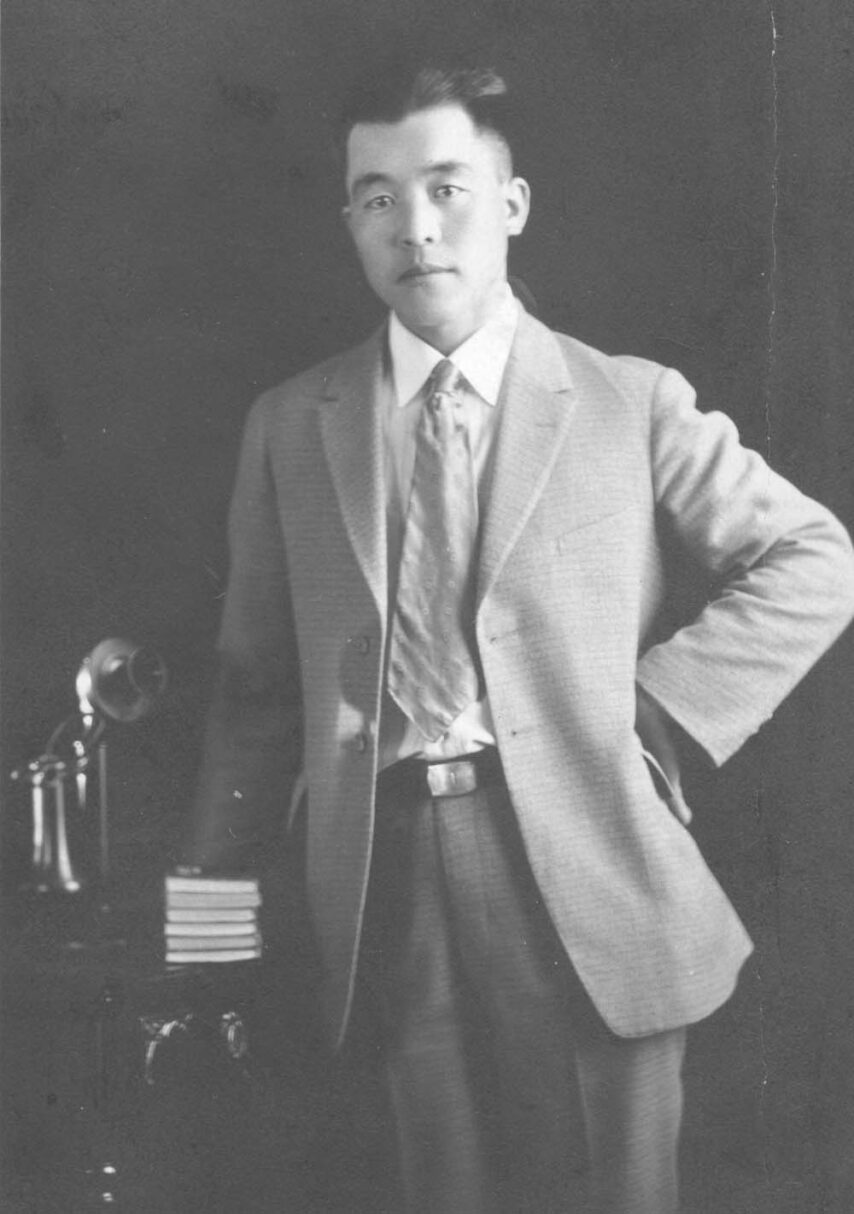
In the Beginning. Kanshiro Koyama was born in 1898 in Mio-mura, a tiny fishing village in Wakayama Japan, the fourth boy among seven children. By the time Kanshiro reached his teens, there was little arable land and no large areas to fish, almost 70% of the townspeople had emigrated to North America. He joined his siblings in the Nanaimo area and then later on Gabriola Island. Kanshiro fished the Strait of Georgia and the west and south coasts of B.C. He purchased catches from other fishermen and transported fish to the Vancouver Wholesale Markets and canneries. Around the same time, he became the proprietor of the fish camp in Silva Bay. As told by Yosh, “he always had a contagious smile and an eagerness to help others. He would have known the Page family, fishermen based on Galiano Island.”
The War Years. On one of his regular return visits to Japan, he married Haruko Shima and brought her back to Canada, but she later returned to Japan where she gave birth to Kanshiro’s two sons, Kazu and Yosh. “Then war came and Kanshiro’s world turned upside down. The Canadian Government confiscated his boat without compensation and gave him 72 hours to get rid of his personal belongings . . . he went on his own volition, looked up friends in Kamloops, BC and relocated more than 100 miles from the British Columbia Coast.”
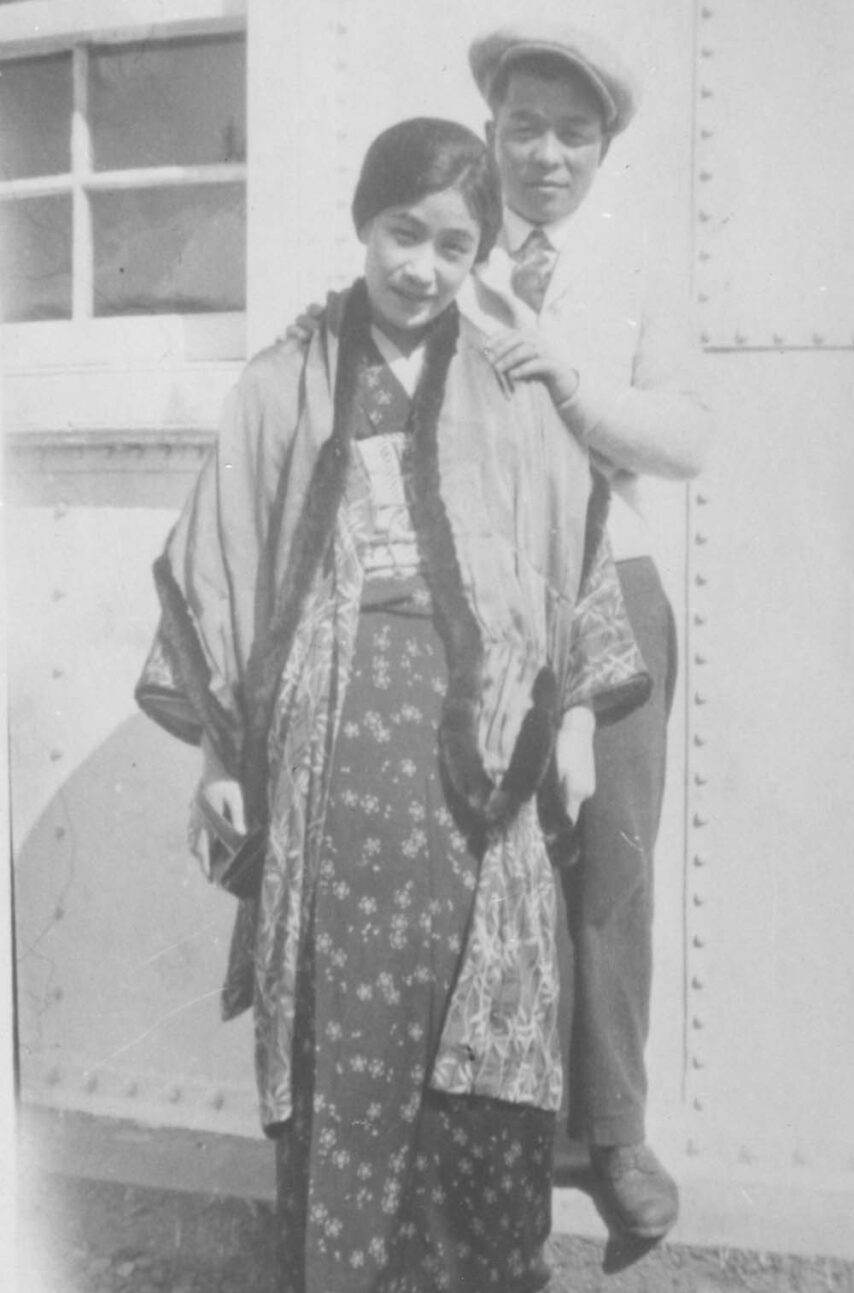
“Koyama’s Fish Camp in Silva Bay belonged now, and for the next 44 years, to Les and Jack Page, who would expand the store and the docks until it gradually became Page’s Resort and Marina. Kanshiro knew and liked the Page Brothers, but he no longer had a home on the Coast.”
When war came, the first thing the Japanese Government did was freeze all assets. Yosh’s and Kazu’s mother couldn’t receive money and their rich lifestyle was shut down. Yosh’s mother closed down their gorgeous two-story house by the moat of Wakayama Castle. Over the next few years, Kanshiro Koyama’s family in Japan lived a life of poverty. Whenever the family moved, they had to make a report to the military police and file a family registry, including the Canadian address of Kanshiro Koyama. “Wherever we moved we were looked at as enemy aliens . . .I had to change grade schools 11 times . . .I used to get in so many fights and poor Mom had to appear and apologize to school authorities” noted Yosh.
Remembrances. Kazu, Yosh and their mother and grandmother survived the bombing of Wakayama City, but their house was destroyed and “anywhere we went were dead bodies . . . the horrors of war. Many old photographs were destroyed in our house during the Wakayama fire bombing. One photograph that I remember vividly and was very fond of was a picture of my Dad and his dog on his boat in Silva Bay. I wish I still had this picture to share.”
When the war ended in August 1945, Kanshiro Koyama learned through the International Red Cross that his family in Japan had survived the bombings. Kanshiro wondered if he would be allowed back to the West Coast of Canada. He waited another year and decided to return to Japan in 1947 on a Canadian Government repatriation ship, “never to return to the land that he learned to love and to fish and farm.” It wasn’t until 1949 that Japanese Canadians were permitted to return to the West Coast and travel restrictions lifted.
The Latter Years. “Dad’s personal life was starting to fall apart, and my mom and dad went through a divorce.” He took up farming to support the needs of his two sons and eventually met a new woman. “My brother . . . moved in with our real mom . . . I decided that I would stick with my dad.”
When Yosh finished high school, it was time to apply for the best work available. He passed the academics test with flying colors and was only one of two finalists. “Then came the interviews and that was when they brought up my parents’ divorce. I did not get the job.” Yosh found a job at the Air Force Base where he made a good friend, a Navy chaplain, who helped him with entry into the U.S. Yosh was given a visa and his dad had enough Canadian dollars left in the bank which he mailed to an uncle for sponsorship. Kanshiro Koyama, along with his new wife, came to “sunny California” and lived with Yosh for a number of years. After working and saving up enough money, Kanshiro returned to Japan where he built a western-style home in Mio-mura. “After going through war, through racial hatred, prejudice and discrimination, but with love and friendship along the way, he died in 1975.”
The Next Generation. Timothy Koyama, son of Yosh Koyama, took multiple vacations with his father to the Nanaimo region where he was told that his grandfather, Kanshiro Koyama was a fisherman. They also traveled to the old fishing village of Mio-mura in Wakayama, Japan where Kanshiro is buried. Tim says “the lighthouse there flies both the Japanese and Canadian flags.”
Tim Koyama noted that he came across a story written in 2017 by the Gabriola Museum in BC regarding the Koyama Fish Camp, and its being on a list of historic sites with significance to Canadians of Japanese descent. He also found supporting reference, written by Phyllis Reeve.
Timothy Koyama writes, “I emailed my father, now 87 years old and suffering from COPD and severe spinal stenosis. I inadvertently opened up some old wounds. My father’s story is difficult to believe, and includes many family struggles and tragedies during a difficult time in our world history. But his story also includes rebuilding and starting anew . . .”
Waggoner would like to thank Gloria Hatfield at Page’s Resort & Marina for bringing this important and interesting history to our attention to be shared with others.
Header Photo: L. Landon
Photos: Koyama Family Photos
Gabriola Historical Museum Society