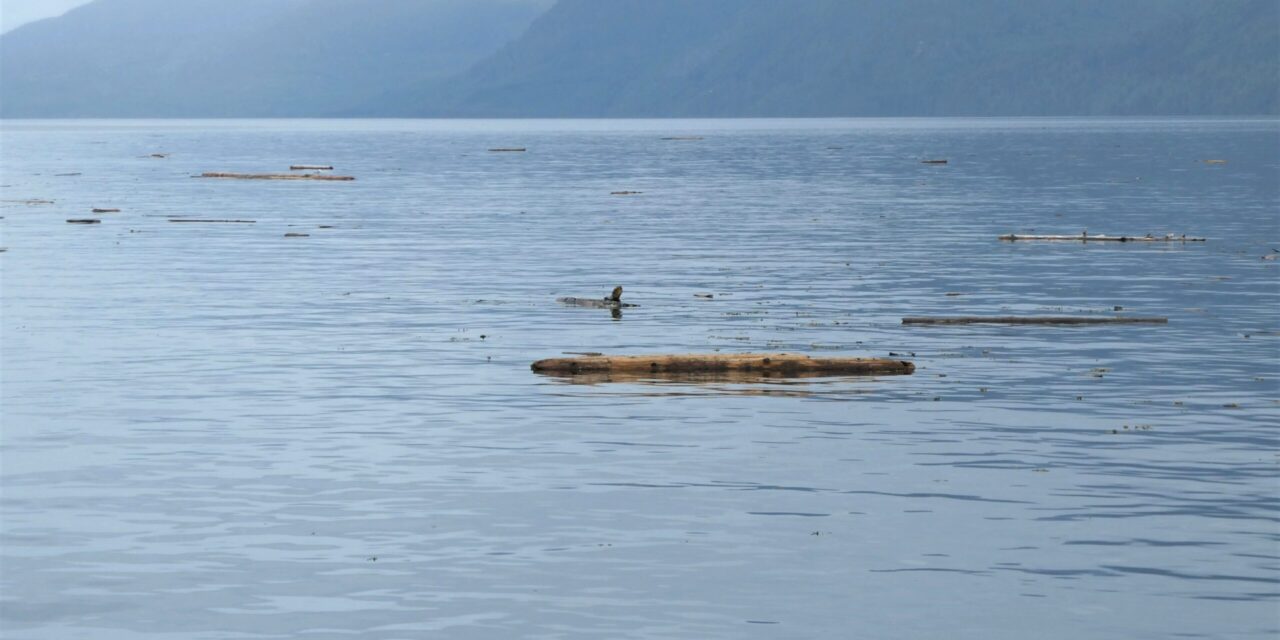
Hitting logs and debris in the water can mean thousands of dollars in repairs, something no boater wants to face. Whether your boat is a trawler style or a fast boat, captain and crew must remain vigilant at all times to prevent hitting logs that can cause significant damage to a boat’s prop and/or shaft, not to mention the gelcoat.
If a prop or shaft sustains damage, a vibration will be felt when running the engine, requiring a haulout and time in the boatyard. Unfortunately, this usually happens at the most inopportune time, interrupting your well-laid plans for a summer excursion.
Logs tend to accumulate in clusters or lines brought together by tides and currents. This is especially true during king tides, large spring tides, and after heavy rains when logs are washed away from the shoreline and from rivers out to sea. Logs are hazards that interfere with navigation for both commercial and recreational vessels. Adding to the collection of logs is the occasional sluffing of logs from log booms being towed by tugs to local mills. In January 2023, a Washington State ferry was temporarily put out of commission after striking a log in the water, causing damage to a prop.
Thankfully, the U.S. Army Corps of Engineers, along with some ports and municipalities have vessels that salvage these stray logs. In Puget Sound, Captain Skip Green and his crew aboard the 104-foot vessel m/v Puget spend four days a week gathering logs from waters around Whidbey Island, Camano Island and elsewhere in Puget Sound. Using a long pike pole, a crew member guides the log close to the vessel, then crane operators using a grapple with a steel claw hoist the log(s) onto the vessel. It’s a public service, much appreciated by all mariners.
After gathering and sorting the stray logs, select pieces are used for wood fuel pellets, and other products, but most of the debris went to landfills; that is until George Blomberg, an environmental program manager with the Port of Seattle, came up with a bright idea. Migrating salmon need nurturing plant life, and shorelines lost to industrialization need revitalizing with anchored logs for fish and plant habitat.
The just completed Duwamish River People’s Park is now the final resting place for 900 of the largest logs Captain Green and crew collected over the last 10 years. The logs were covered in mulch and planted with 30,000 native shrubs and trees. Located across the waterway from Boeing Field, the previous gravel and concrete site is now a 14-acre marsh land with nearly a mile of green, living riverbank. The park is the fifth site the Port has restored, using salvaged logs.
Yes, there will always be logs in our navigable waters, but the next time you see a log – let’s hope it will be salvaged and put to good use – perhaps used as a special landscaping feature, as art, or for a revitalized habitat.