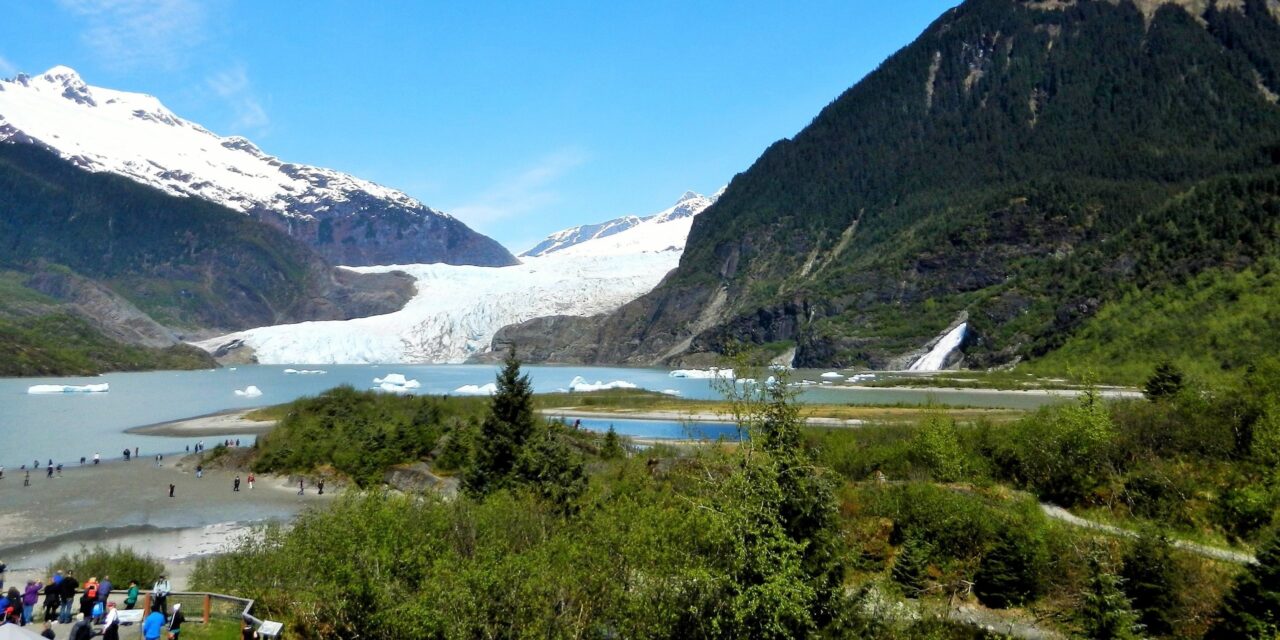
Mendenhall Glacier is the only glacier in Southeast Alaska accessible by road. The Juneau icefield drops over 13 miles and its active face often calves icebergs and brash into its lake. The visitor center overlooking the lake and the scenic trail to Nugget Falls make for a beautiful setting.
Recreational boaters visiting Juneau frequently make arrangements to rent a car in order to visit Mendenhall Glacier as well as the historic mining sites around Juneau. Boaters wanting to see the glacier can also take the local city bus and then walk 1.5 miles to the glacier site, or call a city taxi. Hundreds of cruise ship passengers arrive by tour bus every day during the spring and summer months, inundating this pristine area. When the visitor center was built in the 1960s, there were 23,000 visitors annually; today, about 700,000 come to the glacier each year.
Due to the increased visitations at Juneau and subsequently at Mendenhall Glacier, the Forest Service and the City of Juneau have some exciting plans for improvements at Mendenhall to facilitate growth management. The plan includes a new welcome center and upgrades to the old welcome center. The plan also includes increasing parking, expanding the trail system, and constructing an amphitheater. An earlier suggestion was to build the new visitor center closer to the glacier’s face since the glacier is currently receding, but this suggestion was not included in the final plan. Frank Sherman, Tongass National Forest Supervisor, indicated that the USFS opted to address more pressing needs like overcrowding, providing additional restrooms, and upgrading the aging visitor center rather than getting people closer to the glacier.
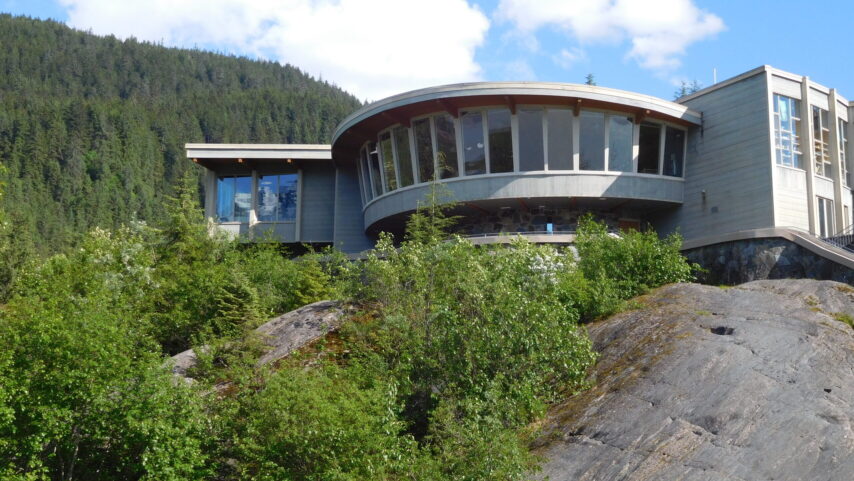
Going forward, the U.S. Forest Service and the Central Council of the Tlingit and Haida Indian Tribes will collaborate on managing the Mendenhall Glacier Recreation Area. More Native culture, history, and language will be incorporated into the programming. The recent memorandum of understanding could also pave the way for collaboration on trail maintenance, watershed restoration, and caring for the fish and wildlife in the area.