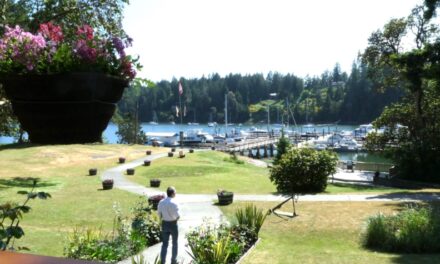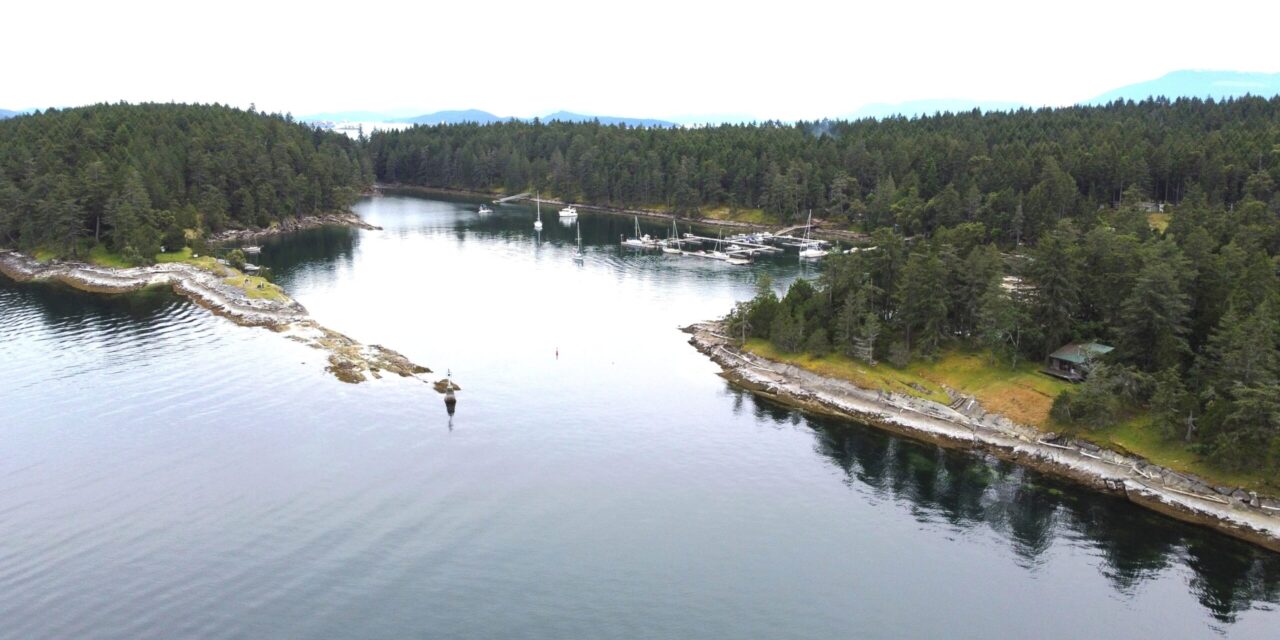
An air of mysticism still hangs over the islands of De Courcy and Valdes, left from the 1920s when these remote islands were occupied by followers of a cult leader known as Brother XII. Edward Arthur Wilson, later known as Brother XII, traveled the world as a mariner and studied world religions. He was a very charismatic individual, who attracted devoted followers world-wide. Many of his followers were socially prominent individuals who gave thousands of dollars to the cause.
After taking on the name of Brother XII, Edward established the Aquarian Foundation in 1927. He published two booklets about his religious teachings, a mixture of spiritualism, Greek mythology, astrology, magic, and Christianity. He created a settlement for his disciples south of Nanaimo called Cedar-by-the-Sea (present day Cedar). The property was fenced, including ten-foot-high gates at the entrance.
The following year, he purchased 400 acres on Valdes Island and built a cabin and an assembly hall on the top of a ridge. This new settlement, called Mandieh, was to be for select disciples who were asked to surrender their possessions since all of their needs would be provided. Most of the funding for the settlement came from a wealthy socialite named Mary Connally from North Carolina.
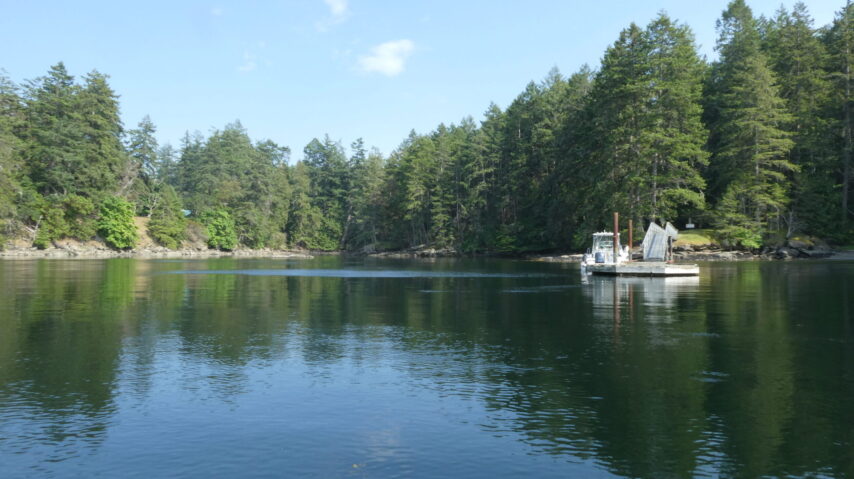
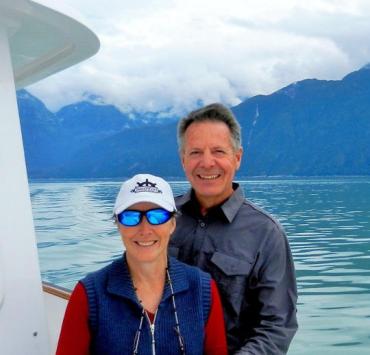
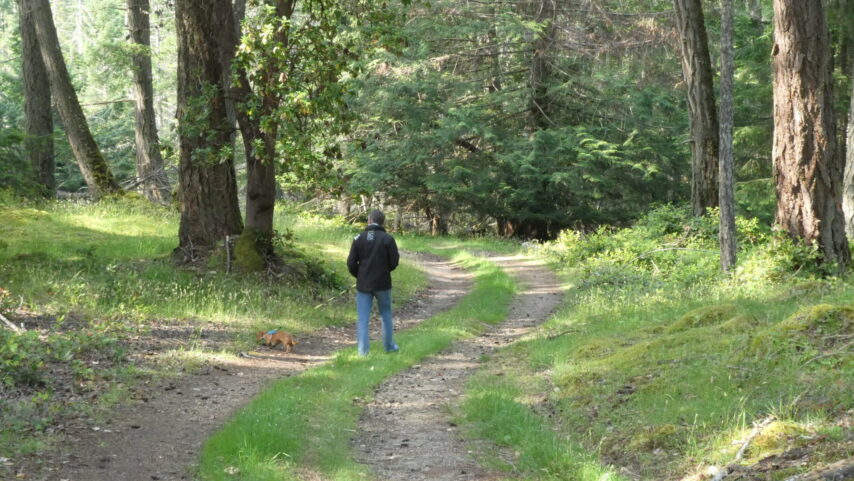
We recently visited Valdes Island by dinghy from Silva Bay, easily done through Gabriola Passage in settled weather and slack current. Wakes Cove Provincial Park at the north end of Valdes Island has a small dock for dinghies, providing access to the trails on Valdes. The trails are more like forest roads that pull at one’s curiosity around every bend, beckoning you on. We eventually came to a very large clearing, could this have been the site of Brother XII’s settlement? Nothing remains of the settlement today, except that feeling of curiosity and awe. We only found what looked like the stub of a fence post. A few permanent residents live on the island today on private property.
Shortly after establishing buildings on Valdes, Brother XII traveled in his tugboat, the Khuenaten, to De Courcy Island, taking Mary Connally with him to show her this beautiful island he wanted as a sanctuary for his new headquarters. A deserted farm on the island would provide all the food required. After returning to Nanaimo, Mary purchased De Courcy Island and Ruxton Island, putting the title in the name of Brother XII’s secretary-treasurer.
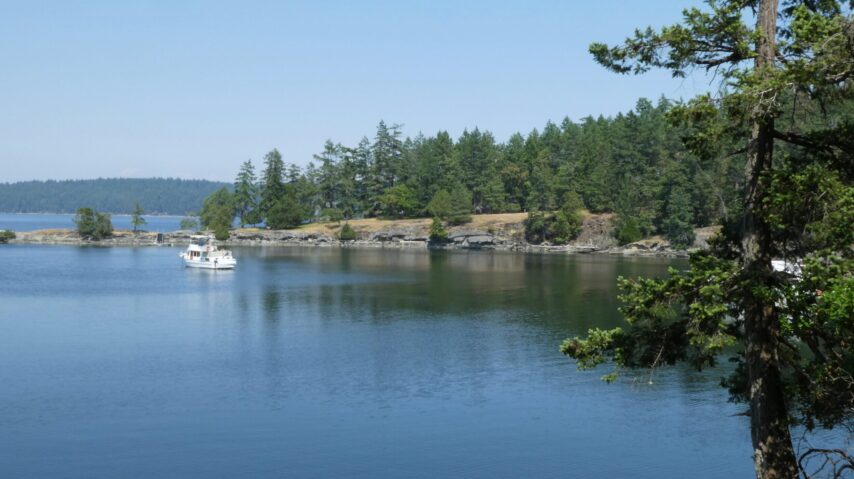
As time went on, Brother XII’s temperament and behavior had become harsh towards his followers. Some followers held out longer than others, believing their faith was being tested. Brother XII was accused of the misappropriation of funds and several lawsuits ensued. In a fit of rage, he destroyed many of his buildings on De Courcy Island; however, the barn and dormitory still remain and are on private property.
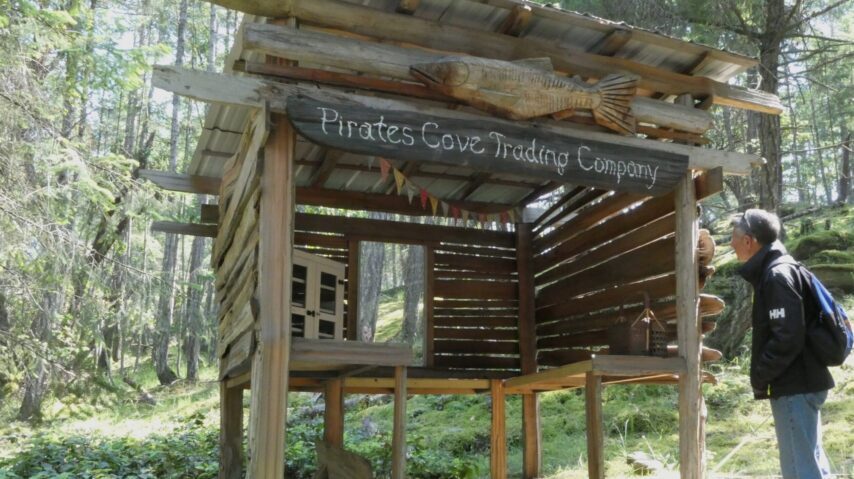
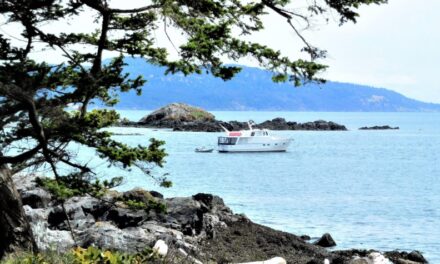
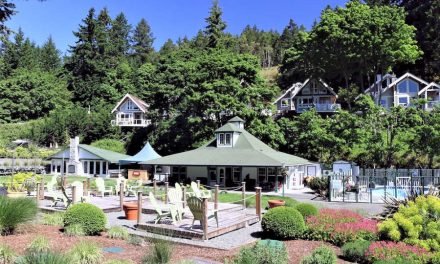
In the early 1960s the island was purchased by DeCourcy Island Estates, which developed the island into its current setting. We recently hiked the trails in Pirate’s Cove Marine Park on beautiful De Courcy Island and the road that runs up the middle of the island with private residences located on both sides. There’s a small seasonal bakery stand on the road south of the private marina and another stand with convenience goods across the road from the marina. It’s an interesting look into present-day island life.
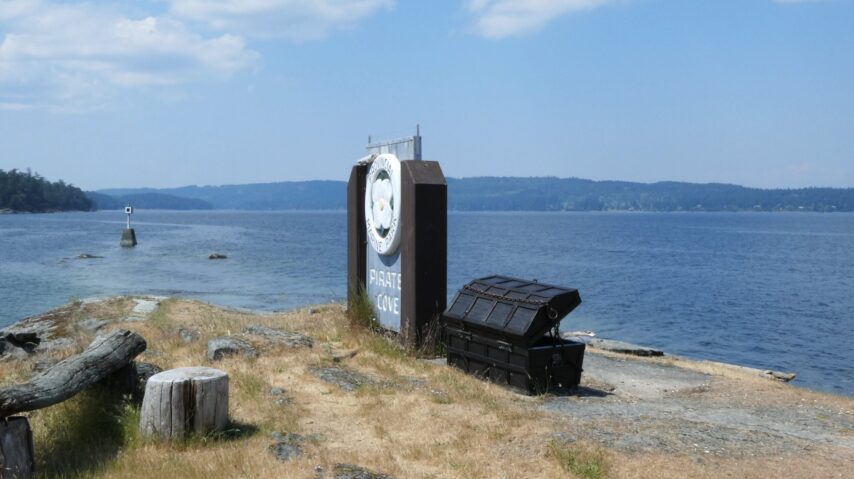
In April 1933, Brother XII fled the islands to avoid criminal prosecution. It is said that he amassed $500,000, a great sum at the time. He converted the money to gold coins and stored them in pint jars. It is not known if he buried the jars on De Courcy Island or took the coins with him back to his childhood home in England, where he died a mysterious death in 1934. Perhaps the symbolic treasure chest, seen at the Pirates Cove Provincial Marine Park entrance on De Courcy, serves as a reminder of earlier times and the continued hunt for his buried treasure!