Captain Darwin A. Jensen: Greetings fellow boaters! It is my honor to have the opportunity to reach you all. As an avid boater and fisherman myself, I share your excitement in hitting the water this summer. As Commander of Coast Guard Sector Juneau, I am responsible for an area extending from Dixon Entrance to Icy Bay, near Yakutat. While Southeast Alaska remains one of the most geographically striking and biologically unique places, our fickle weather and cold waters can be dangerous. Lt. Catherine Cavender, a member of my team, has put together the following article with helpful suggestions while cruising Southeast Alaska. Please take our safety suggestions to heart.
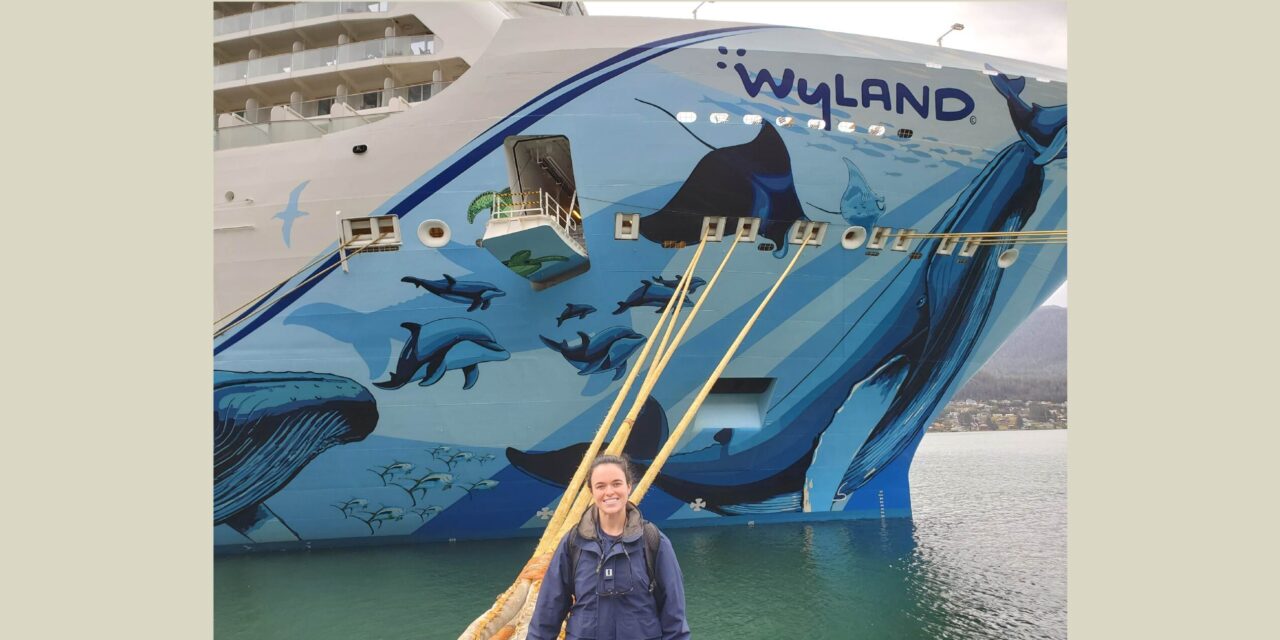
Summertime is officially back in Southeast Alaska! The year 2022 brought back a soft start to tourism in Southeast Alaska, and 2023 is on track to be one of the largest on record. I’m Lt. Catherine Cavender Stationed in Juneau, Alaska as the Coast Guard Sector Juneau Waterways Management, and Inspected Facilities Division Chief. I have the distinct pleasure of working closely with a variety of our port partners who all bring unique concerns to the table. I recently spoke to a Cruise Ship captain who remarked that Alaska is especially popular this year among tourists who are excited to travel post COVID-19 Pandemic. If you find yourself in Southeast Alaska, please consider the following information pertinent to safe boating in the area:
- It is important to be aware that Southeast Alaska is home to several narrow channels that are frequented by cruise ships, oil barges, and freight traffic. Smaller vessels transiting in these areas should recognize that deep draft traffic cannot deviate from the center of the channels as easily as shallow drafting recreational traffic. When in doubt, hail another vessel on Channel 16. Boaters are advised to monitor both Channel 16 and Channel 13.
- Use the utmost caution when transiting in the vicinity of ice. Remember that 90% of an ice structure will be underwater and will likely be difficult to see. Ice formations are traditionally in the vicinity of silty waters discharging from nearby glacial melt rivers and waterways.
- The U.S. Coast Guard operates radio repeater sites throughout the United States. Specifically in Southeast Alaska, these sites are difficult to maintain and regularly succumb to the wind, rain, and dense clouds we experience. Keep an eye on the NAVCEN’s BNM database that will keep the public up to date on outages and other relevant concerns for mariners. Broadcast Notice to Mariners Search | Navigation Center (uscg.gov)
- Plan on researching which ports can accept garbage. Neither plastic nor oil may ever be discharged into the water. Alaska also has specific rules regarding wastewater discharge limitations. No grey or black water may be discharged within three nautical miles of any Alaskan shore.
- Oil spills can be time consuming, costly and result in increased oversight from state and federal incident management organizations. Keep a close eye on your boat’s systems. Manually monitor fueling progress and allow time for air venting. Avoid the urge to solely rely on gauges. Consider keeping oil sorbet pads close by to quickly address any possible spills. In the event of spill or discharge, call the U.S. Coast Guard National Response center at 1-800-424-8802. Mariners should note that automatic bilge systems are a great way to keep rainwater from affecting the stability of your vessel, however, an automatic bilge system does not absolve the owner of the responsibility to ensure oil isn’t discharged. Keep an eye on bilges hosting automatic bilge pumps and ensure these spaces are kept clean and oil free.
- Coast Guard Sector Juneau waterways management wants to hear from you! The Coast Guard is responsible for hundreds of aids to navigation (ATON) throughout Southeast Alaska. We rely on mariners like you to let us know when ATON are discrepant. Should you come across a sunken or missing buoy, or any other damaged aid, please let us know at Sectorjuneauwwm@uscg.mil. Pictures, exact locations, and a description of the problem are always appreciated and helps keep other mariners safe.
- You don’t know what you don’t know! Our Coast Guard Auxiliary personnel are trained to help you get your boat ready for the summer season. The Division 1 Commander, Brett Wells, is the best contact for all things Southeast, he can be reached at: brettwells.ak@gmail.com
- When interacting with whales and marine mammals, all mariners should note that the MMPA (Marine Mammal Protection Act) prohibits feeding, hunting, harassing, killing, capturing, injuring, disturbing or encouraging a change in behavior of any marine mammal. Mariners should be prepared to back down at the first sign of a disturbance. All pets must be controlled in the presence of marine mammals. Vessels must stay 100 yards away from sea lions, seals, whales, and other marine mammals, but 500 yards is considered a more responsible distance.
- Within one nautical mile of a whale, speeds should be reduced. The area within 600 feet of whales must be a no wake zone. The acceptable speed in a no wake zone is usually considered to be at five to seven knots. Turning your engine off and allowing your vessel to drift closer to a whale is not acceptable. Please also note that no matter what situation you are in, you are responsible for your vessel, any potential oil discharge, and the safety of those onboard. You should never put your vessel in a compromising situation for the sake of viewing marine mammals.
Article by: Lt. Catherine Cavender, Coast Guard Sector Juneau
Waterways Management and Inspected Facilities Division Chief