As Peter Ricks of Novamar Marine Insurance likes to say, “Insurance, it’s about as exciting as watching paint dry and is the last thing any boater wants to think about.” But insurance for your vessel can mean the difference between an accident remaining an accident, or an accident becoming a launching pad for financial ruin.
Over the last few years there has been a renewed interest in boating with more boats on the water. Like everything else, insurance premiums are increasing, due in part to social inflation, supply chain disruption, and the prevailing legal climate. When the pool of monies gets low, premium dollars need to be added to pay for claims. Some yacht insurance programs have capacity limitations and are being asked to absorb this excess demand for coverage at a time when their reinsurance and claims costs are skyrocketing. “The premium pool needs to remain full to float all our boats” says Peter Ricks.
Novamar predicts that more capacity will enter the market again when premium pricing and losses stabilize, supply chains get back to normal, and social inflation moderates, but that may be a year or two out. In the meantime, we can all do our part by maintaining our boats and not taking unnecessary risks.
WHAT IS INSURANCE?
Insurance is simply risk transference; an insuring company agrees to financially protect the vessel for partial or total loss in return for a premium (cost) that is a fraction of the insured value of the boat. The coverage is inexpensive relative to the vessel value because the insured (you) are in a pool of insured that share the cost of providing coverage. If a claim occurs, monies are paid out of that pool.
From the insurance standpoint, honesty is mandatory. A new boat owner (especially on larger vessels) must be upfront and open with their agent so the risk (you and the vessel) can be properly considered.
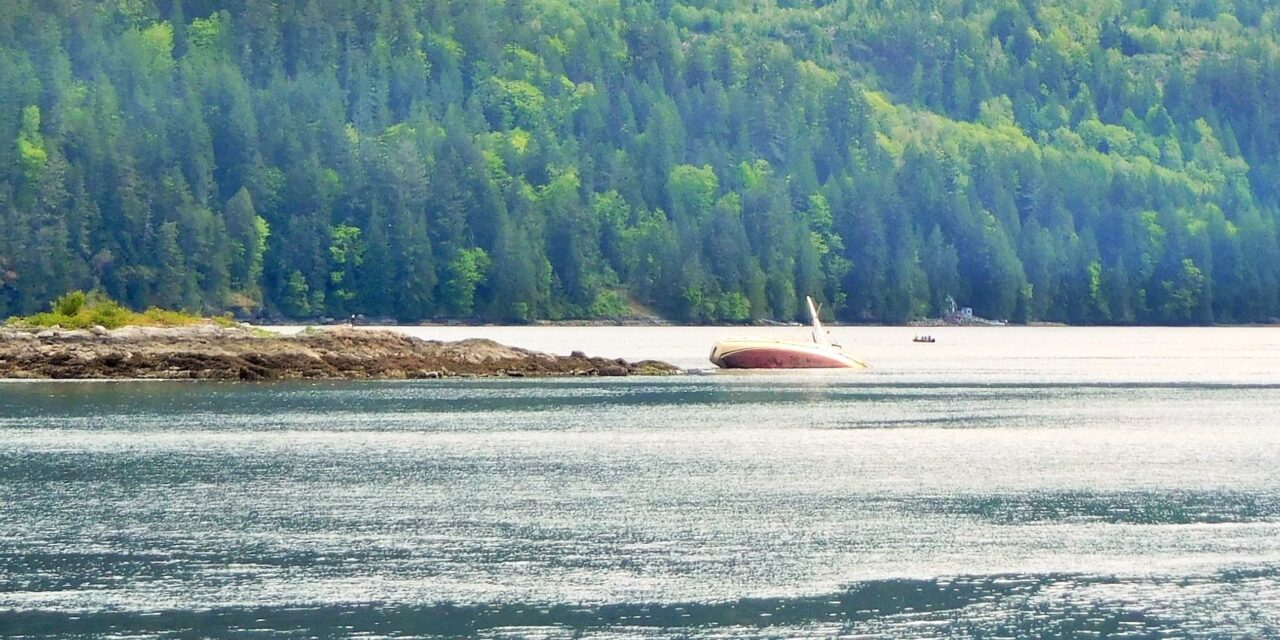
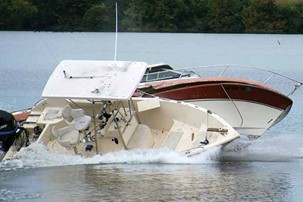
Sudden, direct, accidental, physical loss situations are the very definition of a claim- running aground, striking a deadhead/submerged object, overheating an engine due to kelp or other material blocking raw water intakes. These (and more) are the reasons we have insurance. Not being forthright can lead to a claim not being a covered event (called material misrepresentation).
WHAT IS COVERED?
As boaters, we need to protect our vessels against damages we may cause to our own vessel, other boats, and the environment. Such coverages include:
- “Agreed Value Hull” or Property” – this is coverage that protects your vessel against damage, and satisfies the insurance requirements of your lienholder (bank loan holder). “Agreed Value” is a settlement type- this means that the face value of the policy will be paid in the event of a total loss of your vessel.
- “Liability or Protection and Indemnity”- the key word is liability. This coverage benefits others that you do damage to, such as colliding with another vessel, plowing into a dock, being the source of a fire that burns other boats, and more. A higher limit is better with regards to liability coverage.
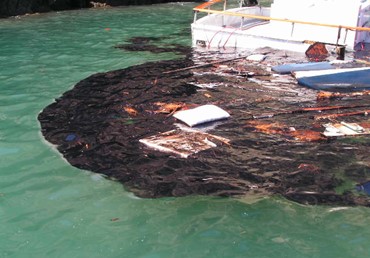
- A separate coverage area that is also liability coverage is Pollution for oil, fuel, and other pollutants your boat may discharge into the waterways. This is based on Federal law passed in 1990 as a response to the Exxon Valdez oil spill disaster in Alaska in 1989 (nearly 11 million gallons of crude oil was discharged into Prince William Sound). You should ensure your policy covers Pollution Liability coverage equal to the current Federal mandated maximum of $997,100.
A personal liability umbrella policy is a policy that adds additional coverage to your personal property, but as “excess coverage”- that is, the vehicle/home/vessel policy’s liability coverage must be exhausted before the umbrella comes into play. Of note- an Umbrella Policy generally does not cover specific marine related exposures such as salvage, wreck removal, or pollution
IS “EVERYTHING” COVERED, AND WHY DOES INSURANCE SEEM SO EXPENSIVE?
Always read and review your policies for specifics on coverage, and never be afraid to ask your agent direct questions about the policy. No vessel insurance policy covers everything, so it is critical that the policyholder understand the policy- and ask their agent about the bits that are confusing. The agent is (well, should be) the subject matter expert on the policy they represent, and any policy should reflect how the vessel is going to be used. It doesn’t make sense to have a policy with full West Coast navigation when your navigation is from Seattle to Desolation Sound.
Actuaries now are using more sophisticated data analysis and modeling to closely review results of all insurance lines, including yacht insurance. The cost of a policy is based on a number of factors- the year, make, model, and purchase price of a vessel, the type of fuel onboard, vessel construction (fiberglass, wood, metal), the propulsion type (inboard or outboard, power or sail), how fast the boat will go, the navigation area of the vessel, the experience (or lack thereof) of the vessel owner, loss history, and more. Each factor is weighed in calculating the annual premium. There is no real “rule-of-thumb” in insurance costs, as each policy is tailored to both individual and vessel- so relying on the expertise of a friend or dock mate as to the cost of coverage is really an exercise in futility. Unlike automobiles, there are far more variables for insuring yachts since no two boats are truly alike.
BOATING IN THE PACIFIC NORTHWEST
Our boating area is vast- from Olympia to the north end of Vancouver Island. Coverage can be tailored for your desired navigation, whether you travel north via the inside passage to Desolation, the Broughton Archipelago, or circumnavigate Van Isle. The more challenging navigation on the west coast of Vancouver Island or navigation to SE Alaska will be reviewed by underwriting very carefully for vessel capability and owner experience, due to the remoteness of the areas.
As a general policy tenet, your tender is covered as part of the main vessel if in service to the main vessel.
WHO HAS THE BEST POLICY?
Contrary to popular belief, there is not a “best policy”. Each insuring company has its own appetite (level of risk they are willing to assume) and has its own criteria for offering coverage. Company A may be OK with a first-time boat owner on a 45’ vessel, while Company B requires significant experience to consider the risk. The best policy is one that most closely meets the needs of that particular boater.
WHERE DO I TURN FOR INSURANCE HELP?
Whether it’s the experienced staff at Novamar Insurance or another provider that focuses on marine insurance, you should get to know passionate, experienced and knowledgeable marine insurance professionals and providers. The marine agent must engage with you so they understand your needs, and then advise you on the best course of coverage based not on price, but coverage.
Those of us fortunate enough to have grown up in and around boats appreciate what a great lifestyle boating is. Sharing that passion with close family and friends, in a sometimes frantic world, is what makes boating so special. Regardless of the direction in which the yacht insurance market continues, we’re confident that when working in tandem with an experienced marine insurance specialist you will be able to secure the proper coverage needed to protect your legacy, investment, and adventures without running aground.
Reprinted article by Peter Ricks of Novamar; edited for current trends.
Header Photo by Lorena Landon