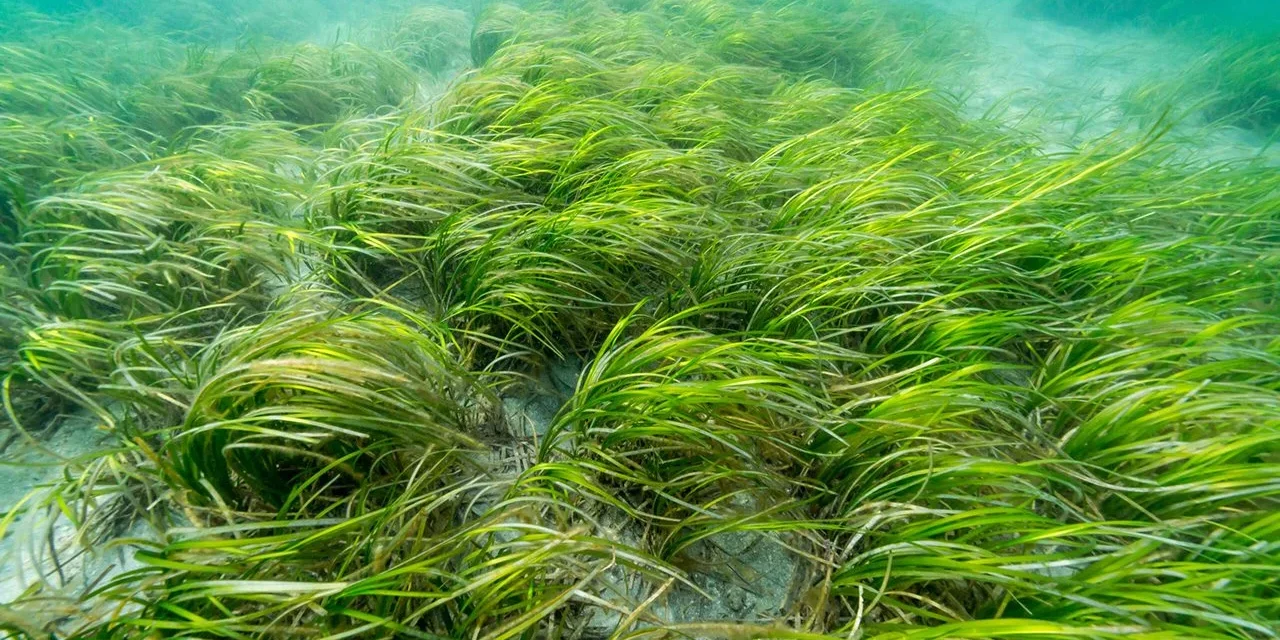
A mixed sandy-mud bottom is ideal for anchoring, but it’s also ideal for the establishment of eelgrass, a seagrass that’s crucial to the ocean’s ecosystem. Notices posted at marine parks and public docks remind boaters to anchor out from shore in deeper water to avoid damaging eelgrass. But why? What’s so important about eelgrass? Eelgrass beds provide important habitat for fish species, filter pollutants, and store huge amounts of atmosphere-warming carbon.
When eelgrass beds are damaged or disappear, carbon is released, warming the ocean. The ability to purge pathogens from the ocean is another important attribute of eelgrass; pathogens can sicken other marine life and even threaten humans. Scientists believe that pathogens, along with the warming ocean, played a part in the devastating sea star wasting disease that destroyed most of the star population on the West Coast. Eelgrass meadows, disrupted by boat anchors, can take years to recover, affecting marine life such as spawning herring and juvenile Chinook salmon that make eelgrass their home. Herring, salmon, and other fish species are important food sources for marine mammals like Orca.
What can boaters do to help protect these vital fields of eelgrass? Eelgrass beds are normally close to shore and are completely submerged, with roots anchored in sandy, muddy bottoms. An anchor can easily pull out the roots and destroy these bedding areas. Boaters are asked to be mindful of where not to anchor. As a general rule, anchor off shore in at least 30 feet of water to avoid anchoring in eelgrass.
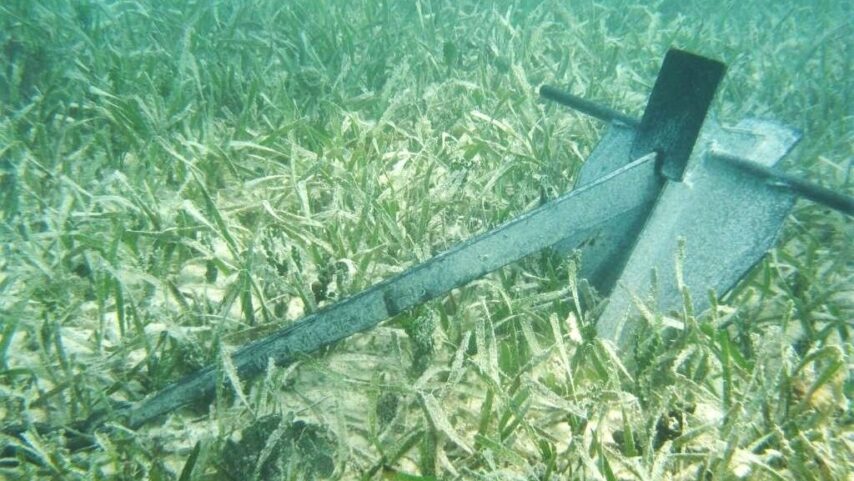
Better yet, use mooring buoys where available. Washington State Park buoys are for boats 45 feet and under; boats up to 50 feet for DNR buoys; BC Park buoys are printed with size and weight limits and sea conditions.
Maps in the Waggoner Cruising Guide show where eelgrass is located in many of the bays throughout the San Juan Islands, and posted signage at most marine parks and public docks in BC depict the locations of eelgrass.
Header Photo: Oceana Canada