Those that have been boating for a number of years, yes us older folks, most likely remember when Canada transitioned to the metric system beginning in 1970, continuing through 1985. Canada’s first formal switch from imperial to metric units occurred on April 1, 1975, when weather reports began using Celsius instead of Fahrenheit. The United States on the other hand chose not to switch to metric; many citizens and businesses of the day didn’t want to go through the time-consuming process nor the expense of changing the country’s entire infrastructure.
Now, the U.S. National Weather Service (NWS) may be taking a small step forward in favor of the metric system. NWS has received input from off-shore sailors (blue-water boaters) that would prefer having information provided in units of meters in National Marine Center products, especially for the high seas. Providing wave information in meters for the high seas would also align with international partners.
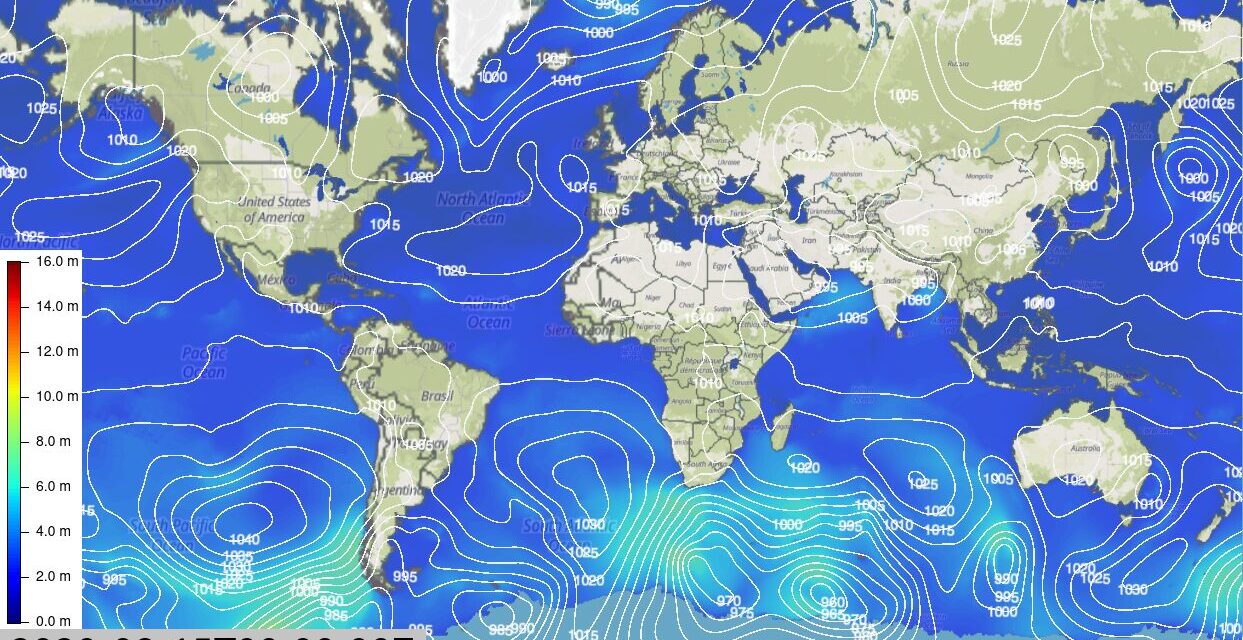
The U.S. National Weather Service is soliciting comments through October 16, 2024, on a “Proposal to Replace the Imperial Unit ‘Feet’ with the Metric Unit ‘Meter’ in National Marine Center High Seas Text and Graphical Products.” Both the Pacific and Atlantic Regions are soliciting comments. Graphical products in this change would include Arctic, Atlantic, and Pacific 24-hour wind and wave forecasts; Atlantic and Pacific wind/wave analyses; National Hurricane Center analysis and forecasts; and Honolulu wind/wave analysis and 24-hr., 48-hr., and 72-hr. forecast charts.
It should be noted that this proposal does NOT affect NWS coastal waters forecasts within 60nm of the coastline. Mariners can submit their comments to the U.S. National Weather Service HERE.
Photo: Meteomatics Weather Service