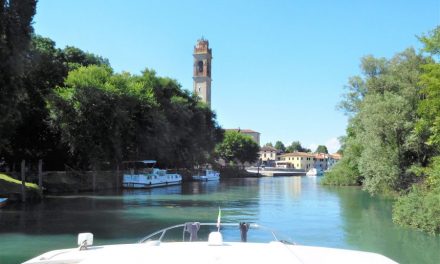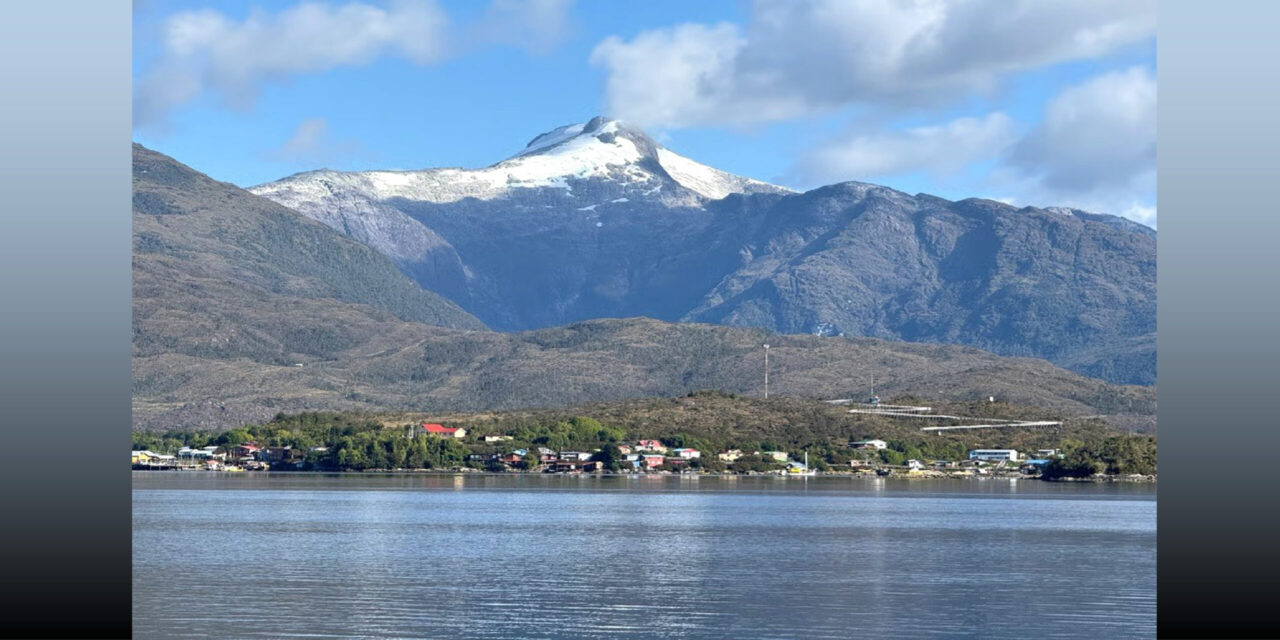
After departing Caldera Chile, the crew of One Ocean entered the protected inlets of Patagonia, stopping at the city of Puerto Montt, with a population of approximately 280,000; Puerto Montt is the capital of Los Lagos and acts as a major commercial hub for Northern Patagonia.
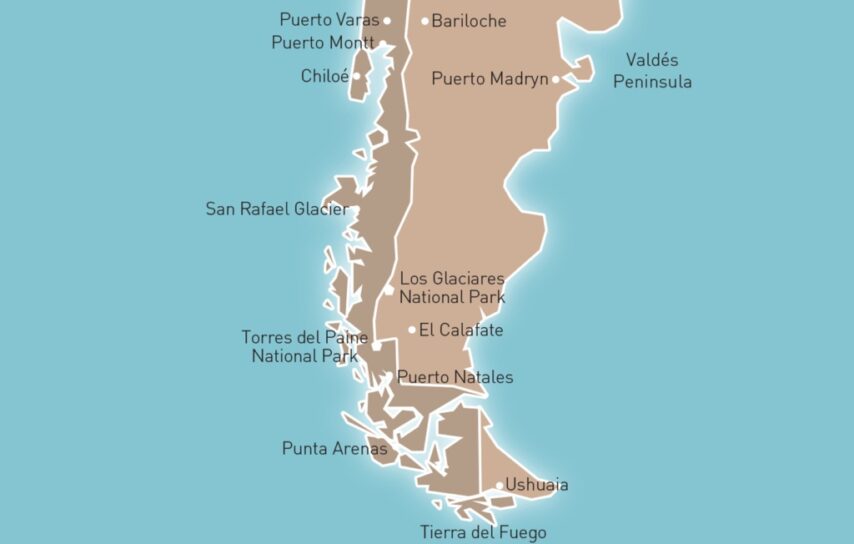
Patagonia, similar to the Inside Passage of the Pacific Northwest, features fjords, temperate rainforests, and glaciers in the west portion, and includes the southern portion of the Andes Mountain Range. From Puerto Montt, One Ocean continued down the “inside passage” of the Gulf of Ancud and the Gulf of Corcovado eventually turning southwest and exiting back out to the Pacific. Cruising in and out of various channels, s/v One Ocean hunkered down along Messier Channel waiting out one of the many storms that define this region of Patagonia.
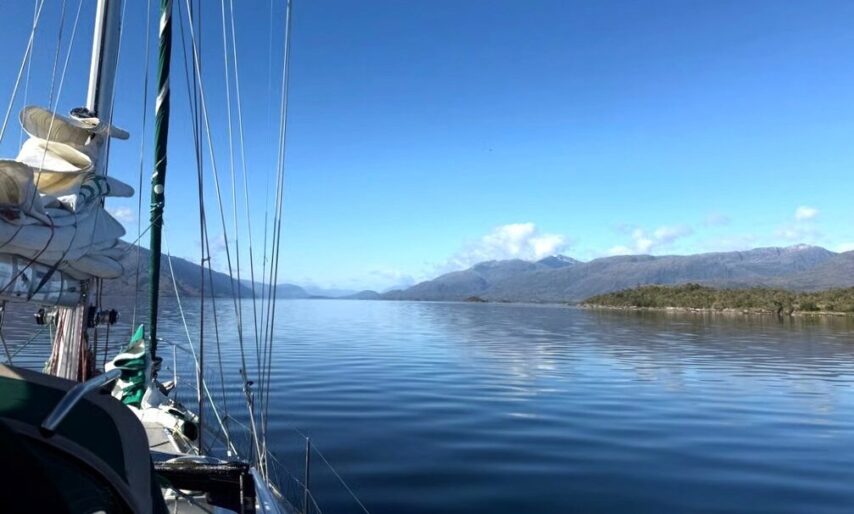
While cruising the beautiful inside waters of Patagonia, the crew of s/v One Ocean weighed their options for rounding the tip of South America. The crew discussed their options, which included the Strait of Magellan, Beagle Channel, or transit the 600-mile-wide Drake Passage.
The Strait of Magellan, which is 20 miles wide (2 miles wide at its narrowest point) is notorious for treacherous Williwaw winds, cold air blasts descending from steep mountains that can reach hurricane-force speeds, causing unpredictable winds and currents. Drake Passage, though relatively wide, is where the exchange of water between the Pacific, Atlantic, and Southern Oceans occur. The Antarctic Circumpolar Current flowing eastward through Drake Passage can reach 40 knots with standing waves of 65-80 feet in height. Beagle Channel, on the other hand, located just north of Drake Passage and south of the Strait of Magellan generally has acceptable sea conditions through the islands, however, strong winds and choppy conditions can occur on occasion.
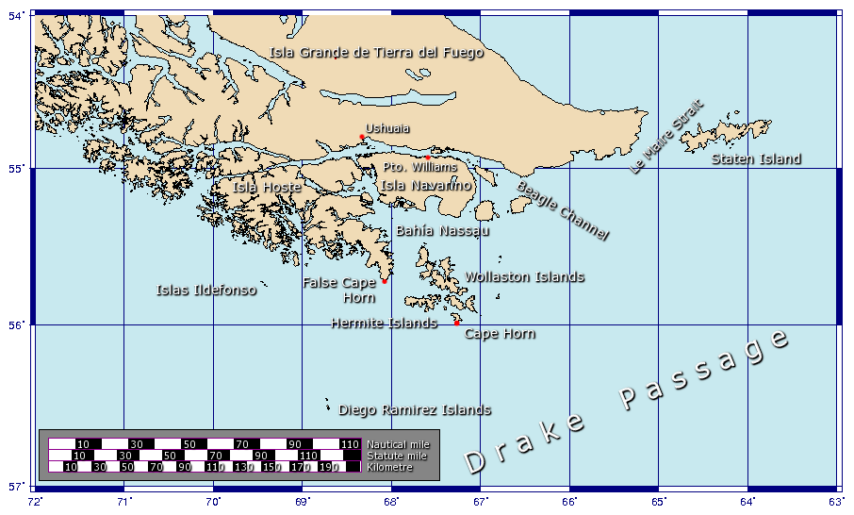
S/v One Ocean chose to transit the 150-mile-long Beagle Channel, which affords the opportunity to stop at the cities of Ushucia, located on the northern shore of the Channel, and Puerto Williams, located on the southern shore of Beagle Channel. Ushuaia (population 83,000) in Argentina is the capital city of Tierra del Fuego Province and is a major tourist hub and a primary gateway to Antarctica. Puerto Williams Chile (population 3,000) is a starting point for hiking the Dientes de Navarino and boat trips to Cape Horn. Puerto Williams is the capital of the Chilean Antarctic Province and is home to a strategic naval base. Both cities claim title as the “end of the World.”
To follow the track of s/v One Ocean, go to oneislandoneocean.com and page down to “Our current location.”
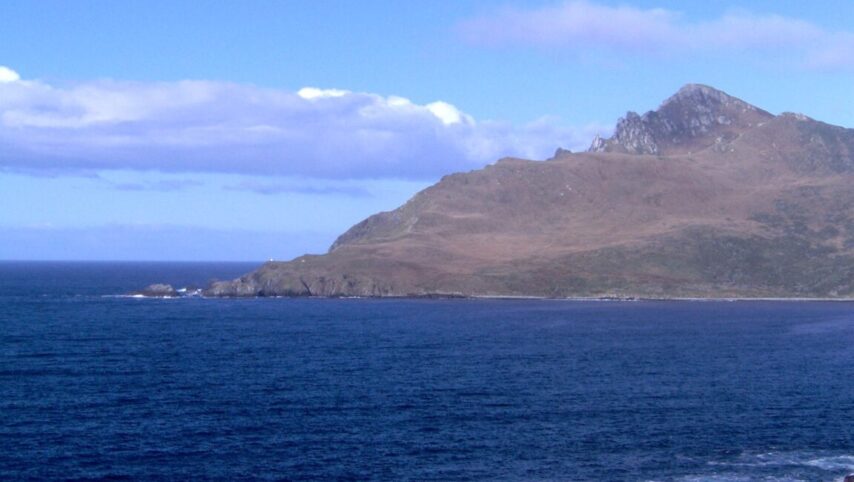
Note: The crew of One Ocean will be deploying a microSWIFT buoy at Cape Horn as part of their ongoing scientific research on their Around the Americas Expedition. You can watch the event live via streaming. The date will be announced a few days in advance – www.youtube.com/@OneIsland.OneOcean
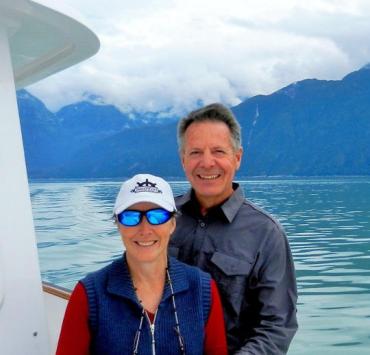
Header Photo (Puerto Eden): One Ocean Crew
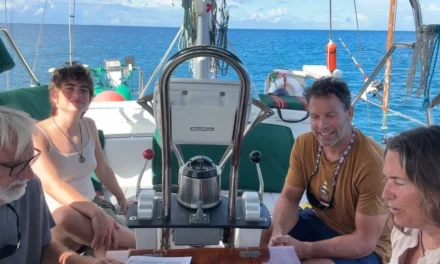
Cruising Patagonia: One Ocean Crew
Patagonia Map: Patagonia Tours
Cape Horn Map: Wikipedia
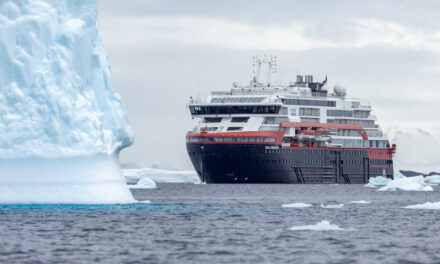
Cape Horn Photo: Wikipedia
Mark Schrader in his online blog shares a bit of history – a British bark named Wager went aground in May 1741 on an island now named Wager Island, the site is where s/v One Ocean anchored one night; the surrounding islands are named after the officers of Wager. Mark says if you like dramatic maritime history, he suggests reading the book WAGER, a tale of shipwreck, mutiny, and murder.
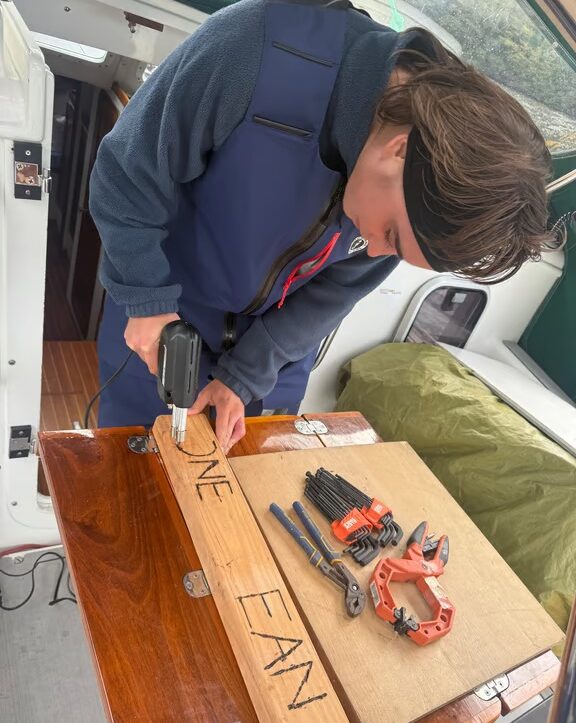
 An old tradition among sailors in the waters of Patagonia is to affix a board with your boat’s name to a tree at the end of Caleta Connor, another anchorage, where the crew of s/v One Ocean did just that, using their soldering iron to burn the name of s/v One Ocean into their chosen piece of wood.