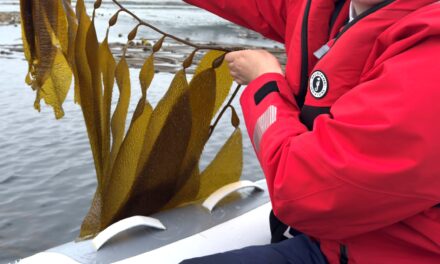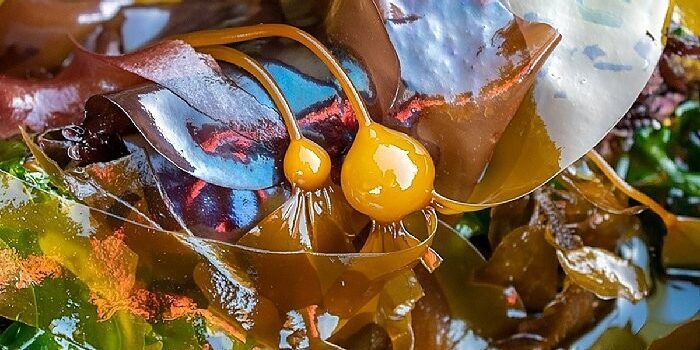
Kelp forests of the ocean are the nurseries for marine life and the support for salmon populations. These forests are the very foundation of the marine ecosystem. Kelp forests absorb large amounts of carbon from the atmosphere which help control climate change. Unfortunately, kelp forests are in decline around the world due to warming temperatures and other factors. These warming ocean temperatures bring an abundance of sea urchins which further devour kelp. Puget Sound has experienced substantial losses of bull kelp over the last century. Forests have also diminished in Barkley Sound on West Coast Vancouver Island and off Hornby Island south of Comox, along eastern Vancouver Island. Diminishing kelp forests accentuate shoreline erosion and the decline in water quality as well as a decrease in wild salmon populations.
Scientists at Simon Fraser University in British Columbia are sending the urgent message that we need to save as many kelp species while these plants are still around. One method is to gather the germplasm or “seeds” of these living plants. A team of researchers, including Dr. Liam Coleman and Associate Professor of Biology Sherryl Bisgrove at Simon Fraser University, have developed a cryogenic freezing technique to preserve and store seeds of bull kelp in a biobank. The technique not only allows the preservation of germplasm or seeds, but requires little maintenance. The intent of the biobank is to allow kelp farmers and environmental organizations to access samples and reintroduce seeds to the oceans.
Although the team has the cryopreservation technique established, they are looking for funding to secure a permanent facility for the biobank as a community asset. The university is currently storing samples in the university’s lab; the lab manager is Silven Read. A permanent facility would allow other coastal species to be stored, including seaweeds and seagrasses.
The biobank project is supported by the Pacific Salmon Foundation (PSF). For more information, contact Sherryl Bisgrove the project lead biologist at Simon Fraser University’s Department of Biological Sciences; sbisgrov@sfu.ca or phone 778-782-5269 (lab 778-782-4442).
Photo: Simon Fraser University