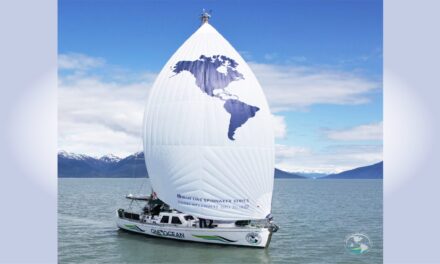
SV/One Ocean and the crew had an incredible crossing of the Bering Sea. We encountered a strong gale for over 30 hours, which allowed us to sail a significant distance (you can read the incredible adventure on Jenn’s blog: Bering Sea Crossing). Once the winds calmed and the sea flattened, we motored the rest of the way.
The night watch was especially memorable—bright skies all night. What an experience. The sun would “set” around 1 a.m., skirt along the horizon, and rise again by 2 a.m.—never leaving us in darkness.
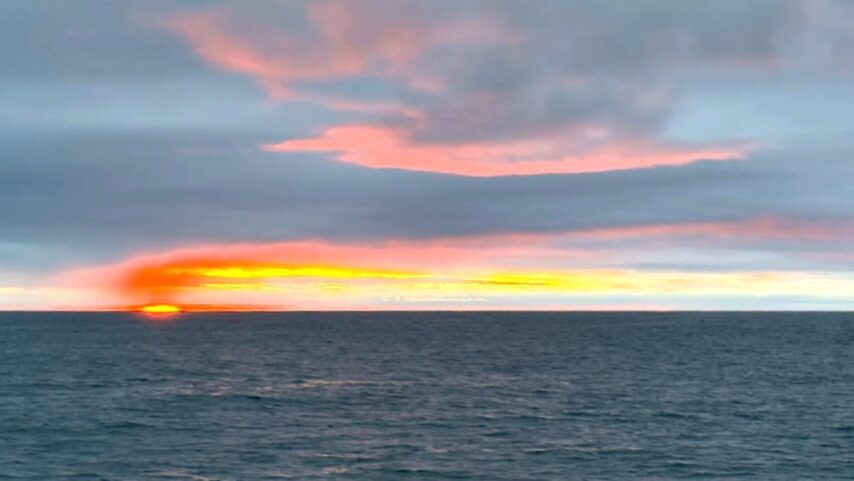
We took a lot of photos. The weather was unusually warm, the sea flat, and the sky glowing. We haven’t had many crossings like that. It just felt so good to finally feel the sun and warmth, but it also felt oddly out of place. I never thought I’d need shorts the further north we sailed!
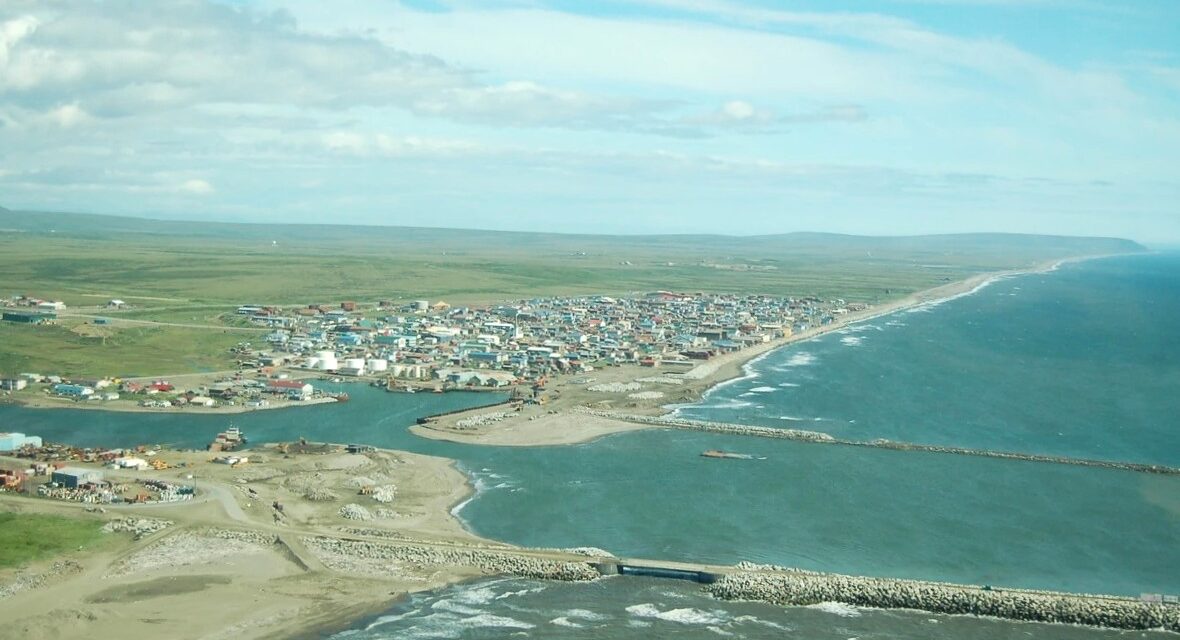
Now, One Ocean is in Nome, Alaska, waiting for the right time to head further north. We’ve been closely monitoring ice reports, talking with locals, and receiving satellite imagery from our collaborator, scientist Harry Stern at the UW Applied Physics Lab. The reality is, the Northwest Passage is currently blocked with “fast ice”—ice attached to the coastline starting in Utqiaġvik (formerly known as Barrow, AK), where One Ocean will round the northernmost point of the United States.
Waiting out ice in a heatwave has been surreal. Yes, a heatwave. We’ve seen temperatures up to 74°F—warm winds blowing across the tundra and dust everywhere. Locals are saying it’s the warmest they’ve ever experienced. It’s unsettling to look at the Utqiagvik (Barrow) Sea Ice webcam and still see thick ice. It sends a chill down my spine despite the warmth around us.
Crew members are doing well with the waiting game, though it’s not easy to keep five highly driven individuals satisfied. We’re all doers—people who like to stay busy, challenged, and positive. We have a list of tasks and plan to depart from Nome on Sunday, July 13, to begin making our way slowly toward Utqiaġvik. (This is a change from our original departure date of Saturday the 12th—please follow our social media for the latest updates found at www.oneislandoneocean.com/blog
The big question we’re asking: are we leaving too early? Ice reports suggest the Passage may clear by late July, but does that give us enough time to make it through before freeze-up begins again on the other side? These are the questions weighing on us in Nome. We’re carefully considering what to provision, how much, and whether we’re truly prepared for the ice ahead. Do I have enough warm clothes on board? Am I crazy for committing to this? (Don’t answer that—I already know the answer!)
We’re thrilled to now have Dave Logan on board. Dave was part of Mark Schrader’s earlier 2009–10 Around the Americas Expedition, and having both his and Mark’s experience with us is an incredible gift.
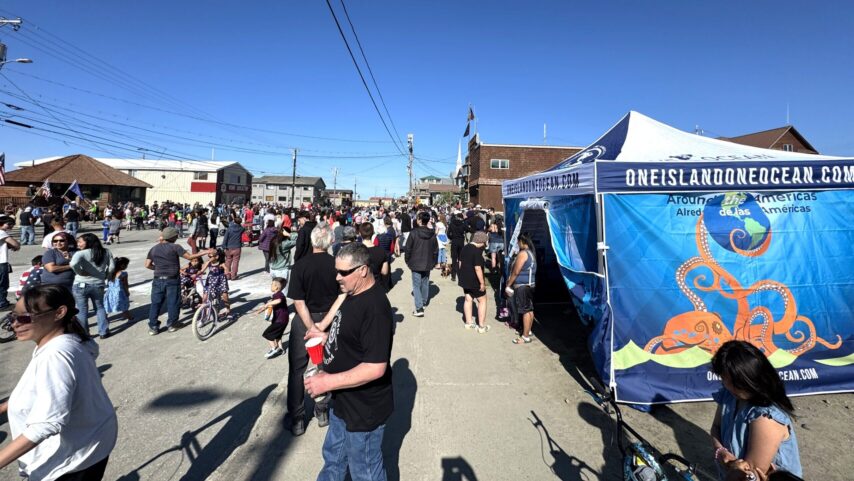
If you haven’t seen our recent blogs, we encourage you to take a look! Tess, our education outreach and social media coordinator, wrote a beautiful post about our time at the Nome Fourth of July Parade. We set up an education tent, connected with local families, and invited them to follow our journey and join our live classrooms this summer. Tess’s blog is insightful, passionate, and meaningful.
We want to extend heartfelt thanks to some of our generous supporters:
- The Burlington Rotarians
- Skagit Valley College
- The Center of Excellence
The Center of Excellence donated an underwater ROV (remote operating vehicle) to help with our kelp research. They’re working to launch educational programs in this industry—and as it turns out, that training is incredibly relevant in Nome! The local gold dredgers use this kind of technology to hunt for gold under the waters of Norton Sound.
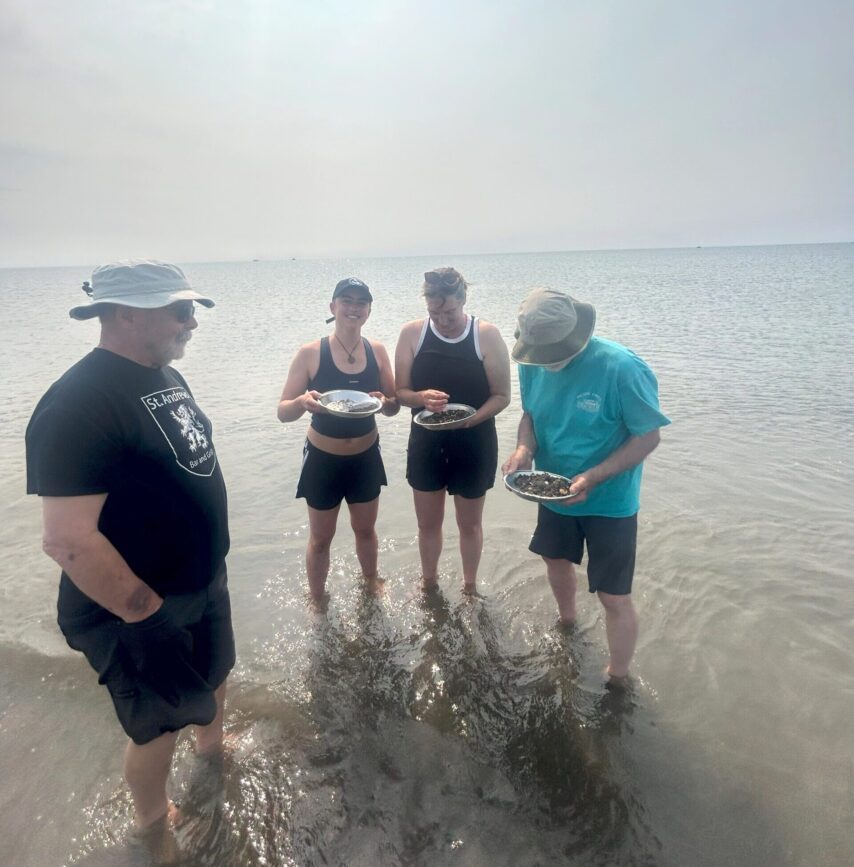
Inspired by this, the crew of One Ocean caught a touch of gold fever—we tried panning for gold. All we could find for a pan was a pie plate and, well… as you can imagine, no gold—just a bunch of gold fools!
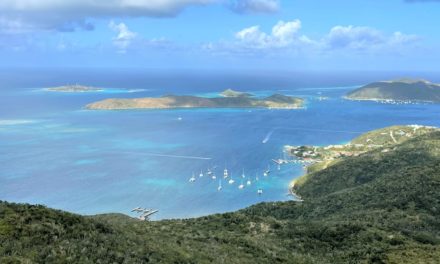
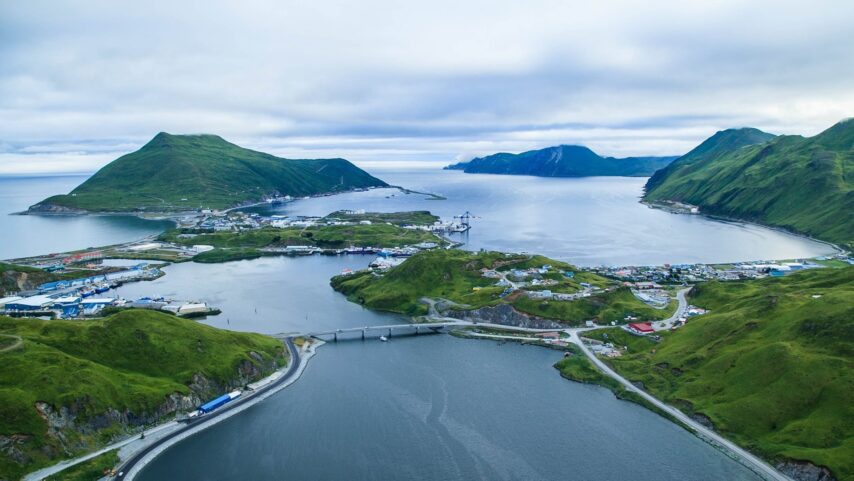
Reaching Dutch Harbor. Prior to reaching Dutch Harbor and the subsequent journey to Nome, the crew faced a full spectrum of weather from extreme wind to moderate conditions. The one constant? A chilly 44-degree temperature. We had up to 6-8-foot waves during calmer periods and estimated wave heights of 15-18 feet during the gale-force storm. Deployment of a SWIFT Buoy (which measures wave height) on June 23 helped us determine the wave heights we experienced.
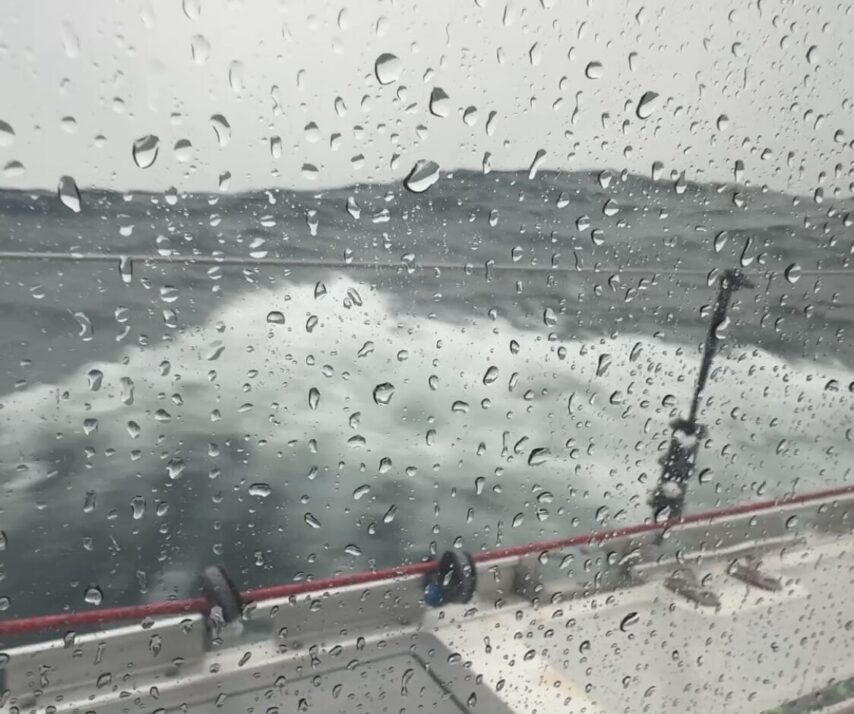
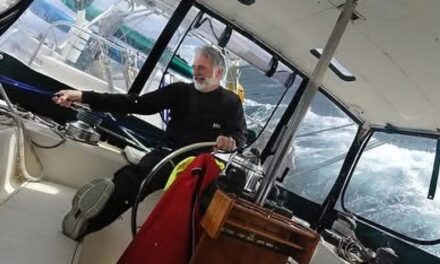
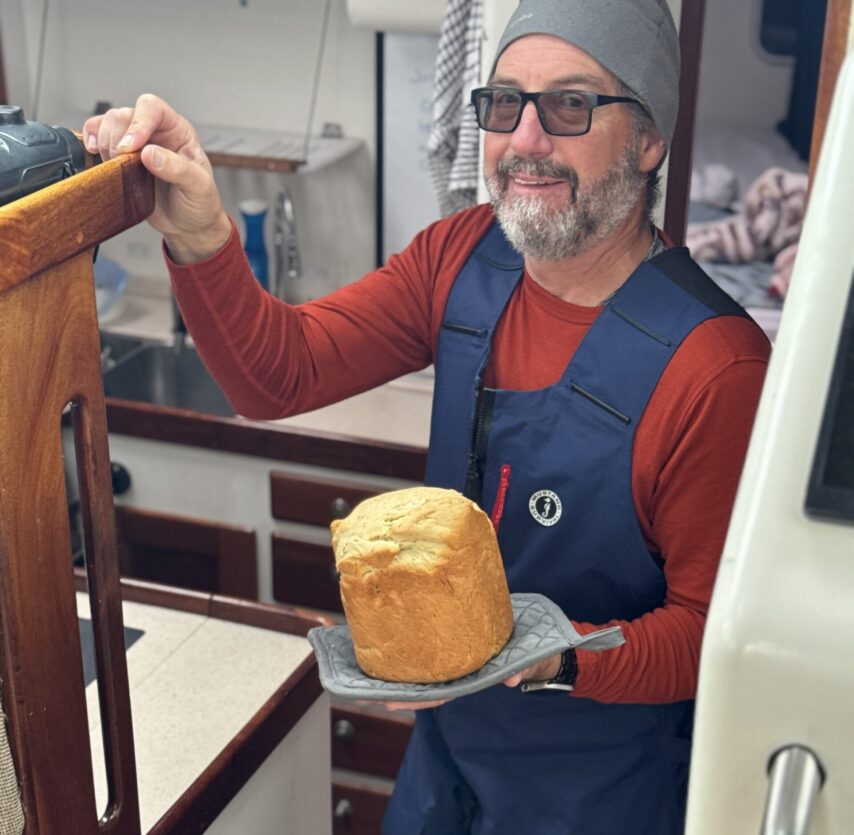
While sailing the open sea, every simple task is a calculated and careful maneuver. Walking from the galley to the table (just steps apart) often means gripping handholds and bracing into the heeled side of the boat. Dinner time is both a distraction and a communal effort; though if conditions get too rough for cooking, we rely on leftovers.
As we neared the end of this major crossing and after days without spotting a ship, plane, or even wildlife – just endless shades of gray – we were back in the shipping lanes, watching the radar closely. There was talk of burgers in Dutch Harbor.
Support the Expedition. The crew of One Ocean wishes to keep sharing this journey in real-time, but maintaining Starlink internet access is costly, as is the need for translation services Around the Americas. Your financial support is appreciated. If you know anyone who can help support this scientific research and educational outreach expedition, please direct them to Skagit Valley College Foundation.
By Jennifer Dalton
Co-Captain and Director
Around the Americas Expedition
Nome, AK Aerial Header Photo: Wikipedia (Harry Turtledove)
Dutch Harbor Aerial Photo: LNDR Photography
Text Photos: One Ocean Crew Members