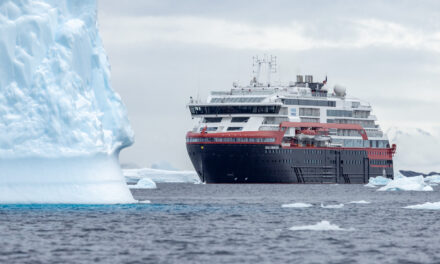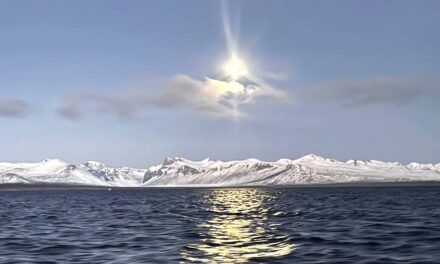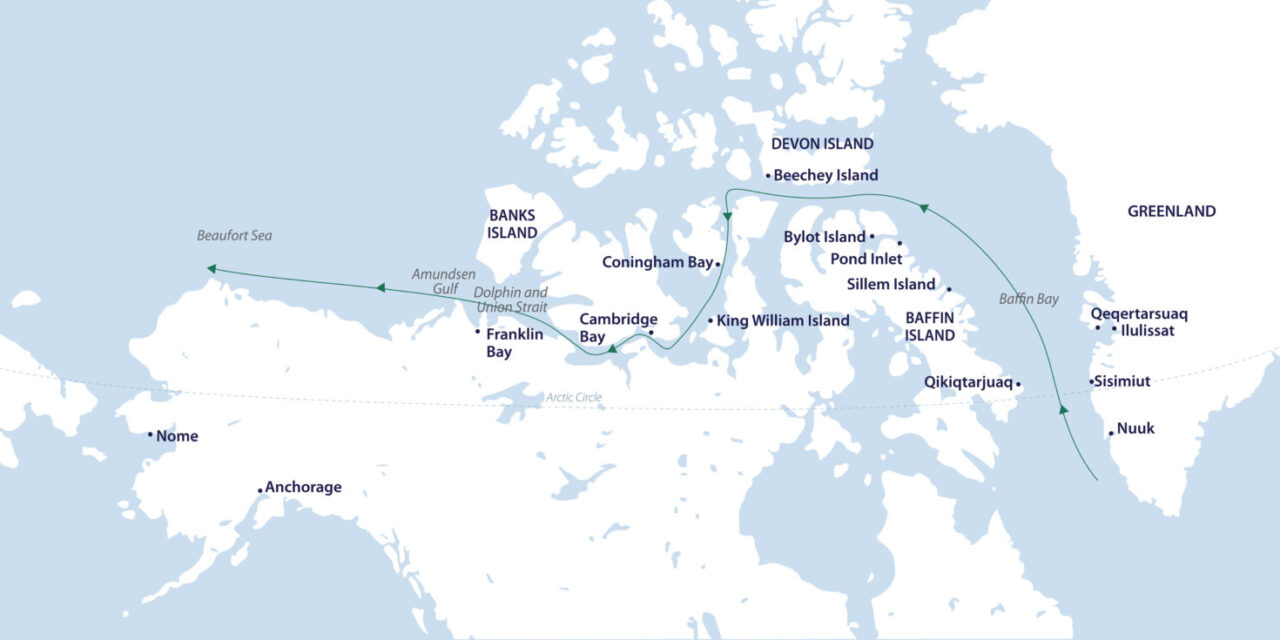
The remote maritime route of the largely untraveled Arctic frontier is an ever-changing network of waterways that spans thousands of miles connecting the Pacific Ocean via Beaufort Sea to the Atlantic Ocean via Baffin Bay. Our friends aboard SV One Ocean will be undertaking this epic journey as part of their Around-the-Americas Expedition and scientific research.
There are actually seven main passage routes through the 36,500 Arctic Islands, including the major islands of Victoria, Banks, Prince of Wales, Somerset, and Devon islands. Lined with icebergs and glaciers, navigation is easiest during the Northern Hemisphere’s summer.
The high Arctic tundra has been home to the Inuit people for thousands of years and the Inuit continue their traditional hunting, fishing, and gathering practices. Since the late 1400s, early explorers sought the elusive Northwest Passage. Italian explorer John Cabot, who departed in 1497, is credited as the first European to explore the region and laid the groundwork for other explorers. Then 80 years later, English explorer Martin Frobisher set out to navigate the Arctic waters. Reaching the southeast corner of Baffin Island, he thought he had discovered the passage and this sparked interest among other explorers.
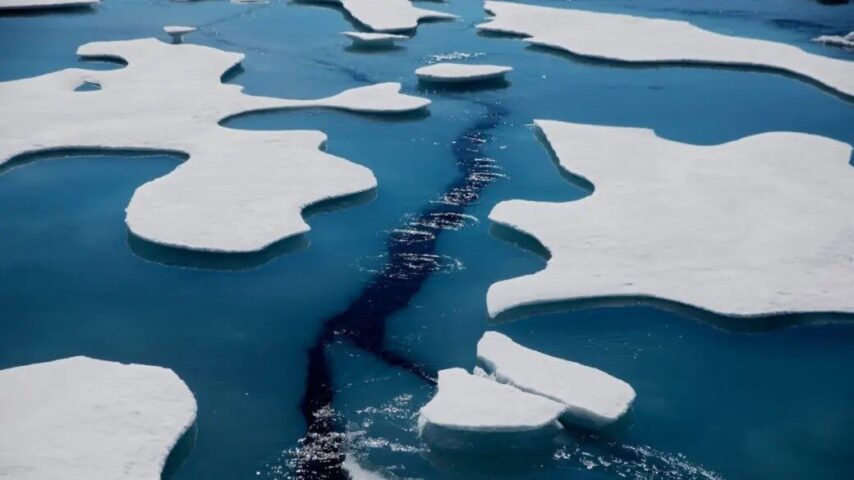
Among the best-known explorers of the Northwest Passage is that of Sir John Franklin who set out in 1845 with two ships, the HMS Erebus and the HMS Terror. The disappearance of the two ships and 100 plus men became a long-standing mystery. Lady Franklin financed many missions, including overland expeditions, to locate her husband and his ships. It was later revealed that the ships had become frozen in the ice, and it wasn’t until the recent past that the ships were found near Nunavut in 2014 and 2016. Learn more by watching “Lost Shipwrecks of the Arctic” at www.youtube.com/watch?v=se1av450iYg. Check out more on the Erebus at Parks.canada.ca/lhn-nhs/nu/epaveswrecks
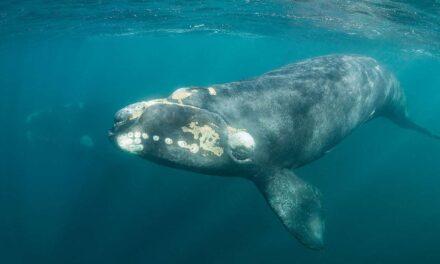
It was Ronald Amundsen who was the first confirmed successful navigator through the Northwest Passage from 1903-1906 aboard the Gjoa. As climate change continues and ice sheets shrink (reported as 32% since the 1960s and mostly open in the summer of 2007), intrepid mariners have found their way through the Northwest Passage, including Navy vessels, scientists, and even a tour operator called Aurora Expeditions. Yes, you too can experience wildlife of the Arctic – polar bears, walrus, puffins, foxes, beluga whales, caribou and oxen.
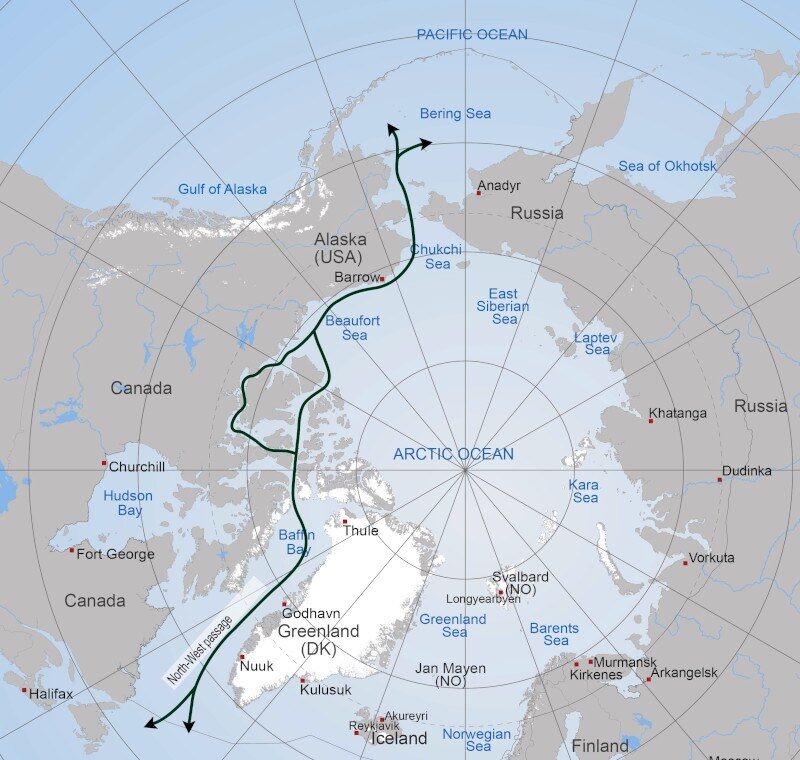
Modern mapping methods, technological advancements, and satellite imagery makes transiting the Northwest Passage possible for more mariners with purpose-built vessels. Waggoner wishes the crew members aboard One Ocean on their Around the Americas Project all the very best – Captain Mark Schrader; Project Dir. Jennifer Dalton; Mike Beemer with the Marine Tec Center in Anacortes; Grace Dalton, science student with the University of Victoria; Tess Schornack, science and education marketing; and other members serving as crew. Departure date is May 1, 2025, from Anacortes, Washington.
Photos: Aurora Expeditions,
Global News, and Artic Portal