It’s no surprise that Starlink has set the bar for internet connectivity for much of the world and offers service plans specifically for people on the go. Boaters have come to depend on fast internet connection via satellite, especially in more remote cruising areas for weather reports and important business matters.
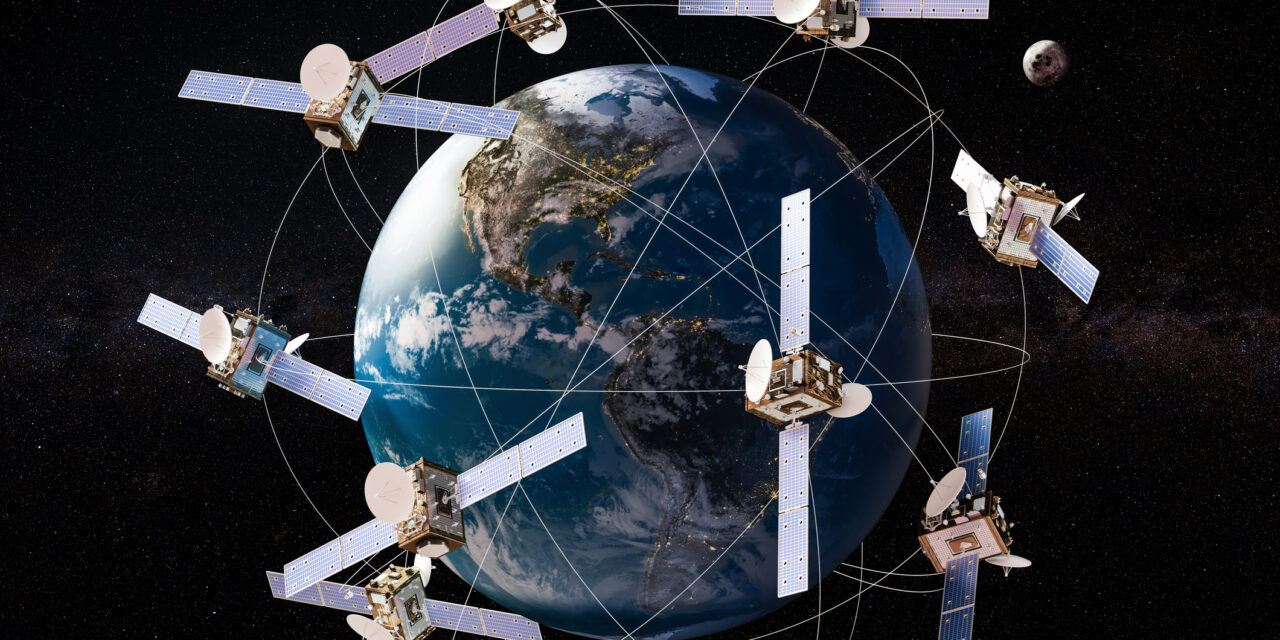
Starlink, a subsidiary of SpaceX, currently has around 7,000 mass-produced small satellites in low Earth orbit. Data is beamed down to a user’s installed antenna which provides 47% faster speeds than fiber optics in one’s home. Download speeds are around 100mbps. In addition to the monthly service fee, there’s an up-front cost for hardware, but there’s no requirement to enter a long-term contract. Hardware costs can be expensive and the monthly premium maritime plan is more expensive than a standard plan. If you are deterred by the expense or don’t travel to remote areas, there are some other options that may fit your boating lifestyle.
HughesNet does not have quite the coverage that Starlink has but it does offer affordable wireless connection with consistent speeds. In 2023, the company launched its new Jupiter 3 satellite into orbit and customers have seen reliable 100mbps speeds since its launch. However, once you go over your allotted priority data, users experience slower speeds. There is also a two-year commitment with their three different plans – the Select, Elite, and Fusion. Fusion is a combination of both satellite and wireless technologies.
Viasat offers service in rural areas, with approximately the same speeds of that offered by Starlink. There are no long-term contracts and Viasat claims there are no data caps. Speeds can get up to 150mbps but slower speeds can be expected after users reach 850 GB of data within a 30-day period. Some areas have experienced slower speeds; however, the company is aiming to bring faster speeds to more areas in the future.
Kuiper Project is Amazon’s future contender in the field of satellite connectivity. Amazon is aiming to bring broadband internet to unserved and underserved communities worldwide with Project Kuiper. The company launched two prototype satellites in 2023 and is planning to have a constellation of 3,232 satellites up and running in the near future. Amazon has plans to start deploying its satellites in early 2025 and could realistically start offering service by the end of 2025. It is reported that there are more than 2,000 engineers and support personnel building the infrastructure, with hopes of balancing performance and affordability with a range of options for customers. Their satellite network is expected to deliver up to 400mbps and 1 gigabit per second. If in line with Starlink’s pricing, Amazon’s Kuiper would become a major player.
Image: SpaceX