Witnessing a submarine transiting through the Hood Canal Bridge opening or near the Bangor Naval Base can be a real thrill for recreational boaters in the area. However, it is essential that boaters observe the rules and regulations of the various Naval Operating and Restricted Areas and keep the required distance from U.S. military vessels.
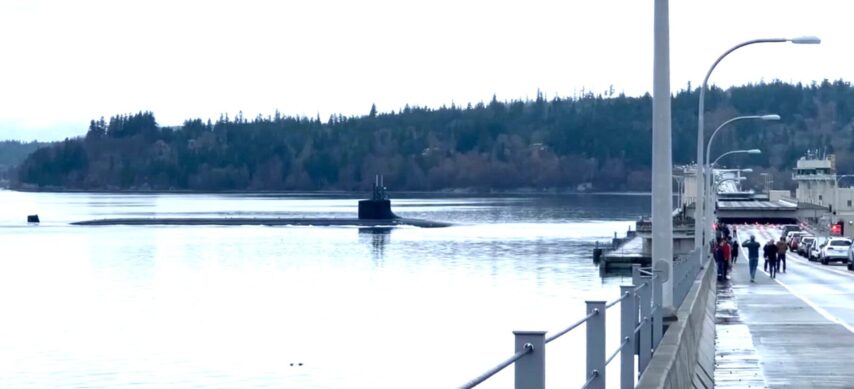
When boaters are visiting the waters of Hood Canal, captains should monitor VHF Ch 16 and listen for any notices of submarines in the area, which are often escorted by U.S. Coast Guard vessels. Boaters are to follow any orders or directions given by the U.S. Coast Guard, including moving farther away and instructions regarding restricted passages. Look for Naval vessels flying a “Bravo” (red) flag during periods of operations in any of the Naval Operations Areas.
Areas in Hood Canal, including Dabob Bay, have Regulated Navigation Areas that are shown on nautical charts as Naval Operating Areas, Military Practice Areas, and Restricted Areas, with rules and regulations that are described in Coast Pilot 10. If there are no announcements of submarines in these areas, boaters are free to transit; however, boaters must observe and always stay clear of the restricted areas immediately around the naval base marked by lights. Nautical charts show the restricted areas immediately around the Bangor Naval Base, as well as the larger RNAs in Hood Canal and Dabob Bay. The Waggoner Cruising Guide has a reference map of these Naval Operating Areas in Hood Canal.
The Military Practice Area south of Bangor Base is actually a non-explosive torpedo testing range. There are regulations in Coast Pilot 10, with information about rules and regulations when the torpedo exercise area is active.
There are 5 sets of warning lights in Dabob Bay. Lights flashing amber indicate that operations are in progress. Boaters may enter the area on an amber light but should keep well clear of Navy vessels. Flashing red lights indicate the area has been closed to navigation. The 5 sets of warning lights are located at Whitney Point, Pulali Point, and Sylopash Point on the west side of the bay; Zelatched Point on the east side of the bay; and at the north end of the bay on the southeast side of Bolton Peninsula. Not all lights may be operational, contact Dabob Range Control on Ch 16 if in doubt.
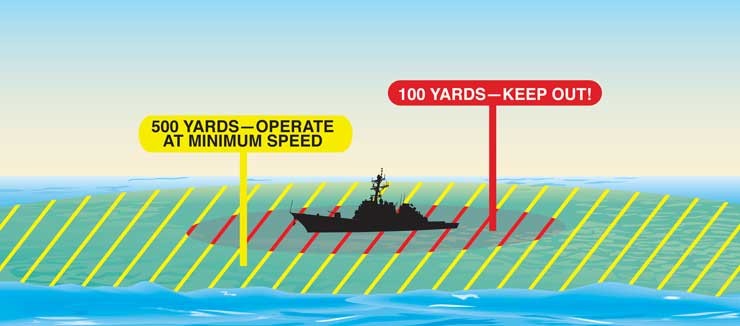
Boaters are reminded not to approach military vessels and escort vessels within 100 yards at all times and slow to a minimum speed within 500 yards of any U.S. Naval vessel in the area. If you absolutely need to pass within 100 yards of a U.S. Naval vessel for safe passage, you must contact the U.S. Naval vessel or the USCG escort vessel on VHF Ch 16.
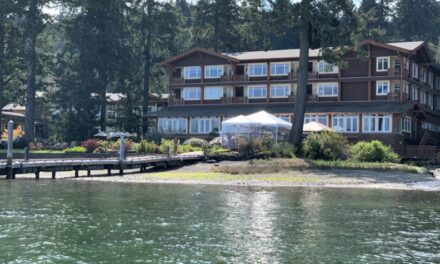
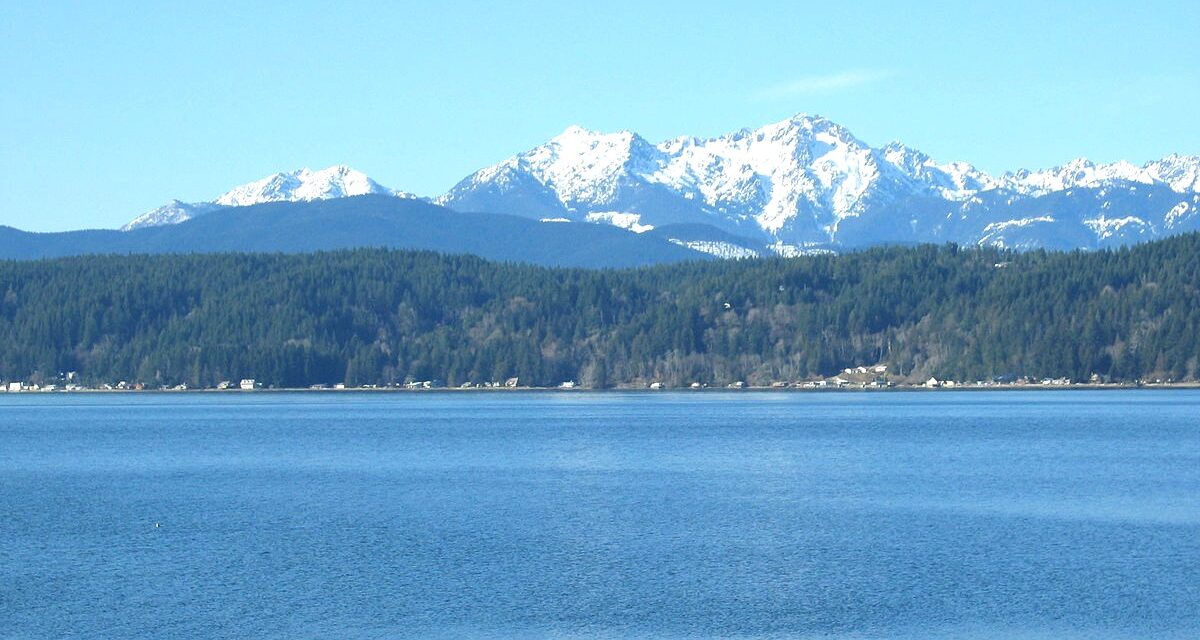
Although Hood Canal is less traveled by pleasure craft than other areas, this 65-mile-long glacier-carved fjord may surprise you. There are several protected anchorages, two excellent resorts (Pleasant Harbor and Alderbrook Inn Resort) that can accommodate larger vessels, and impressive views of the Olympic Mountains. Shrimping, oyster gathering, clamming, and fishing can be outstanding. If you are looking for something different and less traveled, put Hood Canal on your 2025 list of cruising destinations.
Appreciation is extended to Dale Blackburn, Waggoner Field Correspondent, for his research of Hood Canal, the RNAs, and his valuable contributions to the Waggoner Cruising Guide.
Photos: Dale Blackburn
Diagram: Homeland Security