This final article in our four-part series covering cellular, internet, and satellite communications focuses on the all-important satellite messaging and emergency communication devices.
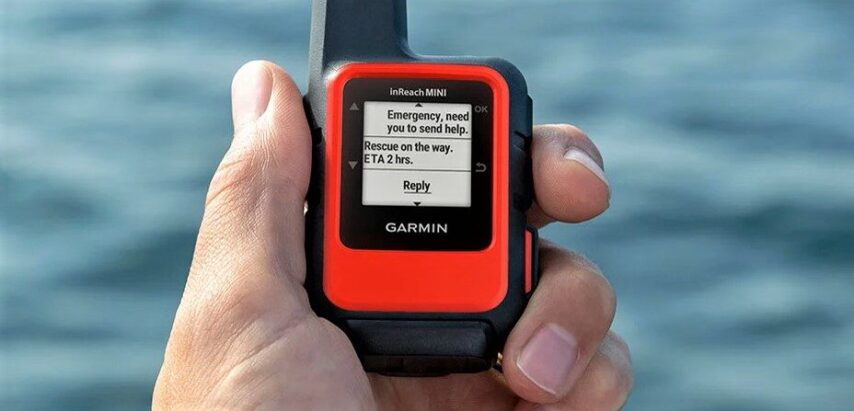
Satellite Messengers. If you don’t have room to install satellite dishes on your boat but want some level of full-time connectivity, then a satellite-based messenger device might be something to consider. These range from handheld satellite communications devices that pair with your smartphone (e.g., SPOT, Garmin inReach, and ACR’s Bivy solutions) to more functional portable internet terminals with sat phone support such as the Iridium GO! Exec. While these devices do not offer high speeds, they can be used for low bandwidth workloads such as email, in some cases basic web browsing, internet weather, and text messaging with position reports. These devices also support sending emergency broadcasts via satellite. Given that, carrying a SPOT, Bivy, or inReach device while you are hiking or kayaking in remote areas makes a lot of sense in case you need assistance.
Smartphone SOS. Some of the newer Apple smartphones such as the iPhone 14 and 15 now support two-way emergency messaging via satellite. This means even if you are beyond cell coverage, you can send an SOS message to their emergency services center.
T-Mobile and Starlink have also announced a plan for supporting satellite-based service from most cell phones. AT&T has announced similar cellular service via satellite. It is too early to tell how usable these services will be for boaters but anything that can enhance communications during an emergency will be a benefit.
Satellite Messengers rely on private satellite constellations, not the internationally organized Cospas-Sarsat network that EPIRBs and PLBs use. SOS messages go through a private emergency center that passes on the message to government emergency services. Satellite messengers are not EPIRBs and should not take the place of an EPIRB, but they can provide low-cost, two-way communications far beyond cell phone service. Satellite messengers offer the coverage of satellite service at a lower cost.
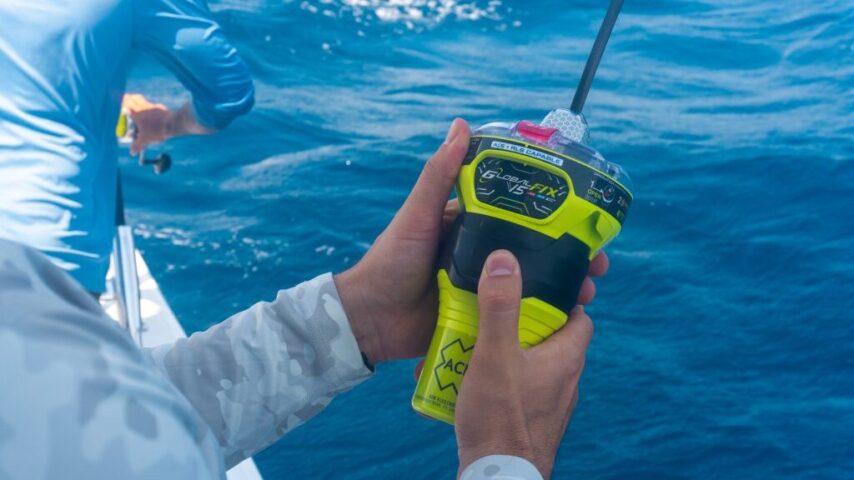
AIS MOB Beacons are small wearable devices that when activated send a man-overboard signal (with current lat/long position) to all AIS receivers within range. Nearby boats and SAR organizations monitoring the area will be alerted. Several AIS MOB beacons also send a VHF DSC signal for DSC VHF equipped boats to sound an alarm.
Important. For emergency, distress, and rescue operations cellular telephones are NOT a substitute for VHF radios. If you have a problem and need help, get on channel 16 and start calling. The Coast Guard and neighboring vessels will hear you and may be your closest and fastest aid. And of course, have an EPIRB available in case you have a dire emergency and all other communications’ methods do not work.
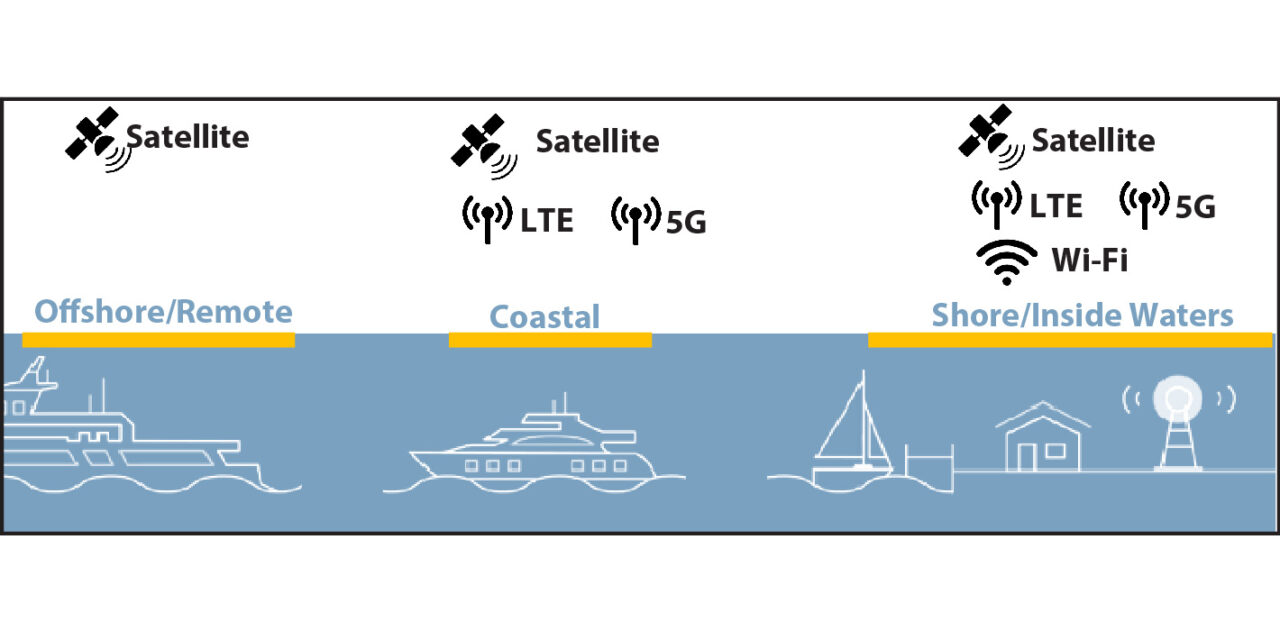
Conclusion from our Articles. You may find that no one solution provides all the capabilities you need based on your connectivity requirements and coverage while transiting, along with other factors such as power consumption. Often a combination of solutions, such as a 5G cellular router or hotspot plus Starlink plus a portable satellite messenger can cover virtually all connectivity needs. For more information, check out online resources at Onboard Wireless, Seabits, and the Mobile Internet Resource Center.
By: Doug Miller, President
Onboard Wireless