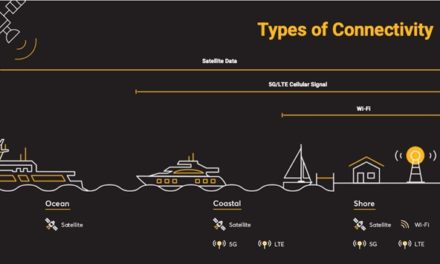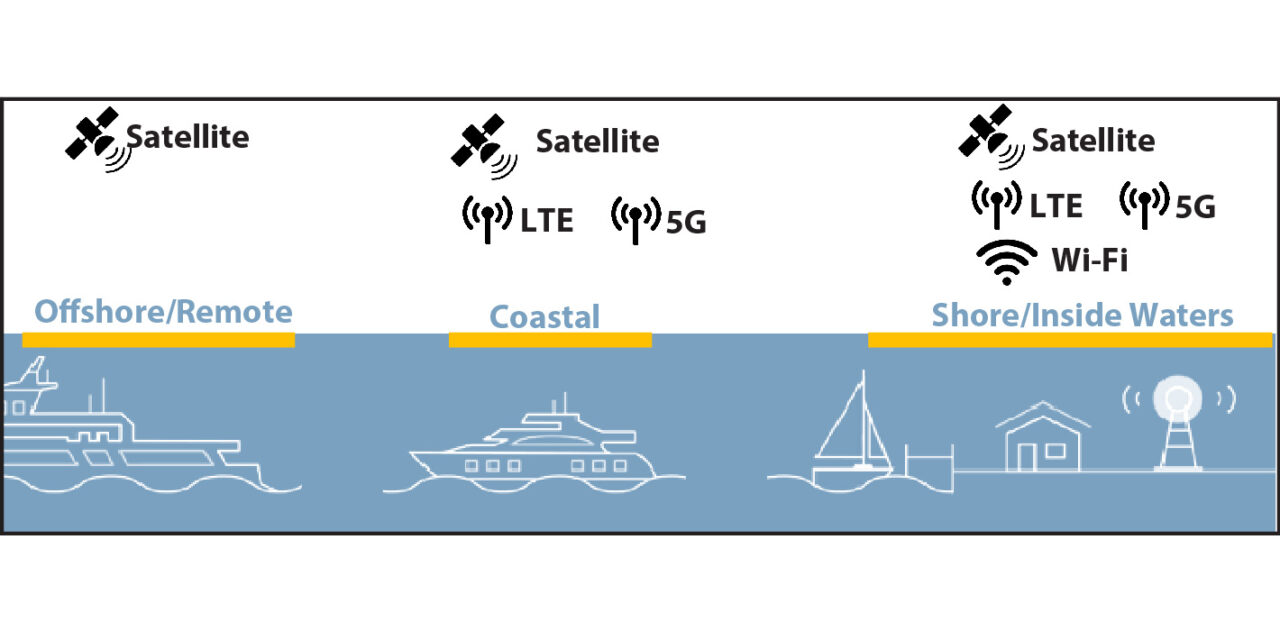
If you want to stay connected while cruising, there are three main technology solution areas to consider – 5G/LTE Cellular, Wi-Fi, and Satellite Connectivity. We will be exploring these solutions in a four-part series, edited by Doug Miller President of Onboard Wireless, including Satellite Messaging Options in Part IV.
While a lot of boaters love the idea of getting away from it all when they go cruising, most of us still want some level of connectivity with the rest of the world and therefore voice and data communications remain desirable when cruising. Email, weather information, financial transactions, marina slip reservations, and web browsing have all become essential elements of today’s cruising.
5G/LTE Cellular. Virtually everyone owns a cell phone and while making phone calls is the primary use, using the phone for email, web, online apps, or setting it up to be a personal hotspot is very useful when you are on the water.
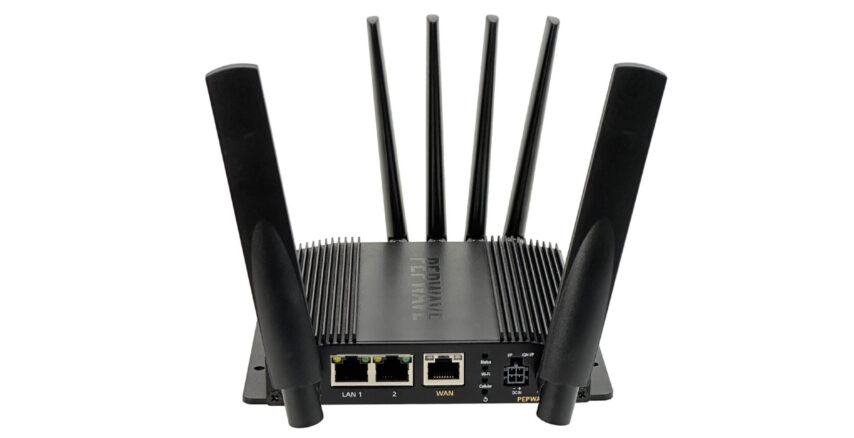
As you cruise to more remote areas, having a dedicated 4G or 5G cellular-based high-speed router coupled with high-gain antennas helps to bring in distant cell signals and provides an onboard Wi‑Fi access point to keep all your devices connected. Companies such as Peplink have solutions specifically built for use on boats.
Another option is to install a cell booster also known as a cellular amplifier from companies such as weBoost or SureCall, which can amplify your cell phone signal and allow you to boost an unusable cell signal to enough bars to make a phone call. Cellular amplifiers are a good addition when cruising north of Campbell River and Desolation Sound. From Campbell River north, there are fewer cell towers, and the distances between them are much greater. Cellular signals emitting from the towers are powerful, but the return signals from your phone are relatively weak. A cell amplifier’s main advantage is in boosting the signal from your phone so that the distant cell tower can “hear” your phone. The best amplifiers have an external antenna. Be sure the amplifier supports the frequencies used by your phone and your carriers for your planned cruising area. It is also essential to follow the manufacturer’s guidance on antenna installation, otherwise a cellular amplifier will not work.
Boaters in the past have installed both a cell booster for phones and a cellular router for data devices, but with Wi-Fi calling supported on all modern phones and carriers, a good cellular router with a well-placed external antenna or Starlink can provide coverage for both phone calls and data applications, negating the need for a cell booster.
Cruise ships have a predictable effect on cell service. In remote areas north of Campbell River and especially in Southeast Alaska, cell phone service is noticeably degraded when a cruise ship or two are in the cell tower area. These remote cell systems, sized to limited cellular demand, are often swamped by the thousands of devices in the hands of cruise ship passengers. The same can be said for popular anchorages such as the Prideaux Haven area in Desolation Sound. You may find you have a decent signal but no connectivity due to the local cell towers not having enough capacity to serve all the various cellular devices trying to connect to the tower. This is especially true if you have a US cell plan, as domestic users have priority over roaming US users. For this reason, it may make sense to purchase a local data plan when cruising across the border if you are relying solely on cellular communications.
Cellular devices require a cell plan and a SIM card (or eSIM). If you have a separate cellular router or hotspot, it will require its own plan. Be sure to check with your cell carrier for device compatibility as well as things like areas of coverage, data limits, and roaming. Cellular providers have a range of plans at reasonable rates often with unlimited voice and data that include cross-border roaming. Today’s cellular data speeds are good and service is very reliable, although you do need to be within 10-20 miles of a cell tower. If you are on one of the newer rate plans, cellular is a cost-effective way to handle your voice, messaging, and internet needs while cruising all of the Northwest waters. Be sure you have a cell plan which includes roaming; if you don’t, you may be shocked when you get the bill or find you have no cell service when you cross the border.
- In Washington, B.C. and SE Alaska waters, cruisers have a number of cellular providers to choose from, all with excellent voice, messaging, and data service. All of the Washington waters, except the western half of Strait of Juan de Fuca, have excellent cellular coverage.
- Telus, Rogers, and Bell operate in B.C. with voice, text messaging, and data coverage. Coverage is complete from the U.S. border to Campbell River/ Desolation Sound on the north. There is no coverage in Jervis Inlet and spotty in mountainous areas.
- From Campbell River/Desolation Sound to Port McNeill, cellular coverage is fairly good with coverage on most of Johnstone Strait. There is spotty to no coverage in the passages and inlets off of the Strait. Coverage between Campbell River and Port McNeill on Johnstone Strait keeps getting better each season.
- Cellular towers high atop mountains near Port McNeill and Port Hardy provide coverage in much of Queen Charlotte Strait, and the edge of the Broughtons. We have had cell coverage almost to Cape Caution, but don’t expect to get coverage within the Broughtons.
- Between Port Hardy and Prince Rupert, cell coverage is limited to the area around the towns of Bella Bella/Shearwater, Klemtu, Hartley Bay, Kitimat, and Bella Coola. The area around Prince Rupert has good cell coverage that continues north to the U.S. border in Dixon Entrance, where U.S. cell service begins.
- Haida Gwaii has cell coverage in and around the cities of Daajing Giids (Queen Charlotte), Sandspit, and Masset.
- West Coast of Vancouver Island has coverage from outside of Nootka Sound south to and including Barkley Sound. Alberni Inlet has coverage in some areas. There is coverage in Quatsino Sound in the north.
- Southeast Alaska coverage begins in Dixon entrance near Cape Fox but is spotty until you pass the entrance to Behm Canal on your way to Ketchikan. Four major U.S. cellular carriers – AT&T, Verizon, and GCI – provide voice, data, and messaging coverage in and around populated areas in Southeast Alaska. Check with your cellular provider for coverage in Southeast Alaska.
For a map of cell tower locations, go to www.cellmapper.net.
By Doug Miller, President
Onboard Wireless