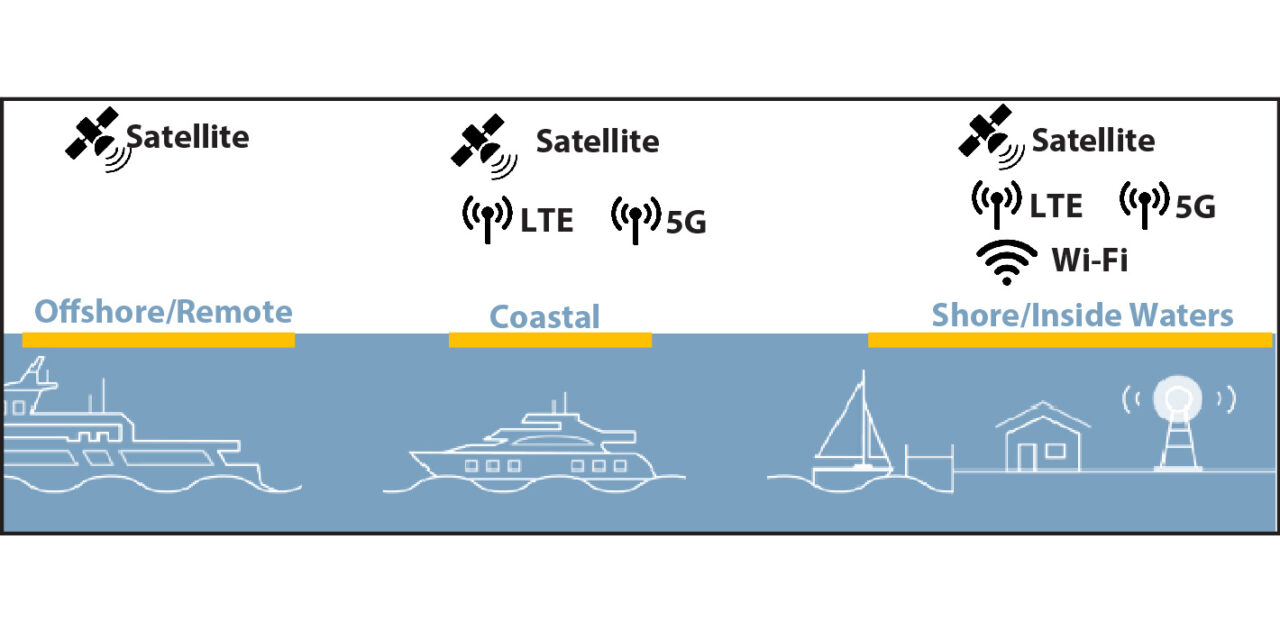
Satellite Connectivity is our focus in this Part III of a four-part series covering cellular, internet, and satellite communications. Part IV will cover satellite messengers and emergency devices.
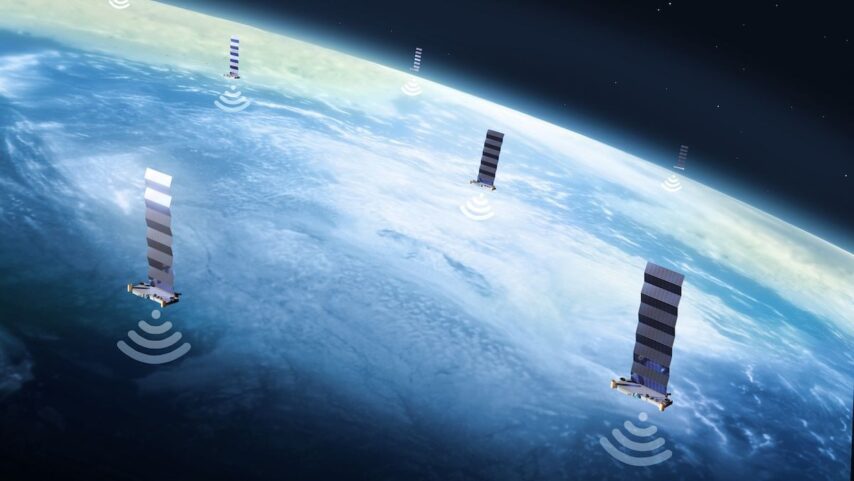
The 2022 cruising season marked a huge breakthrough in satellite-based connectivity with the introduction of Starlink from SpaceX. The Starlink solution consists of an external satellite antenna connected to a router with a Wi-Fi access point. Starlink’s low earth orbit architecture is unique and enables faster data speeds and low latency.
Starlink equipment and plans are reasonably priced and allow boaters to be connected with high-speed internet throughout our Pacific Northwest cruising grounds, including Alaska, and beyond. Over the past year, Starlink has introduced new equipment and new data plans that are more aligned with boaters’ needs. The original “RV” satellite antenna is not marinized or ruggedized for use in extreme wind and sea conditions so it may need to be stowed while underway. It is also not designed for use while moving at higher speeds, although currently Starlink does allow this system to be used if you are moving less than 8 knots. In addition, this system is not designed for use offshore unless the user has opted for a Priority data plan. There is now however, a high-performance flat antenna which is more expensive but is certified for use while underway and on the ocean. Many Starlink users with the original lower cost RV dish and Mobile plan have reported that the system works well even when crossing larger bodies of water such as the Strait of Georgia.
One of the biggest things to consider if you are planning on purchasing Starlink is power draw. The RV system draws about 50 watts of power, and the high-performance system draws about double that. Starlink supports only running Starlink on AC power only, which is problematic for boaters. There are ways to use DC via homebrew kits but it is hit or miss. Be sure your onboard power systems are equipped to handle this level of continuous power consumption, or only use Starlink when you need it.
Based on reports from cruisers throughout the region, the overall experience has been mixed. Starlink is reported to have worked very well in remote areas of Canada where there was no cell coverage. Others reported that Starlink was not working well in crowded marinas due to obstructions and was sometimes slow in more congested, populated areas. Cellular on the other hand works very well in populated areas and allows boaters to be connected even in extreme conditions while underway. Given all that, a Peplink 5G cellular router plus a Starlink setup has become the go-to solution for a lot of boaters who need full time connectivity.
Over the coming year, we expect to see other vendors, such as Amazon with Project Kuiper, firm-up their plans for satellite-based internet solutions.
By: Doug Miller, President
Onboard Wireless
Satellite System Image by SpaceX