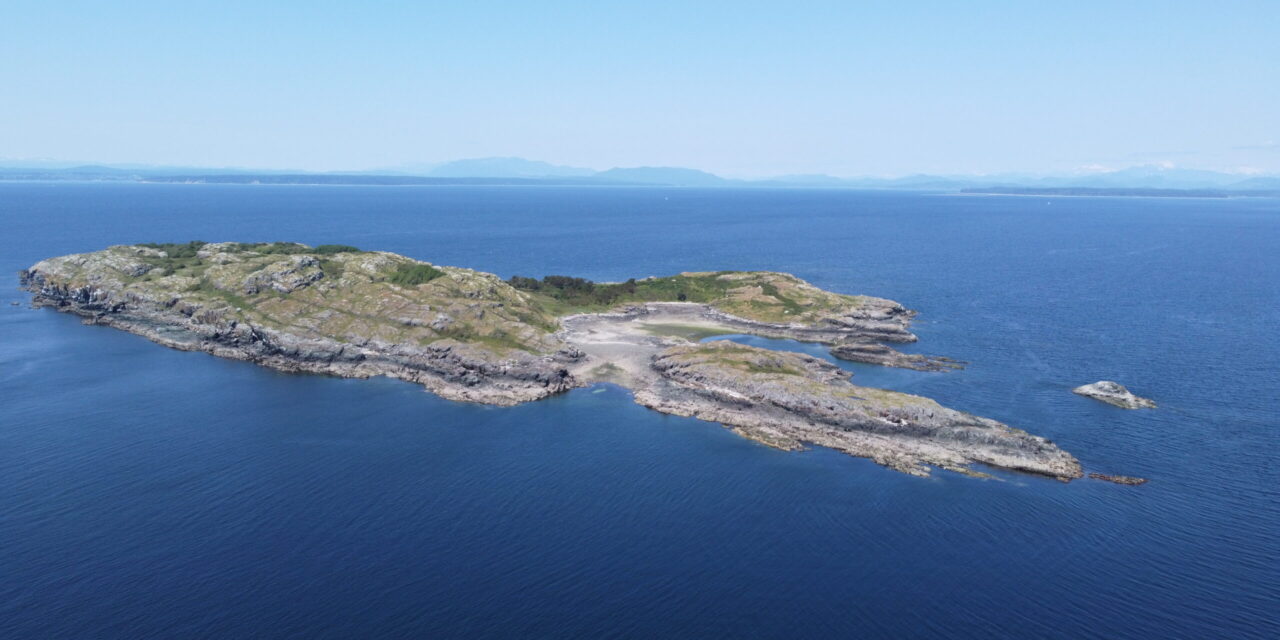
On a clear June morning, I set out from Cortes Bay for a short adventure. The destination: Mitlenatch Island — a name that sounds like a tongue-twister but rolls easily off the lips of local boaters who know its secret. Tucked between Vancouver Island and the mainland, Mitlenatch sits quietly in the middle of the northern Strait of Georgia, about a 30-minute dinghy ride from Cortes Bay. It’s one of those rare Pacific Northwest gems that seems to hide in plain sight.
Approaching Mitlenatch is a bit deceptive. From a distance, it looks like nothing more than a lump of rock tossed carelessly into the ocean — a windswept, barren outcrop that barely rises from the water. But as you get closer, the rock transforms. What first appears inhospitable suddenly reveals itself as a lush sanctuary bursting with life. It’s a reminder that some of nature’s best tricks are all about perspective.
Mitlenatch Island is a designated Nature Provincial Park and marine sanctuary, carefully protected and managed by BC Parks. The island itself is just over 35 hectares, or about 88 acres — small enough to explore on foot but large enough to host an astonishing variety of life. The surrounding waters are protected, too, forming a marine reserve that extends 300 meters offshore. That protective buffer zone helps keep the water crystal clear and the underwater ecosystem thriving.
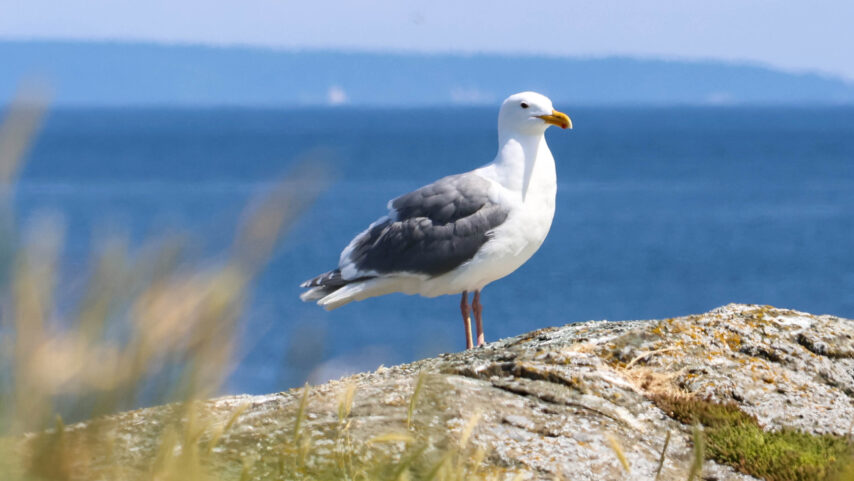
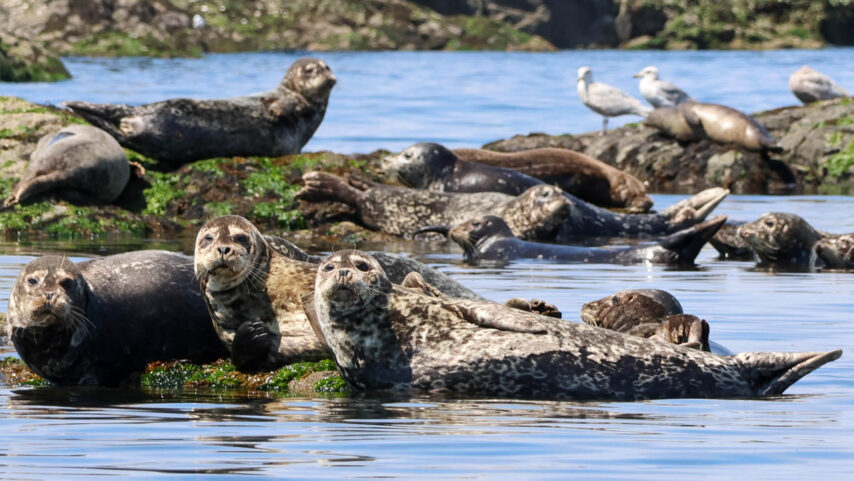
One of the first things you notice, beyond the rocky shoreline and the hardy coastal grasses, is the birds. So many birds. Mitlenatch is known as the “birdwatching capital of the northern Strait of Georgia,” and for good reason. Thousands of seabirds make their summer homes here. Glaucous-winged gulls’ nests in dense colonies that seem to blanket the hillsides like snow. Pigeon guillemots, with their bright red feet, dart in and out of rocky crevices, while cormorants perch like ancient statues along the rugged cliffs. You might also spot black oystercatchers with their unmistakable orange beaks, rhinoceros auklets, and the occasional visiting bald eagle. It’s not uncommon to see harbour seals lounging on nearby rocks or sea lions barking in the distance. While I was there, thousands of sea lions greeted me at Calm Bay with their symphony of barks and an unforgettable scent! On a clear day, you might even glimpse porpoises or orcas cruising past the island’s protected waters.
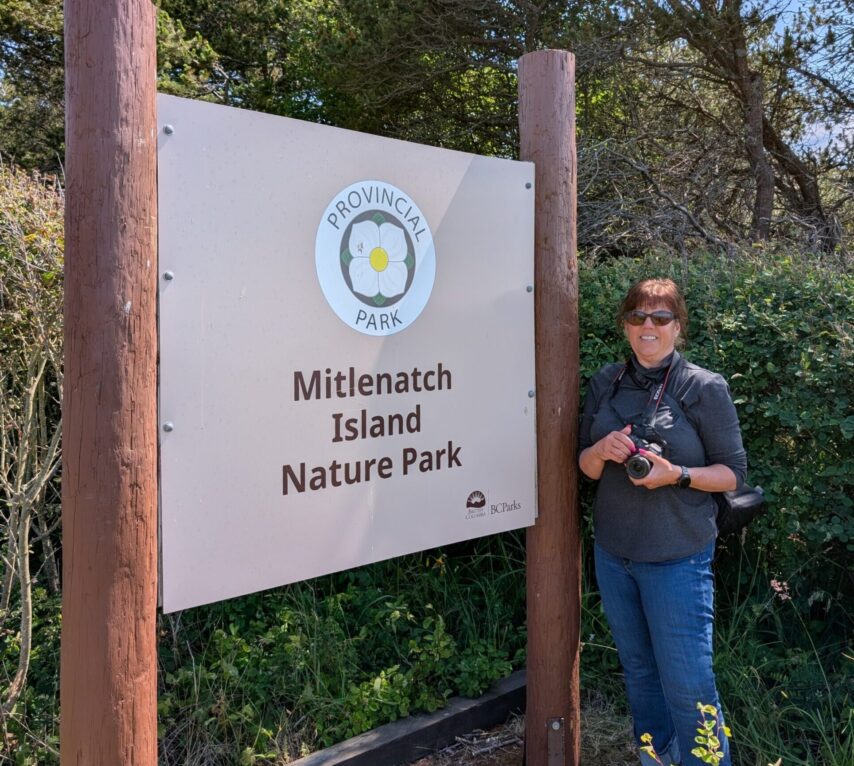
Because Mitlenatch is so ecologically sensitive, most of the island is off-limits to visitors. The protected interior is closed to preserve delicate nesting areas, fragile plants, and the complex web of life that thrives here. What is open to visitors, however, is absolutely magical. Well-maintained walking trails along the island’s perimeter offer breathtaking views of the surrounding sea and allow you to explore without disturbing the wildlife. A highlight for many is the bird blind — a small shelter that lets you quietly observe nesting seabirds up close without causing any stress to the inhabitants.
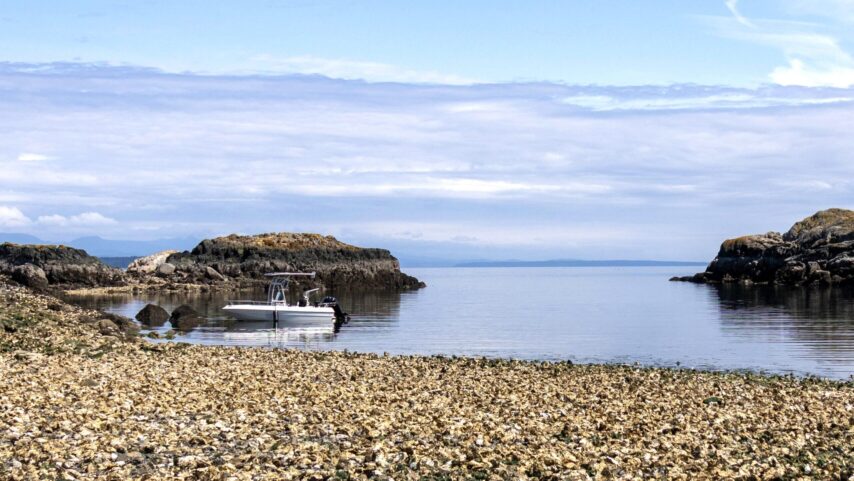
Landing on Mitlenatch is part of the adventure. There’s no dock or marina here; you must beach your dinghy at either Calm Bay on the island’s south side or Northwest Bay on the north. Conditions must be calm for a safe landing, so timing your visit with the weather is key. Also, make sure you are wearing water walkers or shoes because the oyster shells are prolific. Once ashore, it feels like stepping into a mini-Galápagos in British Columbia. The rocky outcrops, hardy wildflowers, and thick carpets of kelp lining the shore are a living museum of coastal ecology. Native plants like prickly pear cactus (yes, cactus in BC!), chocolate lilies, and sea blush bloom against a backdrop of driftwood and basalt. It’s a wild, otherworldly kind of beauty that quietly steals your breath.
One of the most remarkable things about Mitlenatch is the stewardship that keeps it so pristine. During the summer, volunteers with the Mitlenatch Island Stewardship Team live on the island in rotating shifts. They maintain the trails, monitor wildlife, answer visitor questions, and serve as the island’s informal ambassadors. If you’re feeling adventurous, you can even apply to volunteer and spend a week living on the island, immersed in its rhythms. There’s something wonderfully old-fashioned about the whole experience — a small band of dedicated people living simply and working to preserve a little corner of paradise.
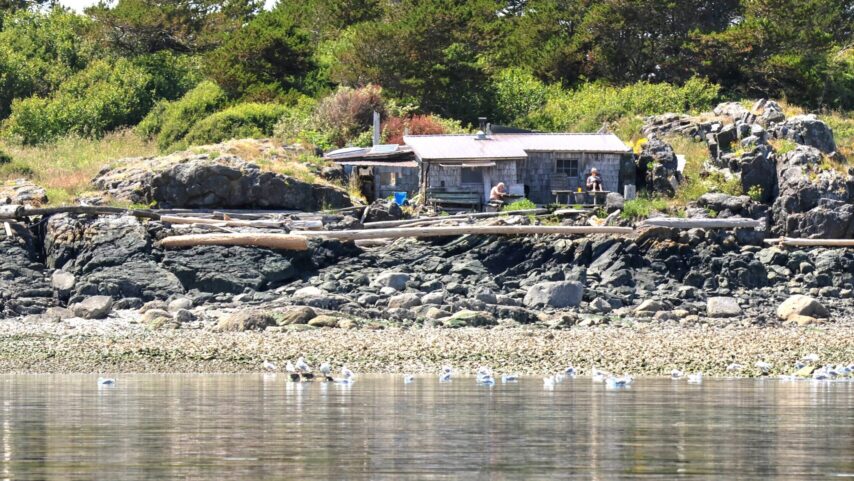
For those of us who don’t have the flexibility to camp out with the gulls and seals, donations to the stewardship program are always welcome and help fund ongoing conservation efforts. Every dollar supports habitat protection, research, and educational programs that ensure Mitlenatch remains a sanctuary for future generations.
As I returned to the dinghy, I couldn’t help but feel grateful that places like this still exist. Mitlenatch isn’t flashy or crowded or commercial. It’s a wild, whispering place where the only sounds are the wind, the waves, and the calls of thousands of seabirds going about their ancient business. For boaters looking to experience something rare and profoundly beautiful, it’s a journey well worth making.
For more information go to: https://www.mitlenatch.ca/ and to donate go to: https://www.mitlenatch.ca/donate. You will find Mitlenatch described in the 2025 Waggoner Cruising Guide on page 297.
Article by Melissa Gervais
Waggoner Field Correspondent
Header Photo by Leonard Landon
Text Photos: Melissa Gervais