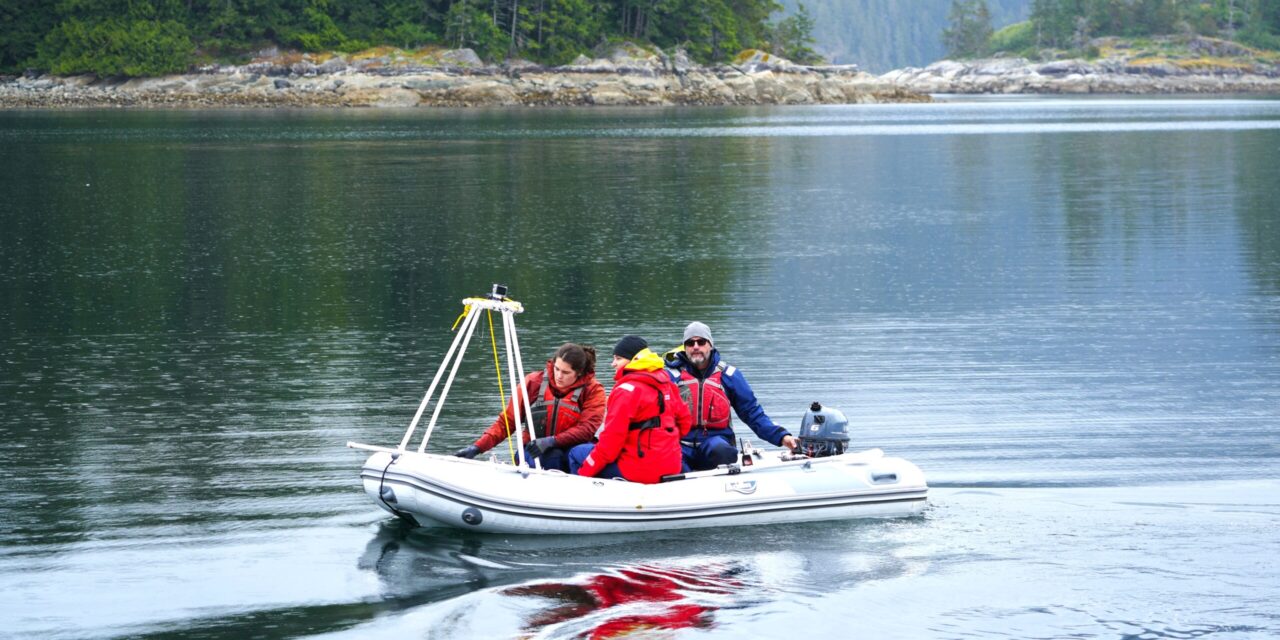
We’re five plus weeks into our 14-month adventure aboard One Ocean, and both crew and vessel are settling into a good rhythm. The research is well underway and, frankly, intense. So far, we’ve studied 15 kelp beds, observed a pod of about a dozen orcas, a humpback whale, and begun collecting data for the University of Washington Applied Physics Lab. We have covered approximately 340 nm during our research thus far. Big thank you to the Center of Excellence for the ROV and infrared drone. We couldn’t have done these studies without this equipment.
Grace has been hard at it! She has been dropping our quadrat over 20 times on some days, to depths of up to 30 feet. We’ve captured some incredible underwater imagery, which we’ve begun sharing on the tracker on our website: www.oneislandoneocean.com. I’m also diligently recording every detail—from marine life and ocean conditions to human impact and weather.
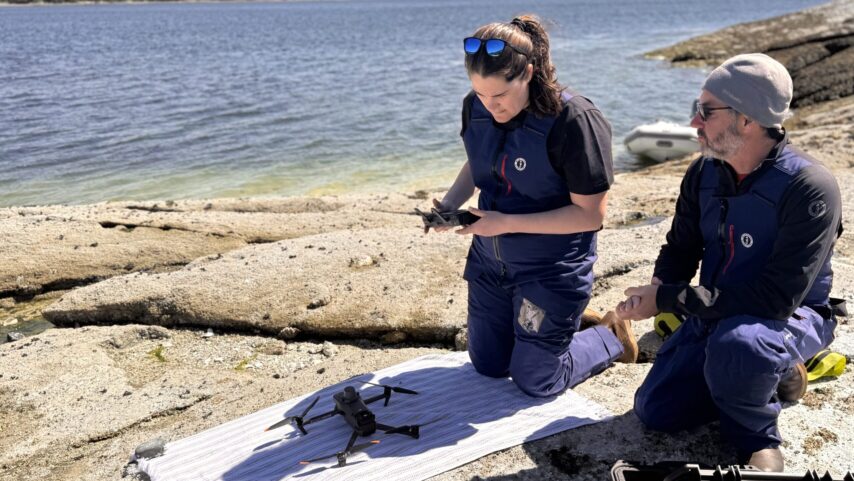
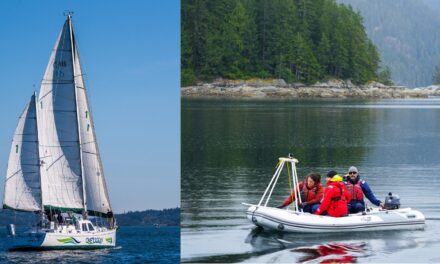
We anchored among the Octopus Islands in British Columbia just a few miles north of Seymour Narrows and spent hours studying two kelp beds. At our stop in Alert Bay, we studied six different kelp beds in the area. Continuing north, we spent time in Blackfish Sound in the Discovery Islands studying a kelp bed site and observed a humpback whale. Grace has managed to capture fluke images for identification. The data we are collecting (pages and pages) will keep us busy for years.
You can follow us on our website tracker at www.oneislandoneocean.com. The team has been working at a rigorous pace — waking around 5 a.m., underway by 6 a.m., covering good distances most days. Our port stops are quick — mainly to restock food or visit hardware stores. Huge thanks to Mike Beemer for keeping us civilized with water, electricity, and heat! Between skipper duties, research, meetings, writing, and cooking, we collapse into bed each night completely exhausted — but grateful.
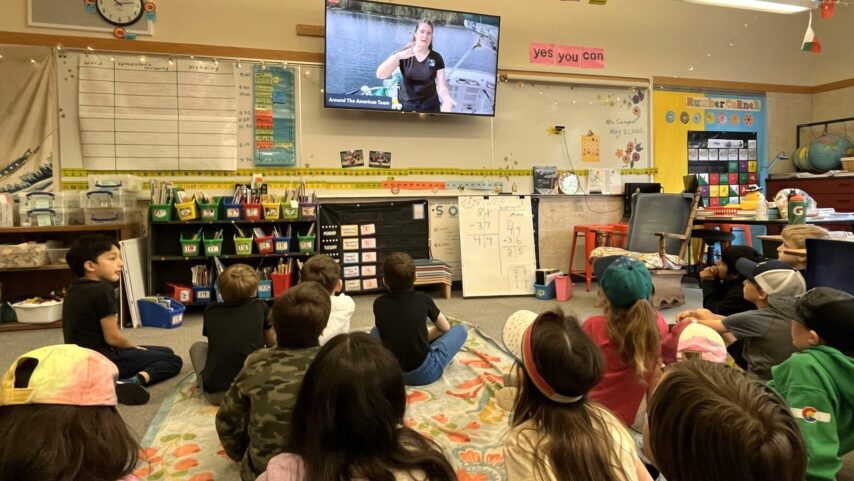
Our first televised classroom session was held on May 21 at 10 a.m. Pacific Time, hosted through “Exploring by the Seat of Your Pants,” a thrilling and rewarding experience. Classrooms from around the world tuned in for a tour of the 41,000 lb. sailing vessel One Ocean and to hear the crew talk about their journey for science – kelp research, whale photos (fluke imagery), and ocean atmospheric research.
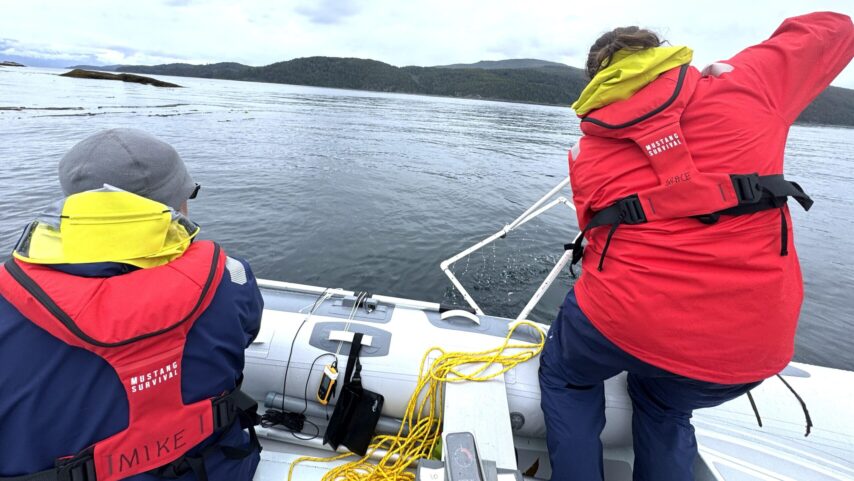
The crew described the quadrat system with a GoPro camera at the top and sides for kelp data collection. A drone is also used for photographing kelp on the surface. We had the opportunity to answer some truly thoughtful questions from students of all ages (https://www.youtube.com/watch?v=ixOi5eWLQYE), here are a few highlights:
- How many countries will you be visiting? – 12
- Do you get seasick? – not yet, we have patches just in case.
- What about hurricanes? – we avoid them by staying in port or altering course. Captain Mark Schrader has weathered one before – he and the ship pulled through.
- What do you eat? – a variety of home-style meals. We reprovision every few weeks. Yes, we have an Instant Pot on board named “Kelpy.”
- Do you live on the boat? – yes, for 14+ months, this is home.
- How do you wash your clothes? – with a bucket or in the shower; laundromats at port help too.
- Do you have medical training? – yes, we completed advanced medical preparedness training and are well equipped.
- Have you seen any sharks? – not yet but likely will soon.
- Do you have everything you need? – yes, we have a watermaker, 4 solar panels, satellite communications, 350 feet of chain for anchoring, and life rafts.
- Do you have land support – absolutely, scientific and medical partners are just a call away.
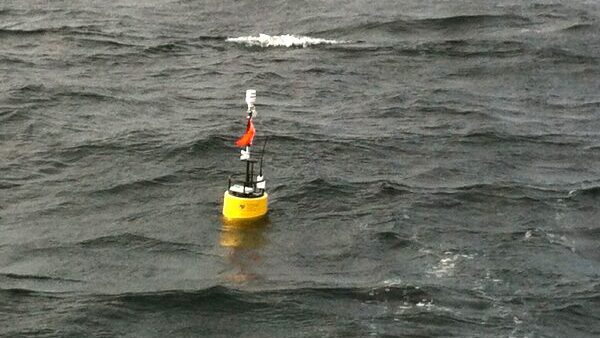
We’re excited to deploy our first MicroSwift Wave Buoy near Unalaska Island in June with our buoy drop sponsor Sailors for the Sea Powered by Oceana. Sailors for the Sea Powered by Oceana is the world’s leading ocean conservation organization that engages, educates, and activates the sailing and boating community toward restoring ocean health.
We’re also planning another classroom session in June to showcase kelp research, including a live quadrat drop, CTD cast, and ROV (remote-operated vehicle) footage.
We have had great press coverage so far and big thanks to our Education Partner, SVC, for a very spectacular launch from Anacortes! When we arrived in Victoria, BC we had a list of press coming to the boat and interviewing the team including CBC (one of my personal favorites) and the Times Colonist.
- CBC – https://www.cbc.ca/listen/live-radio/1-93-all-points-west (search for Around the Americas)
- Times Colonist – https://www.timescolonist.com/local-news/research-ship-with-uvic-ties-leaves-on-14-month-scientific-voyage-10618148
- SMS – https://www.smus.ca/news/charting-change-one-ocean-expedition-launches-learning-smus
- University of Victoria – https://www.uvic.ca/socialsciences/info-for/faculty-staff/announcements/uvic-kelp-study-sets-sail.php
And then of course, Waggoner, which has been a constant and wonderful support for this project! Watch for more updates and articles of our exciting expedition.
We thank everyone’s continued support and belief in this project for science and education.
Article by Jennifer Dalton and
the Crew of One Ocean
Photos: Crew of One Ocean