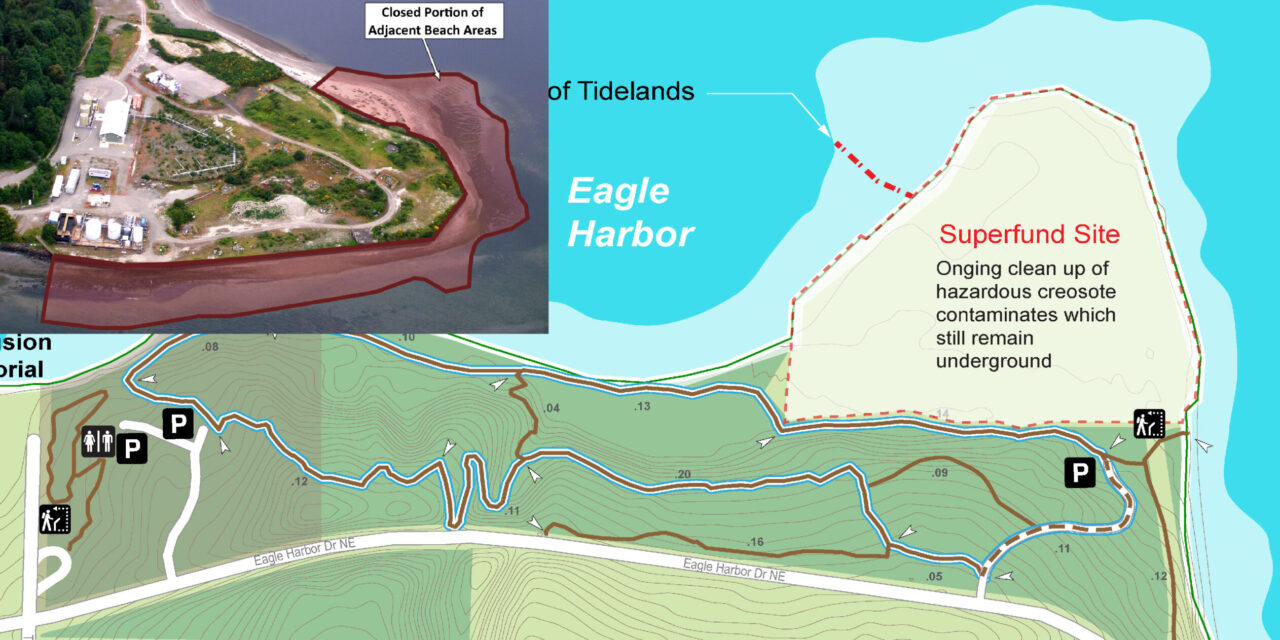
The EPA (U.S. Environmental Protection Agency) has announced several new phases of cleanup for the Wyckoff Superfund Site to be completed by the end of 2024, followed by the perimeter wall replacement slated to begin sometime in 2025. Work in September 2024 included decommissioning several existing groundwater wells, installing replacement wells, and demolishing the old thermal pilot test system in order to prepare for future remediation activities. The following information is provided by the EPA.
Background. Groundwater is recovered through nine extraction wells and treated in an on-site treatment plant prior to discharge into Puget Sound. The groundwater extraction system and a metal sheet pile wall around the edge of the site prevent contaminants from moving into Eagle Harbor.
Cleanup actions for soil and sediment at the site have been completed over the years, however, two beaches around the point remain to be cleaned. Work includes removal of contaminated sediments and capping the remaining contamination. The Wyckoff Superfund Site is on the eastern side of Bainbridge Island and forms the entry to Eagle Harbor in central Puget Sound. The contaminated site was once home to one of the largest wood treatment facilities in the United States – The former Wyckoff Company, which operated from 1903 until 1988. These operations contaminated the soil and groundwater at the Process Area (the Point) with chemicals from the wood-treatment process, primarily creosote.
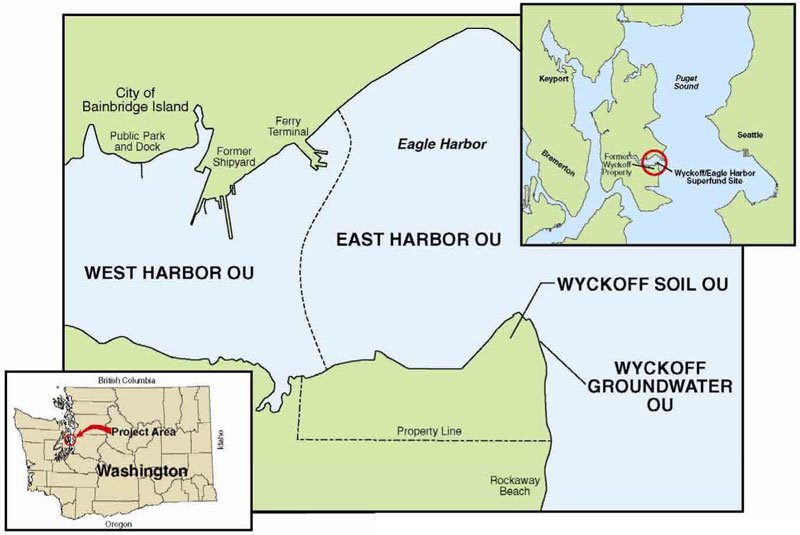
The EPA divided the site into three cleanup areas: the East Harbor Sediment Cleanup Area, the Wyckoff Facility Soils and Groundwater Cleanup Area, and the West Harbor Soils and Sediment Cleanup Area. The next three years of cleanup is funded by $80 million from a Federal Bipartisan Infrastructure Law. EPA is the lead agency for this project, with the support from other government agencies and organizations, including the U.S. Army Corps of Engineers. The Washington Dept. of Ecology operates the groundwater extraction and treatment system.
Health Concerns. The tidelands near the cleanup site are home to 22 acres of eelgrass beds, a critical habitat for young salmon and other marine species. Some of the eelgrass has been transplanted to other areas nearby. Contaminants pose a risk not only to the environment but to public health as well. Creosote, used in the wood-treatment process, is an oily, petroleum-based product with a distinctive odor. On bare skin, creosote can cause chemical burns, and may also cause cancer.
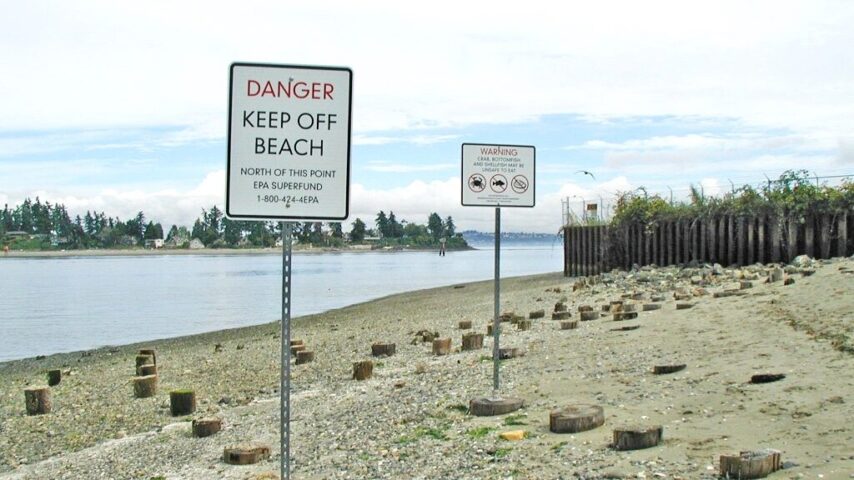
Access. Areas impacted by the cleanup work remain closed to the public. During cleanup, the public will not be able to access the southeast corner area. A guard shack has been installed in front of the fenced area, and two onsite informational kiosks display fact sheets and other information about the project.
Future Park. The ongoing work will support more of the Superfund site being open to the public as part of Pritchard Park, an existing 50-acre recreational area. The City of Bainbridge Island and the Bainbridge Island Metro Park and Recreation District have purchased the Wyckoff property, including the Point, with plans to establish a regional public park. Development of the park will occur in accordance with the requirements in the 2006 Agreement between the Dept. of Ecology and the City of Bainbridge Island.
Photos: EPA