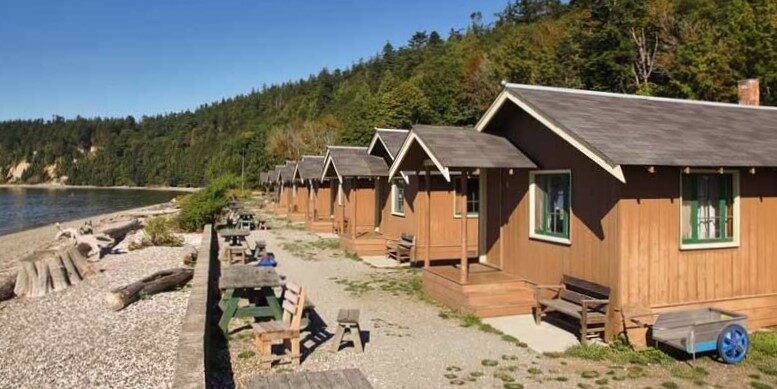
After much discussion and input from the community of Camano Island, the Commission of Cultural Resources voted in October 2024 to permanently close the historic cabins at Cama Beach. Restrooms in the lower area of the park, the park office, and the store along with the Center for Wooden Boats are also now closed.
King tides, flooding, and damage to the seawall led to significant septic and infrastructure failures, which prompted the closure of the cabins and other buildings in the beach area of the park. Day use will remain open, but restrooms will only be available in other parts of the park.
A comprehensive planning process for the future of the park, including considerations for overnight accommodations, is underway and expected to continue through 2026. Public input is encouraged during the planning process and comments can be submitted online using the comment form. Planning will take into account the aging seawall, the impacts of sea level rise, coastal bluff erosion, and regulatory requirements. Beach modeling research has indicated that there is a 50% probability that the majority of the lower park area will face frequent inundation by 2050 as a result of sea level rise.
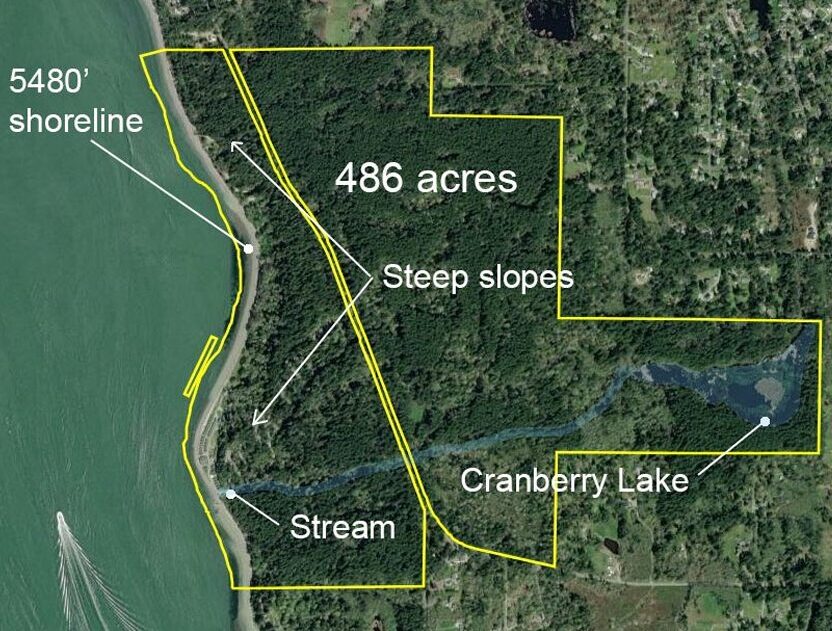
Background and History. Cama Beach, a former 1930s saltwater fishing resort was created by LeRoy Stradley. In 1934, LeRoy opened his resort with a couple dozen cabins that he rented to vacationers. After his death four years later, the Stradley family continued to operate the resort until 1989. The resort fell into disrepair, the Stradley granddaughters sold the property to the State of Washington at a fraction of its worth and contributed their own monies to improve the property and its assets. Then in 2005, Native American artifacts and human remains were unearthed at the resort while excavating utility trenches, putting a halt to the creation of a state park. After a long legal battle with the Tulalip Tribes, Washington Parks was able to open Cama Beach Historical State Park in 2008.
The ongoing planning process for the park’s future is now being done in consultation with impacted Tribal Nations, and there will be many opportunities for public input and involvement. You can email your questions to planning@parks.wa.gov.
Photos: WA State Parks