The Province of BC along with BC Hydro and conservation organizations have stepped up their efforts to protect local waterways from the invasion of harmful mussels, including zebra and quagga mussels. Nathan Cullen, Minister of Water, Land and Resource Stewardship has made fighting invasive mussels a priority in British Columbia.
The Threat. Invasive mussels pose a significant risk to rivers and lakes and the ability to produce electricity when pipes are plugged and other critical equipment damaged. Water intake pipes are often encrusted with thousands of zebra mussels, which increase sedimentation and corrosion of pipes, restricting or stopping water flow.
Environmental Impact. Zebra mussels attach themselves to native mussels in large numbers, preventing native mussels from moving, feeding, and reproducing. Adult zebra mussels can survive out of water for a week and up to a month under ideal conditions, which is why it is so important to wash down trailers, boats, and equipment with high-pressure hot water, then dry as much as possible. Microscopic larvae can be transported in bilges, ballasts, or any equipment that holds water. Potassium chloride (potash) can be used to kill zebra mussels. The dosage is 100 parts per million so as not to harm finfish. Causing similar havoc, quagga mussels can alter the entire chemistry of a water ecosystem. They are prolific filter feeders, removing plankton, causing unnaturally clear water.
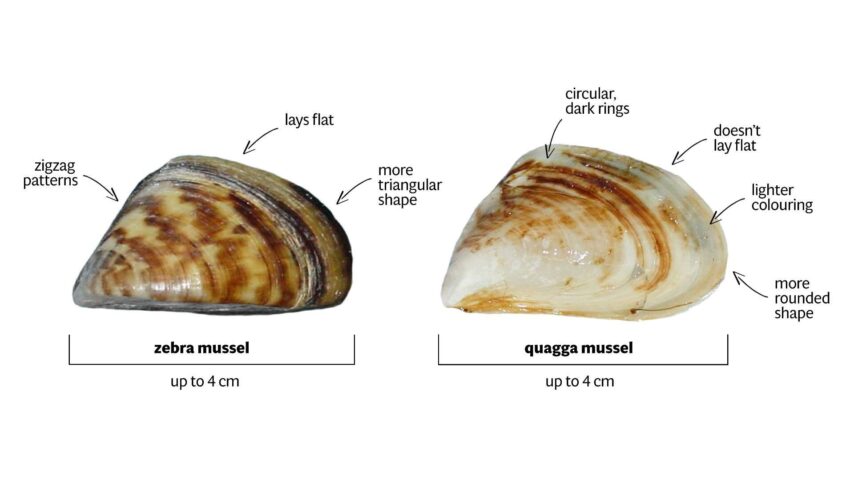
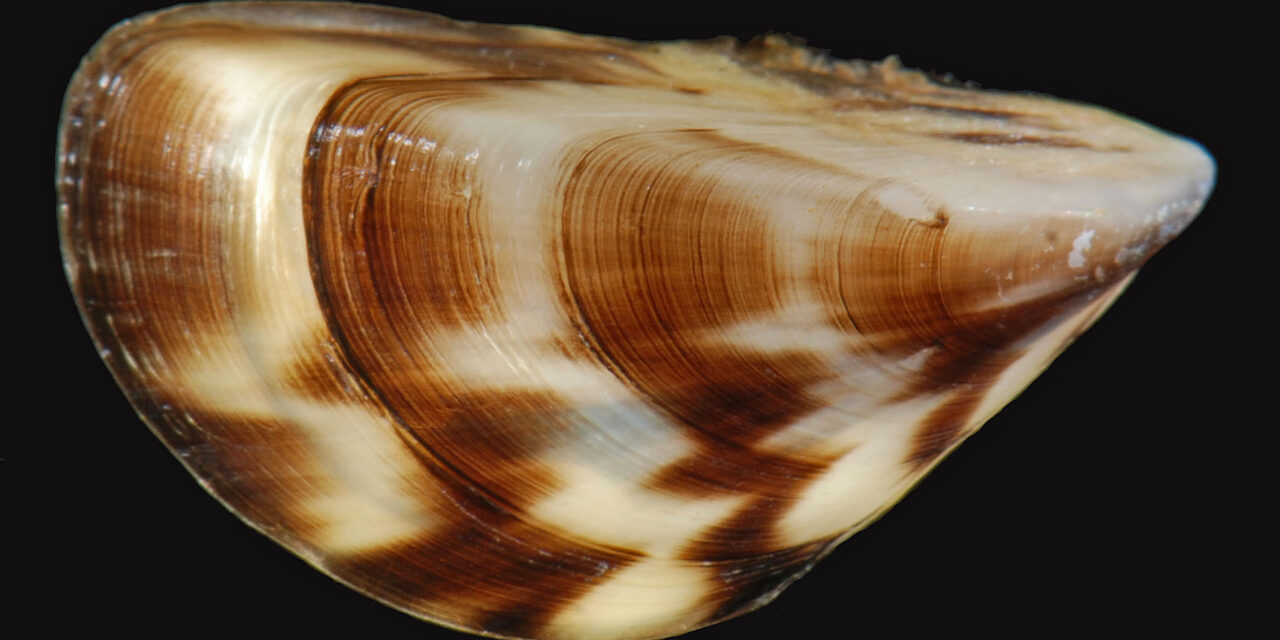
What’s Being Done. Eradicating invasive mussels is possible if low in numbers but can be very expensive. Preventing their spread is the best course of action. Zebra mussels and quagga mussels are similar in appearance – the zebra mussel has a zig-zag pattern and the shell lays flat; the quagga mussel has dark circular rings and lacks a flat underside so will tip over.
BC Hydro is supporting IMDP (Invasive Mussel Defense Program) for the province, with a new five-year commitment of annual funding of $900,000 beginning in 2024. The BC Wildlife Federation, Pacific Salmon Foundation, and Habitat Conservation Trust Foundation are also providing a collective contribution of $150,000.
The IMDP program includes watercraft inspection stations, enforcement, lake monitoring, and public outreach signs and education. The program collaborates with neighboring jurisdictions across Western Canada and the United States.
New B.C. Law in Effect. It is now illegal, as of May 17, 2024, to transport watercraft in British Columbia with the drain plug still in place. Boat operators in B.C. are required to pull the plug before moving a boat or any equipment between water bodies. Boats must be drained of water on dry land, including internal compartments such as ballasts, bilges, and live wells. Other equipment such as fishing gear, life jackets, coolers, and paddles should also be cleaned away from storm water drains, ditches, and waterways. These steps help stop the spread of whirling disease (microscopic parasites that infect fish through their skin) and invasive mussels.
Inspection Stations. Under Provincial legislation, all watercraft entering BC and passing by an open inspection station must report in. Failure to stop at an open inspection station could result in a $345 fine. Inspection stations are open from April through mid-October to prevent zebra and quagga mussels from hitching a ride on boats and other watercraft. You must stop and report to all watercraft inspection stations along your travel route. Watercraft includes sailboats, motorboats, car toppers, kayaks, canoes, and paddleboards being transported in BC. A team of specialized inspectors will check for invasive mussels; and if necessary, decontaminate watercraft.
Watercraft decontaminations are free and Provincial inspectors can inspect watercraft upon arrival to ensure they are clean before launching in BC waters. Advance notification will help streamline this process. If you’re bringing your boat from out-of-province, contact the Provincial Program at COS.Aquatic.Invasive.Species@gov.bc.ca.
“Don’t Move A Mussel,” a catchy campaign slogan, serves as a great reminder.
Photo: Wikipedia
Diagram: Lilly Center