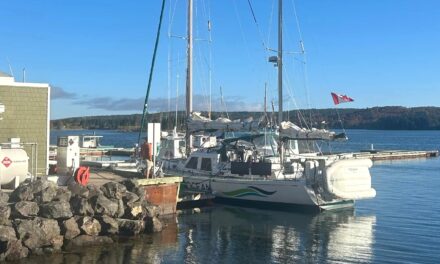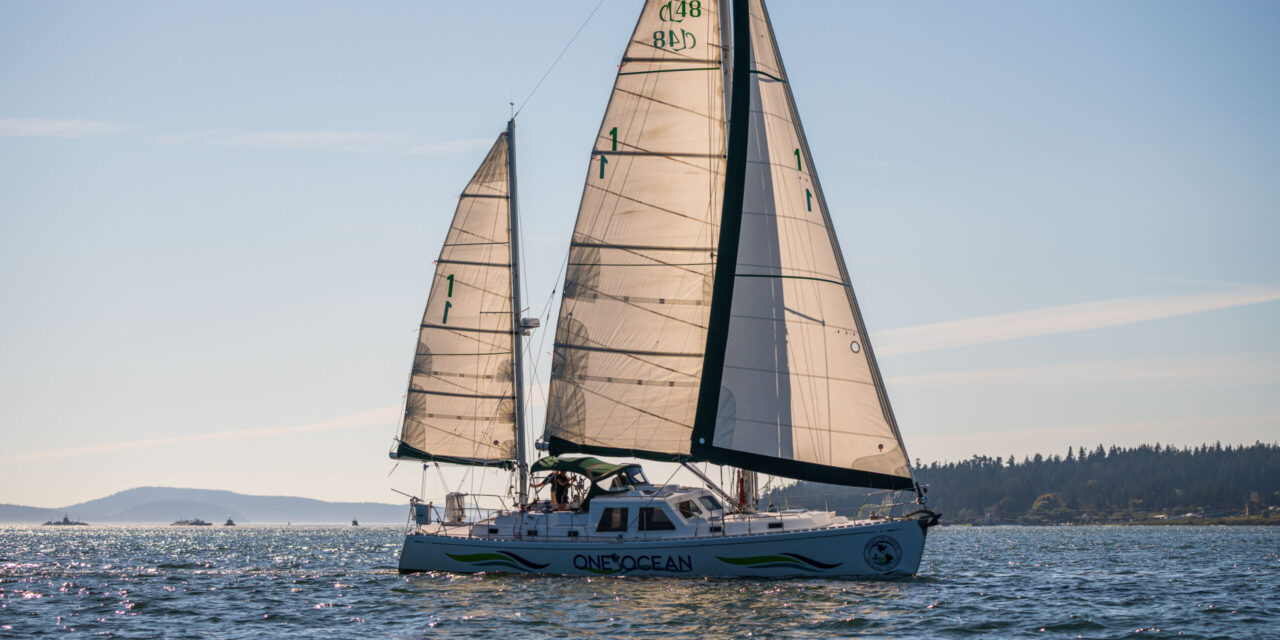
The 1995 Westerly sailing vessel One Ocean is receiving her refit at the Marine Technology Center in Anacortes, Washington in preparation for the 14-month Around the Americas Expedition. The refit is progressing nicely and the team is on schedule for a May 2025 departure.
Likewise, scientists involved in the expedition are making preparations for on-board scientific equipment and documentation of research to be shared on an open-source website. See the previous Waggoner article HERE regarding the Pole-to-Pole study of Bull Kelp by crew member Grace Dalton, with the University of Victoria, under the direction of Dr. Maycira Costa.
The University of Washington’s Applied Physics Laboratory will play a key role in the expedition via onboard research equipment, including a meteorological station to gather weather and surface heat flux calculations; deployable buoys for wave studies and ocean properties; and instruments for ocean temperature and salinity profiles. Needed instruments will be purchased or built for the voyage and installed on the vessel One Ocean in addition to being supplied with deployable wave buoys.
The crew will monitor and maintain the instruments, which are connected by cable to an onboard laptop with data acquisition software. Data will be stored on a hard drive and regularly transmitted to the cloud for the meteorological and ocean temperature studies. Wave reports from deployed buoys will be sent every hour via iridium Satellite for approximately three weeks. The buoys are not recovered and no data will be stored on board the vessel. Buoy reports are publicly available in near real time at www.apl.uw.edu/swift.
The land-based UW Applied Physics Lab Team consists of Harry Stern (Principal Mathematician and Arctic Studies), Andy Jessup (Principal Oceanographer), Jim Thomson (Wave Buoys), Ignatius Rigor (International Arctic Buoy), and Amanda Labrado (workforce development, education, and outreach).
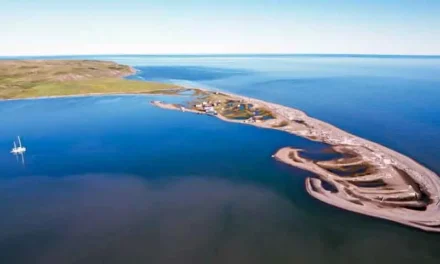
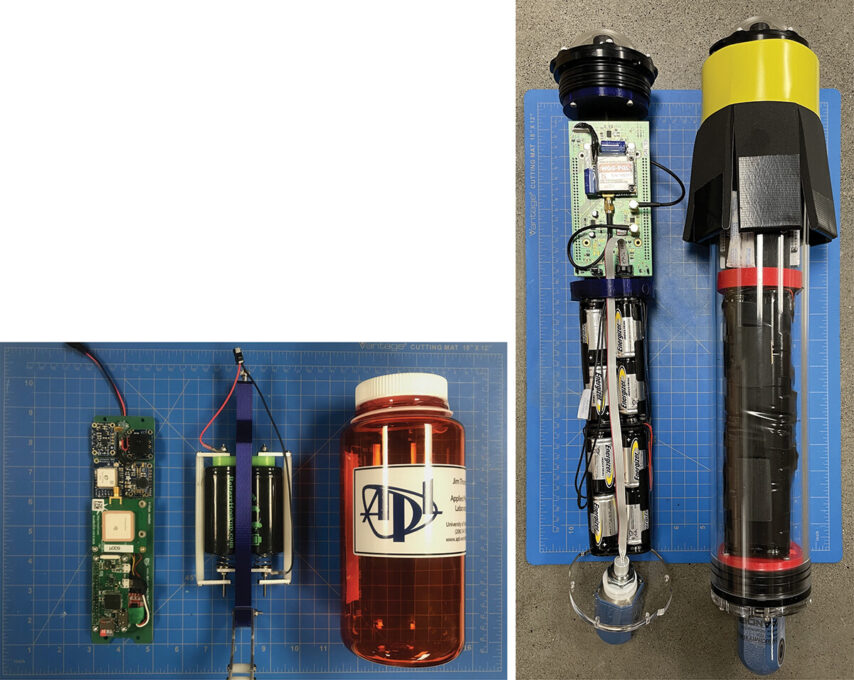
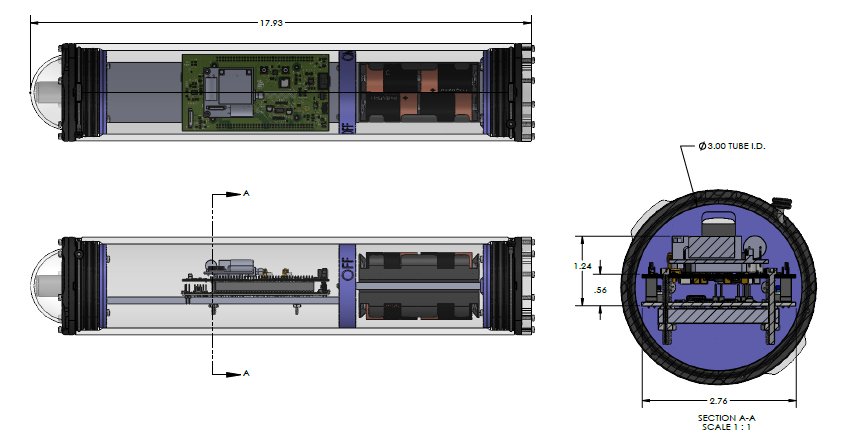
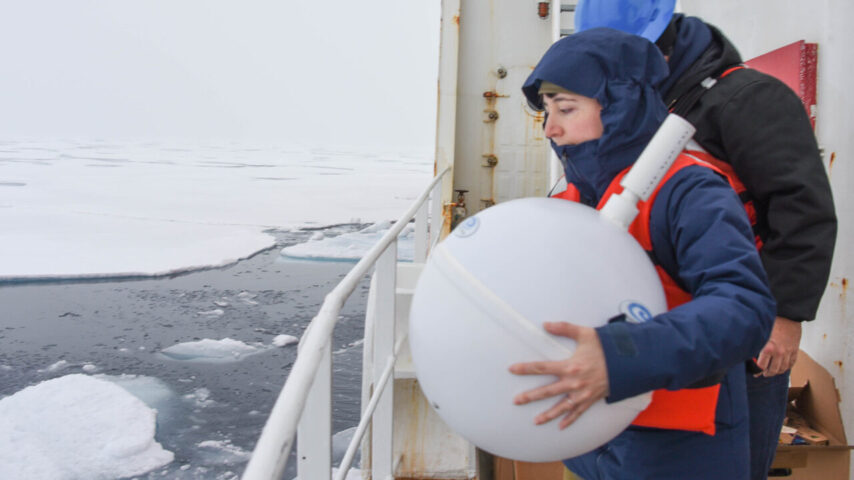
microSWIFT Expendable Wave Buoys. These small, cylindrical-shaped buoys (weight 6 lbs., length 17.9 inches) are used to measure ocean surface waves and positions. The buoys are robust for sea ice, aerial deployment, and can be used in tropical cyclones as well as in polar regions. The crew on vessel One Ocean will have 10 such buoys, which will be deployed at specific locations: Bering Sea, Beaufort Sea, Baffin Bay, and seven other locations to be determined. UW scientists are interested in the strong increase in wave activity in the polar regions related to reductions in sea ice and how wave increases are affecting the coast and those who live along the coast.
Ocean/atmosphere Buoys. These buoys collect data about the ocean and atmosphere, they are used in the International Arctic Buoy Program (IABP), see https://iabp.apl.uw.edu. The type of buoy used depends on where they are deployed. The IABP Ice Ball buoy sits on top of large chunks of ice and measures temperature above, in, and below the ice; measures the ice thickness; and measures sea level pressure. The NOAA SVP-B buoy is a drifting buoy that measures sea level air pressure and other parameters.
Community members and students can learn about the Arctic Ocean through the Float Your Boat program at www.floatboat.org.
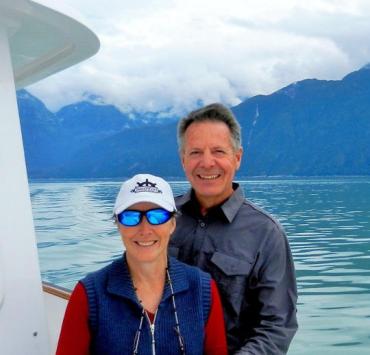
Header Photo: Around the Americas Team
Photos: MicroSwift and IABP
Univ. of WA Applied Physics Lab
Stay tuned for Part II – to learn about the onboard meteorological station and instruments for collecting atmospheric conditions and radiant heat transfer data.