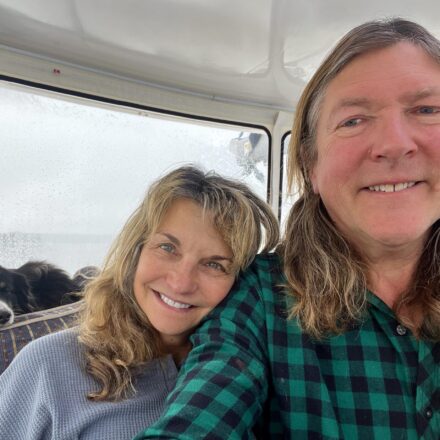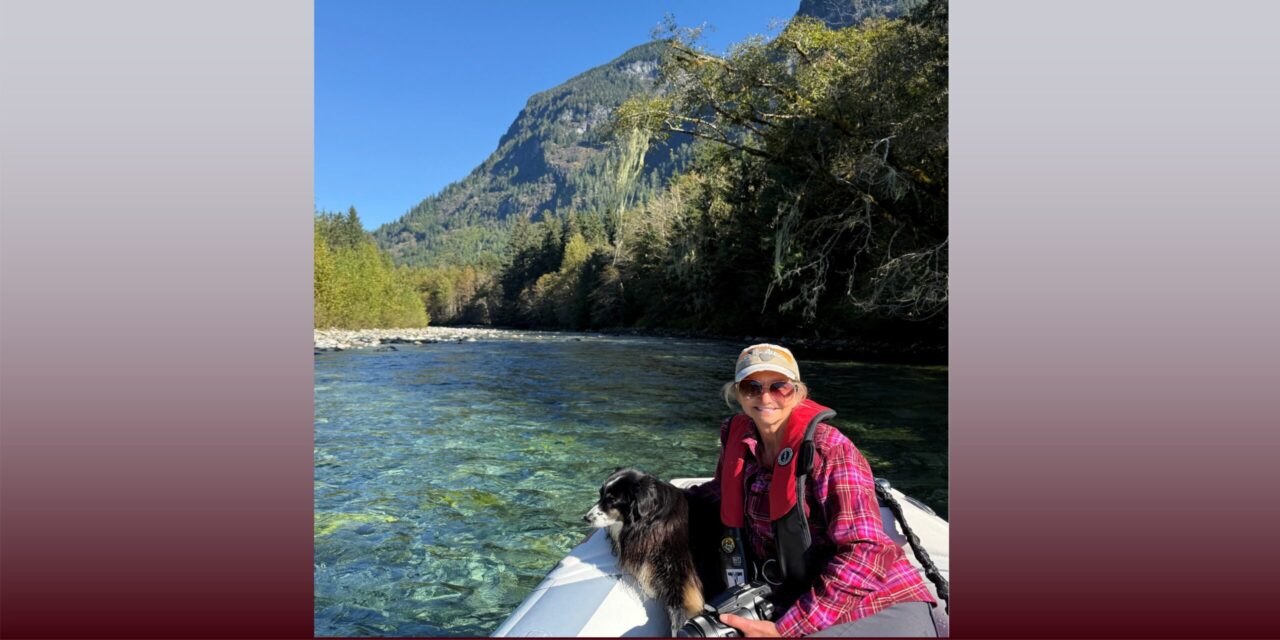
Waggoner Field Correspondents Brian and Laura DeNault have been spending September and October in search of bears. While there are official designated bear viewing sites in British Columbia and Southeast Alaska, the DeNaults have chosen to explore remote rivers and river deltas for a true wilderness experience.
In their hunt for salmon and bears, their first stop was to take their tender up the Theodosia River, which flows into Okeover Inlet. There were salmon in the pools, but apparently not yet enough to attract bears. Their second stop was near the head of Toba Inlet in the Desolation Sound region. Their report follows:
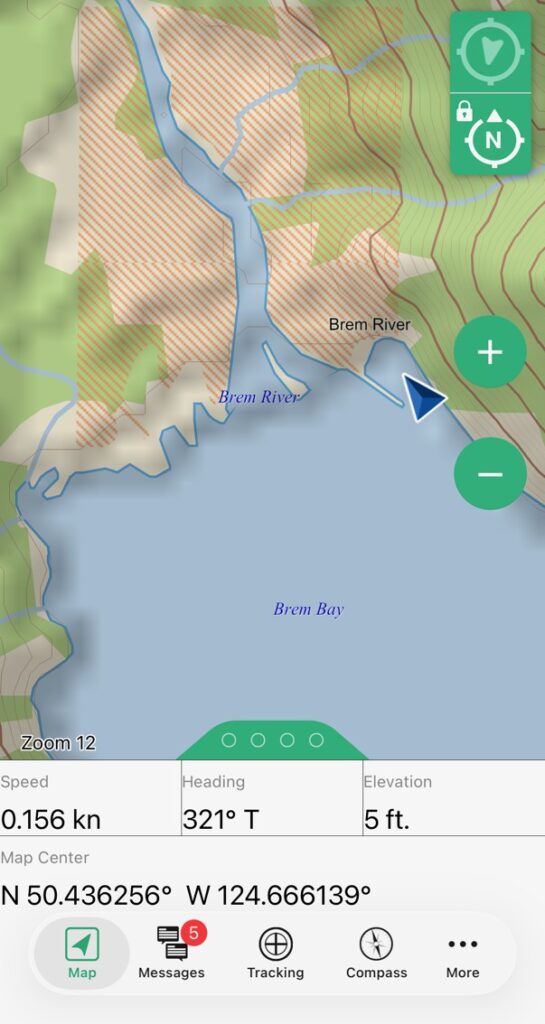
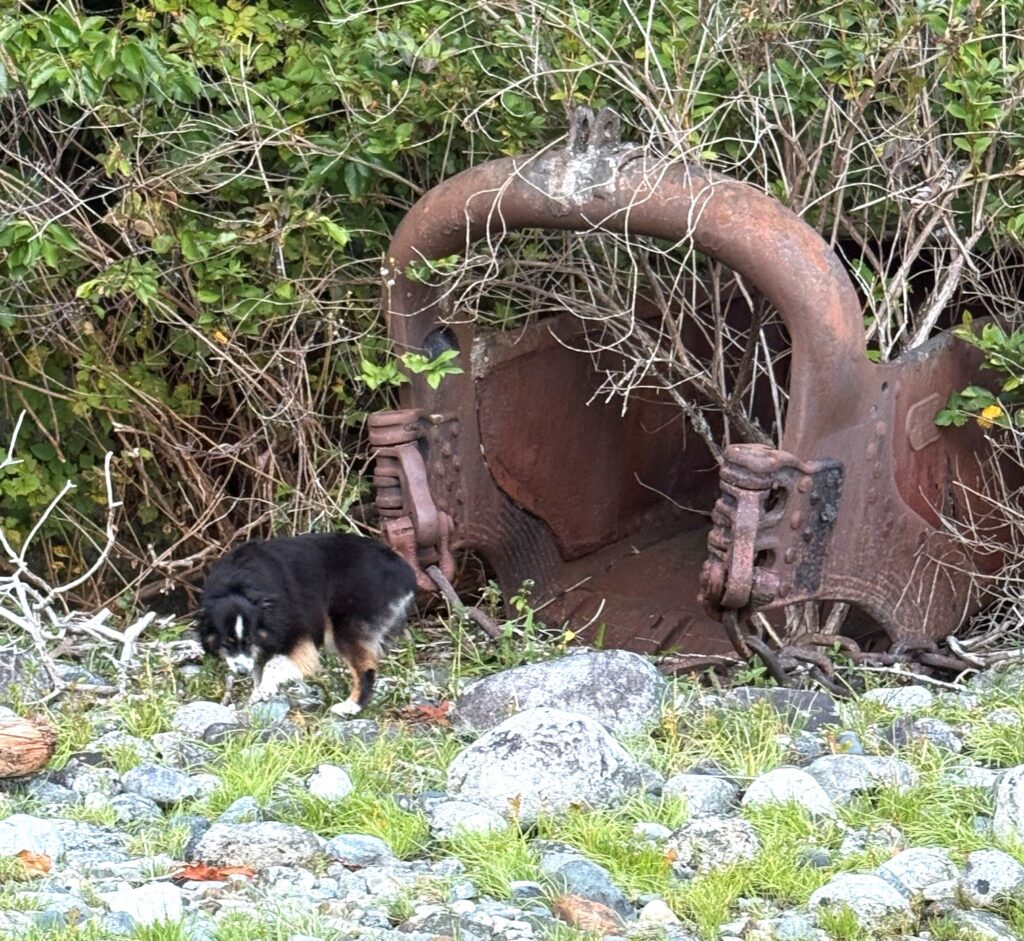
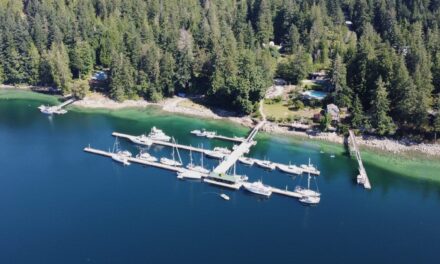
We anchored in Brem Bay, located in Toba Inlet, which has an excellent anchorage in the northwest corner. There is a natural cove that has been extended by the construction of a rock breakwater, no doubt man-made since we saw the remains of an old huge scoop nearby on shore that could be attached to a crane. The bay is big enough for one large yacht and has good anchoring depths. It would be easy to miss seeing this great anchorage spot on a chart plotter unless you zoom in. We were able to get our tender up the Brem River about 1/4 mile before we reached a shallow rapid. We anchored our tender in about 18 inches of water mid-stream, and watched and waited. No bears and we saw only one salmon. Our conclusion was that the salmon have not yet started their runs in Desolation Sound.
We departed Toba Inlet and headed north through the Yuculta and Dent Rapids and anchored at the head of Frederick Arm at the mouth of the Estero Basin drainage creek. Estero Basin gets runs of all northwest salmon species but we saw no salmon. Because of the dry summer, water flow in the creek was still low. We estimate that a tide of 14.5 feet or more would allow entry to the basin with a kayak.
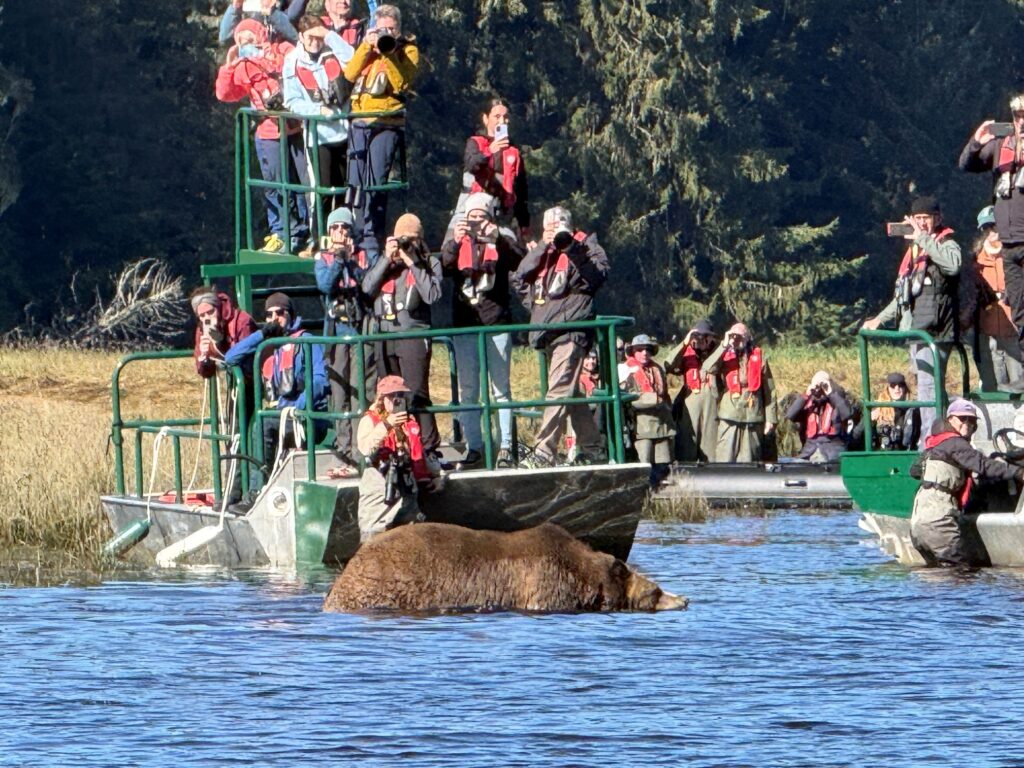
In their journeys, the DeNaults stopped at Glendale Cove off Knight Inlet in the northern reaches of the Broughtons, a known bear-viewing site monitored by First Nation watchmen. They discovered that Knight Inlet Lodge within Glendale Cove is now owned by five different First Nations that provide commercial bear viewing excursions. The DeNaults report that the area has become overcrowded and very commercial. While commercial craft were seen entering the river delta, recreational boaters are told not to enter the river. Because the DeNaults saw the commercial boats go upriver, they decided to follow and they did get to see a grizzly bear that put on a show, but they left feeling disappointed due to the unfair advantage granted to commercial vs. recreational boats and the large number of tourists crammed into a small viewing area. The DeNaults then cruised to the head of Knight Inlet and spent an evening moored at an abandoned dock left from a logging camp. Their report follows:
We left Glendale Cove and cruised to the head of Knight Inlet and moored overnight on a rickety abandoned dock left from a prior logging operation. There is an extensive road system that reaches both to the valley of the Klinaklini River and the valley of the Franklin River. We walked for several miles on these gravel roads and saw lots of bear scat. We could not boat up the Franklin River, because there is a shallow rapid where it reaches Knight Inlet, but we were able to take our tender a long distance up the Klinaklini River; however, it was a challenge not being able to see the rocks through the turbid glacial melt waters. We saw no sign of salmon in the Klinaklini River, nor any bears feeding, but suspect both are present and that the bears’ feeding pools are much farther upstream.
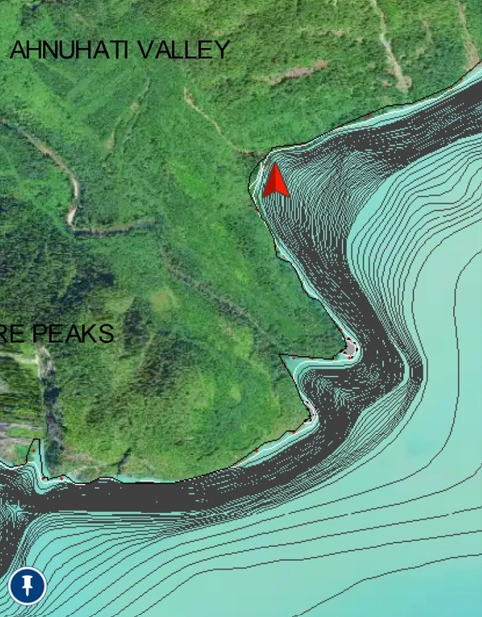
We started heading back down Knight Inlet in the afternoon, knowing that there is very little anchorage in Knight Inlet. We felt lucky to find a satisfactory place to anchor in a cove just north of the Ahnuhati River. We set our anchor at a depth of 50 feet and put out 160 feet of chain, which allowed plenty of room between our boat and shore. We learned later that our anchorage was just in front of the site of the ancient Ahnuhati Village, no sign of the village remains. A legendary tribal story makes the Ahnuhati Valley famous in local tribal lore.
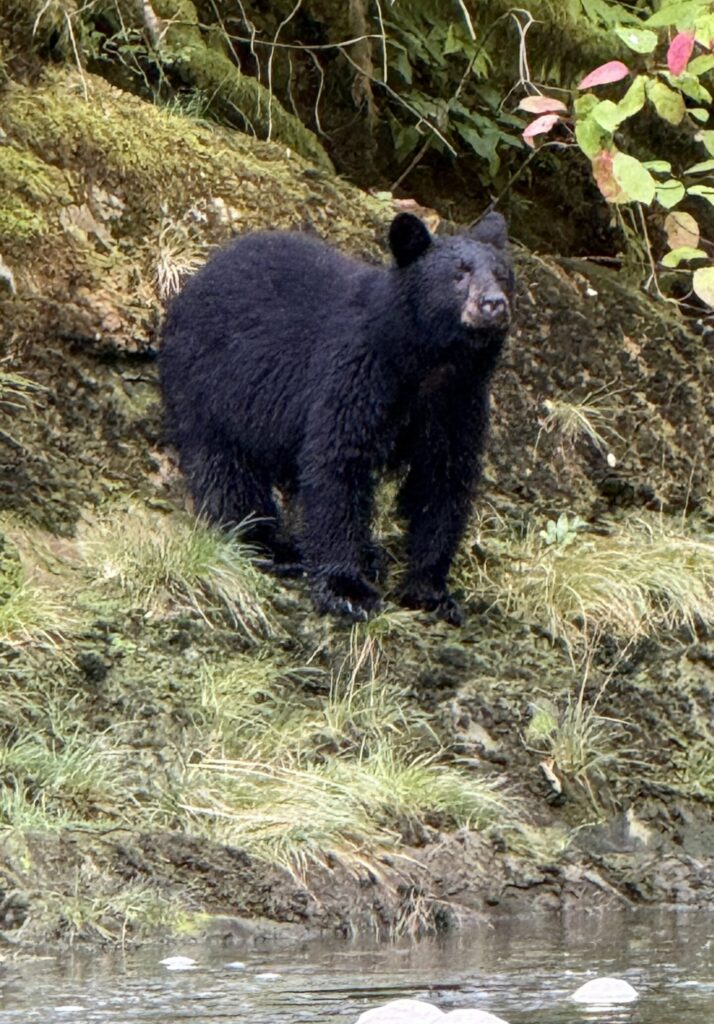
Just before we left our Ahnuhati anchorage, we kayaked over the mouth of the Ahnuhati River and saw a cute, small black bear, and then saw another black bear on the shore as we came back.
Not deterred in their search for salmon and bears, the DeNaults departed Knight Inlet and cruised into Tribune Channel, where they spent a night anchored in settled weather between Kumlah Island and Gilford Island in the Broughtons. The following morning, they cruised to the head of Thompson Sound. Their report follows:
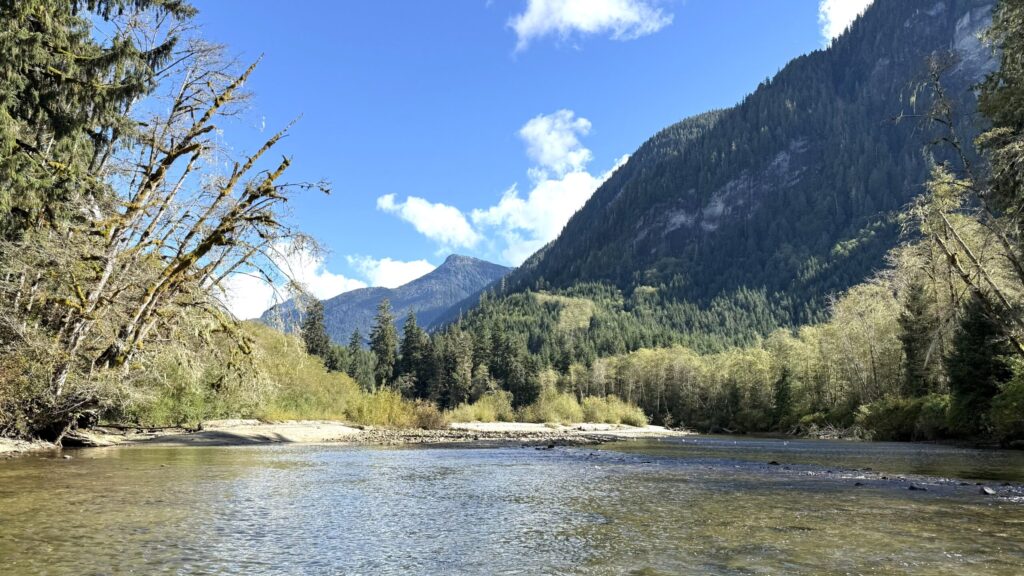
At midday there was a 14.6-foot-high tide (Kwatsi Bay tide station) so we took our tender on a beautiful journey up the Kakweiken River and found it surprisingly easy to get nearly 2 miles up the river, when it suddenly became shallow over a gravel bottom. We threw out an anchor and watched the nature show – lots of birds and salmon struggling to cross a shallow gravel bar to continue their journey up stream.
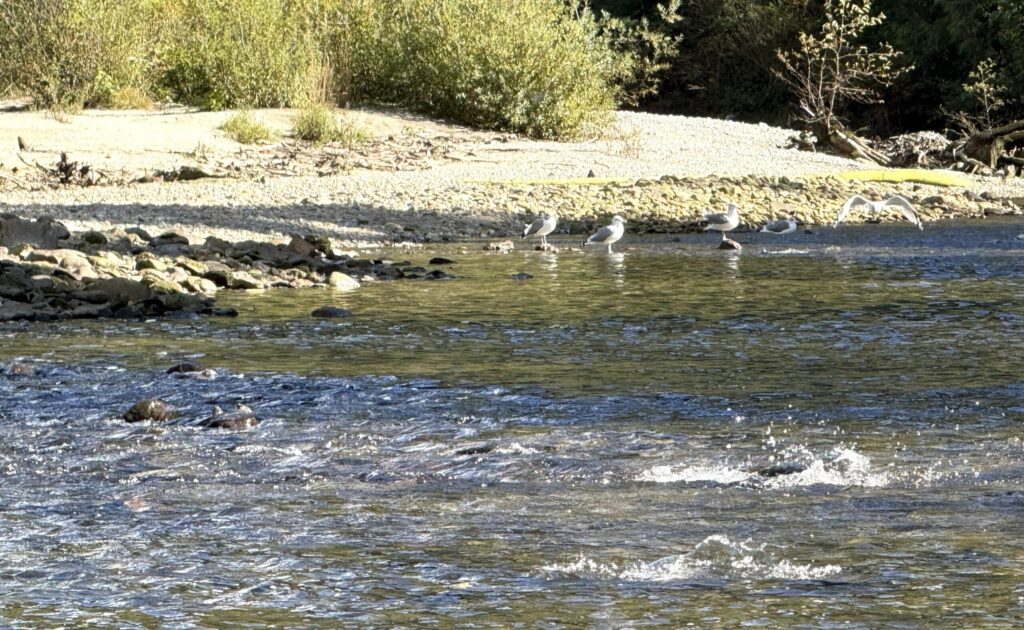
We were surrounded by thousands of swimming Pink Salmon, and the bottom of the river was littered with hundreds of spawned-out dead salmon. We saw a large black bear on the riverbank, and surprised that there were not more bears present. There were also a lot of seals at the mouth of the river, many basking on floating logs. This was a most memorable river excursion.
Stay tuned for more articles about the DeNaults wilderness adventures as they continue further north in search of salmon and bears.
Article by Brian & Laura DeNault
Photos Credit: Laura and Brian