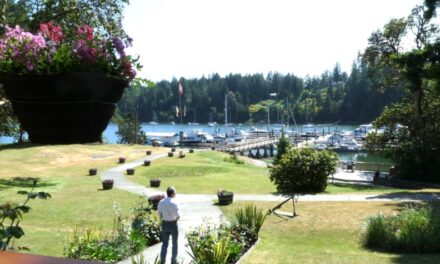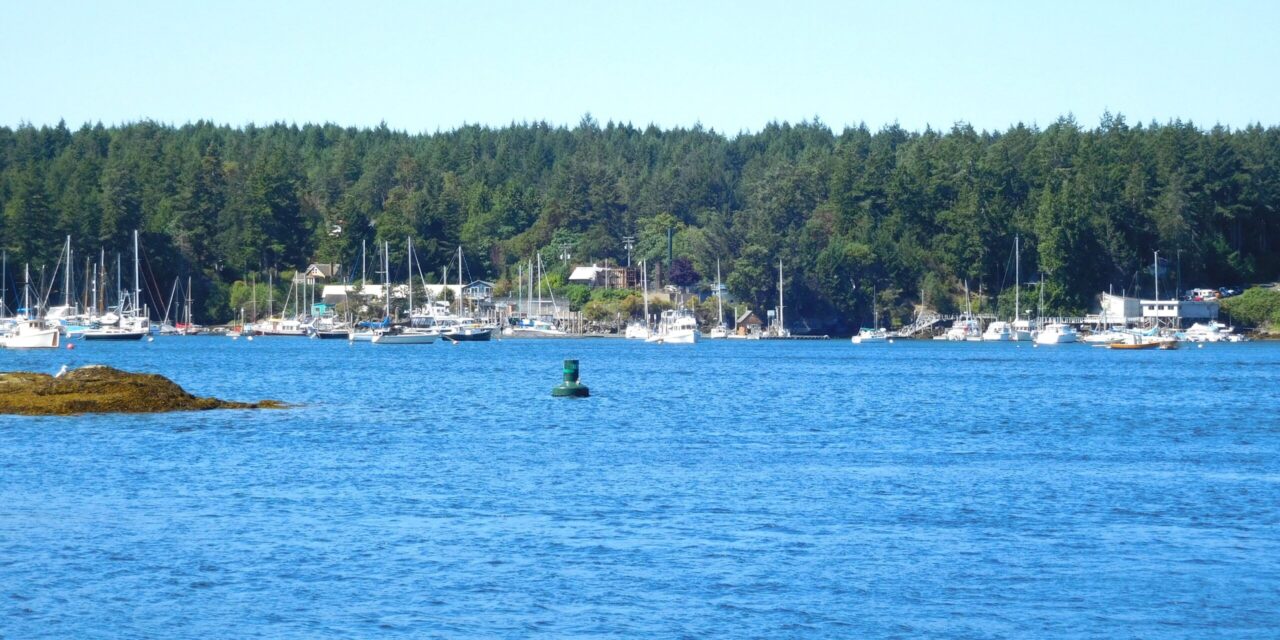
A new museum project commemorates the Japanese community on Gabriola Island before their forced removal between 1942 and 1949. The main exhibit is at Gabriola Museum with satellite components at Page’s Resort & Marina and Page’s Inn on Silva Bay, a popular destination among boaters as well as locals, and the historic location of the Koyama Fish Camp and the Shinde Sunrise Sawmill.
The satellite components at Page’s Marina and Page’s Inn commemorate the Japanese community on the island before their forced removal, featuring the Koyama and Shinde family businesses. The components at Page’s on Silva Bay feature monuments to the Koyama and Shinde families, inspired by Shinto torii gates. The gate on the docks at Page’s Resort commemorates the Koyama story and the gate on the docks at Page’s Inn commemorates the Shinde family story. There is a middle panel on each torii gate with a see-through photo illustrating the fish camp and the sawmill in their original locations. A third exhibit, Gaman, meaning resilience, at Page’s Inn is an interactive display showcasing Gabriola artists influenced by the Japanese culture.
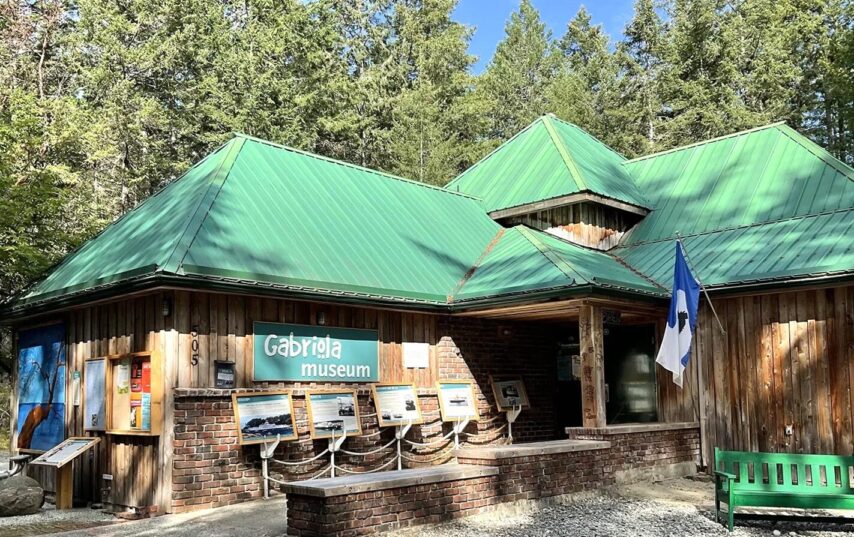
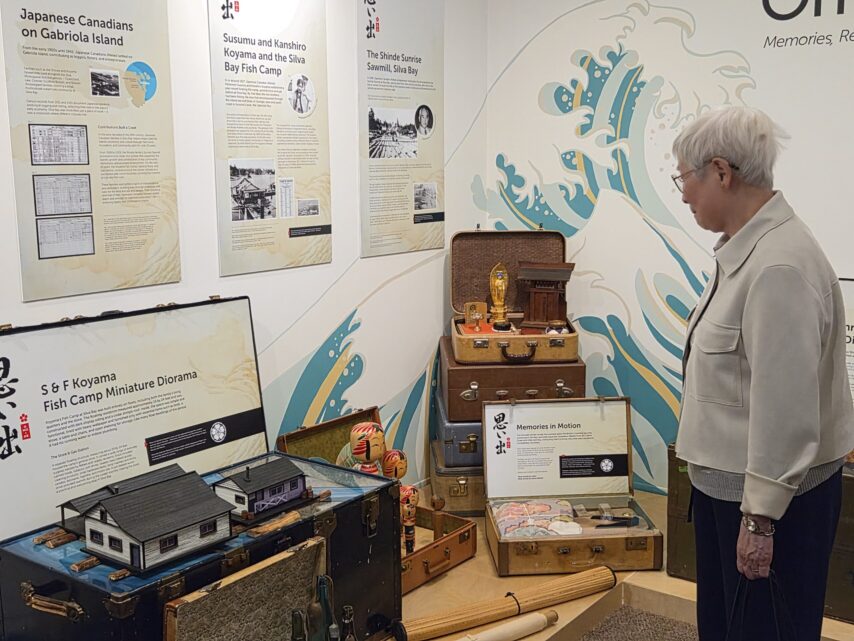
The Gabriola Museum, located on the north end of the island, showcases miniature dioramas of the Koyama Fish Camp and the Shinde Sunrise Sawmill, which once stood at Silva Bay.
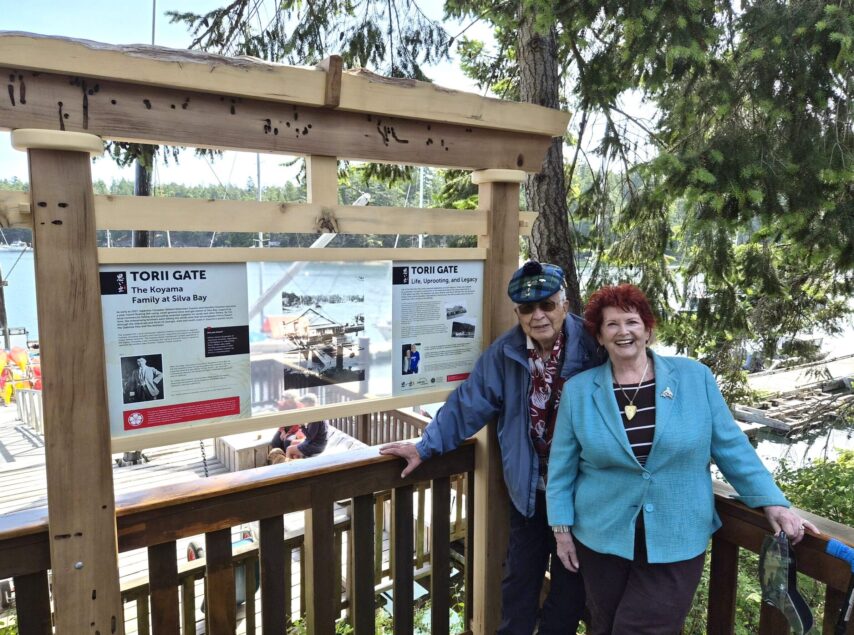
The Koyama Family Story. As early as 1927, Japanese Canadian (Nikkei) fishermen Susumu & Kanshiro Koyama operated a year-round floating fish camp, small general store, and gas station at Silva Bay. In 1942, Kanshiro Koyama’s family was forcibly removed as part of the federal government’s wartime internment of people with Japanese origin. The Koyama fish camp was seized and sold. Les and Jack Page, who purchased the property from C. Taylor in 1943, continued operating a store and fish-buying camp on the site. The Koyama family had maintained multiple operations in the region, including a fish camp at Brechin Point in Nanaimo, operated by a brother.
The Shinde Family Story. The Sunrise Sawmill at Silva Bay, owned and operated by the Shinde family, was destroyed by fire in 1925. The family moved to Steveston, where they resumed fishing for a living. Like all Japanese Canadians living on the coast, they were forcibly uprooted in 1942; their boats and property were seized and the family separated. Yoshimatsu and his wife Kiri were moved to Emerson, Manitoba to work on the sugar beet farms. The rest of the family was moved to Greenwood BC. Few traces of the mill at Silva Bay remain, but memories survive through family stories and community research. Shinde had recognized the advantages of Silva Bay with its protected waters, nearby stands of timber, and its proximity to Nanaimo and Vancouver markets. He had built a mill, along with a bunkhouse and cookhouse for workers and their families.
The torii features at Silva Bay can be viewed year-round, while the exhibits at Gabriola Museum titled “Omoide: Memories, Recollections and Reminiscences,” are open seasonally, starting mid-May. Gabriola Museum is located at 505 South Road (up the hill from the ferry dock at Descanso Bay); call 250-247-9987 to confirm hours. The Omoide (memories) project is supported by the Gabriola Historical & Museum Society, along with collaborations with the descendants of Japanese families.
For Island transportation, contact Gertie Transit (250-668-6809), a flag-down bus system, or contact Gabriola Taxi (250-247-0049). If you carry fold-up electric bikes on board your vessel, you have another viable option for touring the Island and visiting Gabriola Museum.
Header Photo Credit: Lorena Landon
Museum Photo Credit: GabriolaMuseum.org
Daniel Yosh Koyama, son of Kanshiro Koyama and
Gail Page at Page’s Resort – photo credit: Gloria Hatfield
Masako Fukawa and granddaughter of Yoshimatsu Shinde
at Gabriola Museum – photo credit: Gloria Hatfield, Page’s Resort