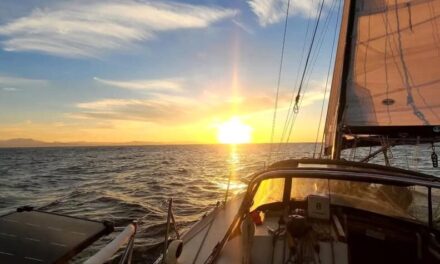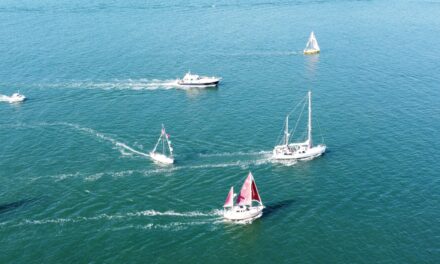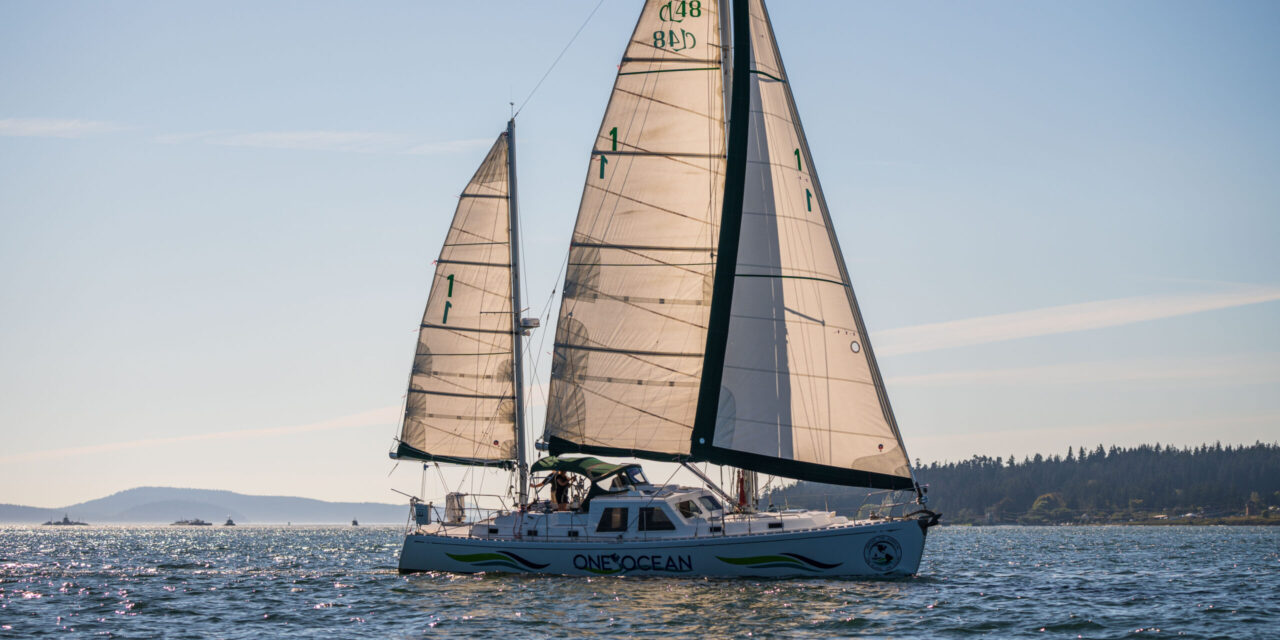
The 48-foot vessel One Ocean is set to sail the Americas with a purpose. In Part I, we described the deployable buoys that will be used to collect wave study data and how these small microSwift buoys work. Here in Part II, we will discover how the crew and the UW physics lab will be gathering data regarding ocean salinity and temperature, and the instruments included in the onboard weather station. Studies and data collected during the Around-the-Americas Expedition will be shared publicly through an open source, more about that to come.
Salinity and Temperature. Studying ocean salinity and temperature is crucial because these factors directly influence the density of seawater, which in turn drives ocean currents, impacting global climate patterns, the water cycle, and the distribution of heat across the planet.
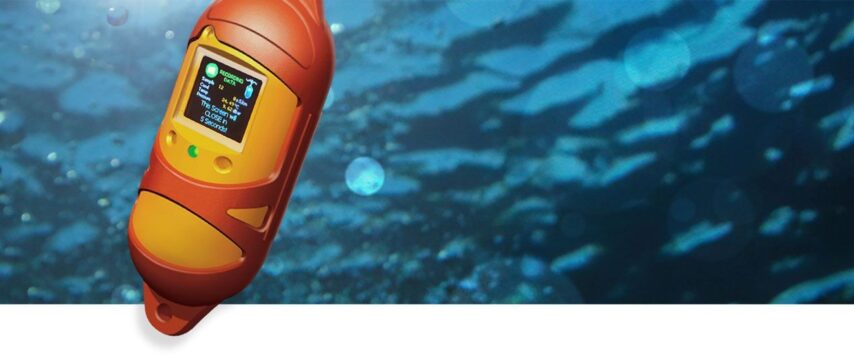
The crew aboard One Ocean will use a SonTek Castaway CTD to measure ocean temperature and salinity. The CTD (conductivity, temperature, depth) is easy to operate from a sailboat and is self-contained. A profiling CTD measures water parameters as it travels vertically through the water lowered over the side of a boat and can profile to depths up to 100 m (328 ft.). Each CTD cast/drop is referenced with time and location using a built-in GPS receiver. Plots of conductivity, temperature, and salinity can be viewed immediately on the integrated color LCD screen in the field. Raw data is easily downloaded via Bluetooth to a Windows computer for analysis or export.
By measuring the conductivity of seawater, the salinity can be derived from the temperature and pressure of the same water. The depth is then derived from the pressure measurement by calculating the density of water from the temperature and salinity.
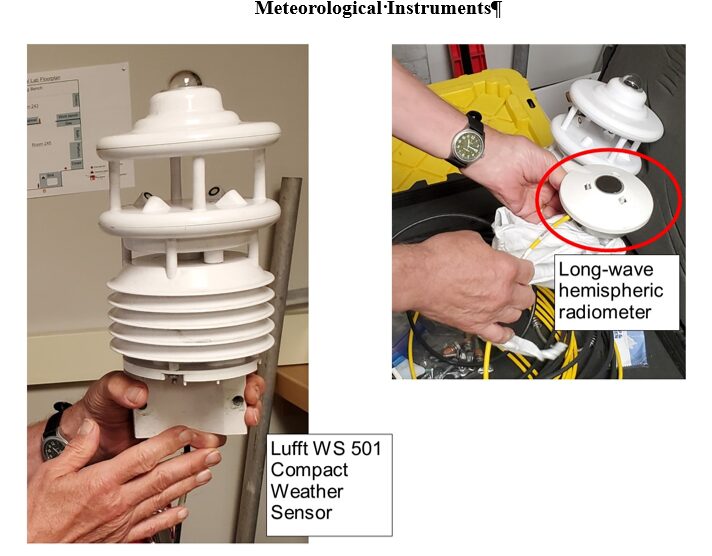
Onboard Meteorological Station. Several instruments make up the onboard weather station to collect basic meteorological observations and study upward/downward longwave radiation. These instruments include the following:
- Lufft WS 501 Weather Sensor – a compact, all-in-one device that measures various atmospheric conditions including air temperature, relative humidity, air pressure, wind-speed, wind direction, and solar radiation.
- Kipp and Zonen SGR3 – is a radiometer/pyrgeometer device used to measure the intensity of radiant energy (electromagnetic waves that travel thru space). The SGR3 measures the amount of longwave infrared radiation coming from the sky – essentially measuring the heat being emitted from the Earth’s surface towards space. SmartExplorer Windows software provides logging and display.
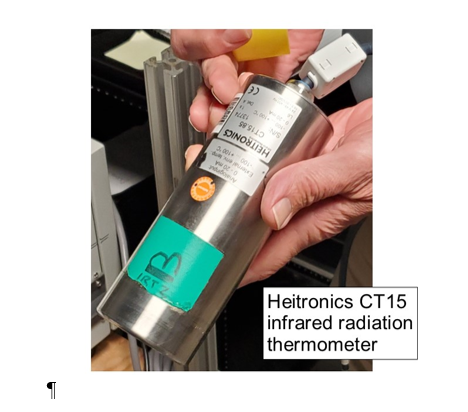
- Heitronics CT15 – is an infrared radiation thermometer, also known as a pyrometer, designed to measure surface temperatures of objects using infrared radiation. The stainless-steel housing is robust and suitable for harsh environments.
Heat Flux Calculation. Collected data is used for heat flux calculation. Calculating ocean heat flux essentially means measuring the amount of heat energy transferred across the ocean surface, usually between the ocean and the atmosphere, by considering factors like temperature difference, humidity, wind speed, and solar radiation, and summing up the different components like “sensible heat flux” (direct temperature transfer) and “latent heat flux” (heat transfer through evaporation) to get a net heat flux value; this helps scientists understand how heat is distributed within the ocean and impacts climate patterns.
While there are a number of instruments to be carried aboard One Ocean, meteorological instruments today are small and compact, making them easier to use and store. The 4-member crew will be using and caring for these instruments as directed by the team at UW Applied Physics Lab.
Photos: UW Applied Physics Lab