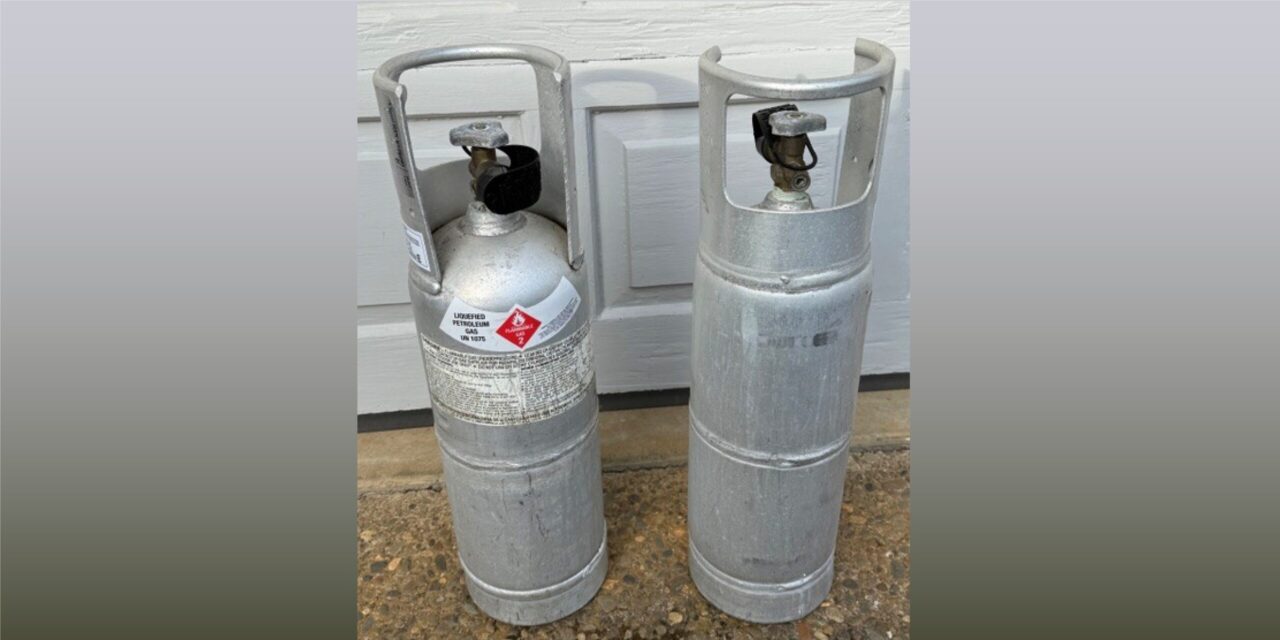
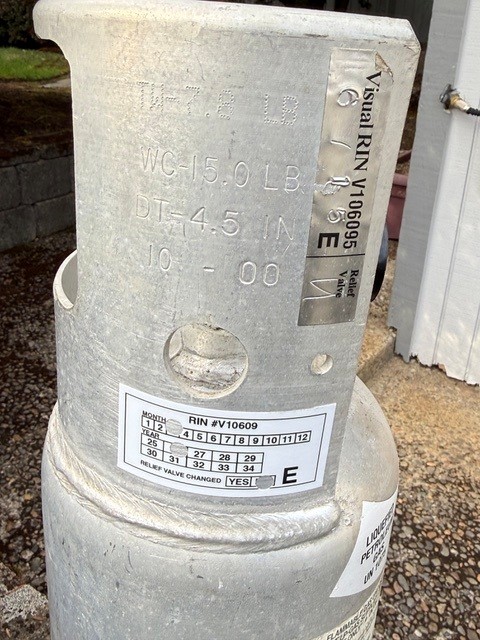
I was preparing for summer 2026 cruising and happened to look at the certification for my propane tanks. They were last certified in June 2015, nearly 11 years ago. That’s not good. So off to the Propane Shop with the pair of them. 20 minutes later at a cost of $22, I learned that both were in good condition – valve’s function, no signs of rust. The technician also shared that tanks should be certified every 5 years, which may differ in various states. Wow, might be a good idea to check your tanks.
Checking Your Propane Tank(s)
The DOT rules state that portable propane tanks must be certified upon manufacture and requalified after 12 years, with subsequent requalification every 5 to 7 years, depending on the method used. Failure to meet these certification timelines renders the tank illegal to refill.
If your tanks are “really, really old” you will be required to install a new OPD (overfill protection device) valve, which has some features:
- Overfill Prevention. The OPD uses an internal float mechanism that automatically closes the fill valve when the liquid propane reaches approximately 80% of the cylinder’s capacity. This leaves a 20% vapor space (headspace) at the top, allowing the propane to safely expand if the tank heats up (e.g., from sunlight or ambient temperature changes). Without this space, overfilling could cause excessive pressure buildup, leading to leaks, relief valve venting, or in extreme cases tank rupture or explosion.
- Automatic shutoff. When disconnected, the valve stops propane flow if nothing is connected to the outlet, or should the hose burst between your tank and regulator.
Propane Tank Inspections
- Vessel Safety Checks (VSC) by the USCG Auxiliary are voluntary and educational. They check for required safety equipment and “safe galley and heating systems” but do not issue formal citations. If issues are found (e.g., obvious damage, improper installation, or leaks), examiners note them and advise fixes. They do not enforce tank requalification dates.
- Official USCG boardings or inspections (e.g., for suspected violations or on certain inspected/passenger vessels) focus on whether the system as a whole is safe and compliant with 46 CFR requirements (which reference ABYC A-1 or NFPA 302 for LPG systems). They look at condition, installation, and operation—not the tank’s stamped requalification date in isolation. A visibly corroded, damaged, or leaking tank could lead to a deficiency or citation for an unsafe system, regardless of the date.
The Coast Guard does not typically cite recreational boat owners solely for a propane tank whose requalification/certification is more than 5 years old.
As spring begins to beckon, encouraging us to get out on the water, now might be a good time to review your safety equipment. Start the boating season with a VSC check by your local USCG Auxiliary. They are a great resource to help boaters have a safe and fun season.
By John Shepard
WG Field Correspondent
Photos: John Shepard