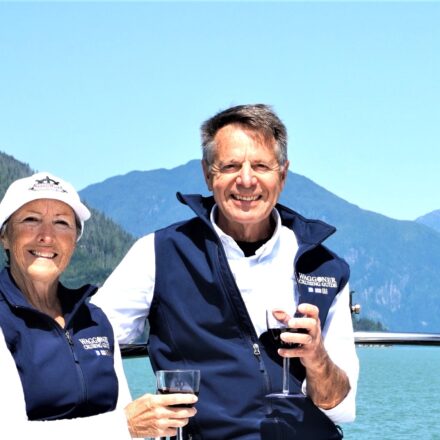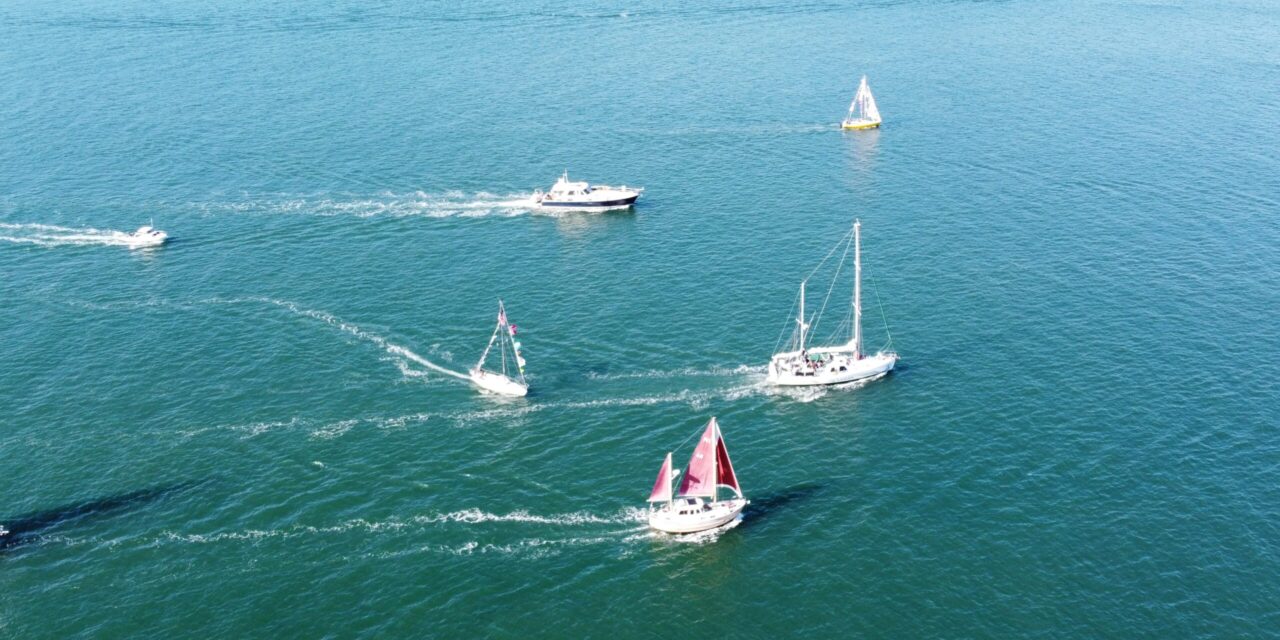
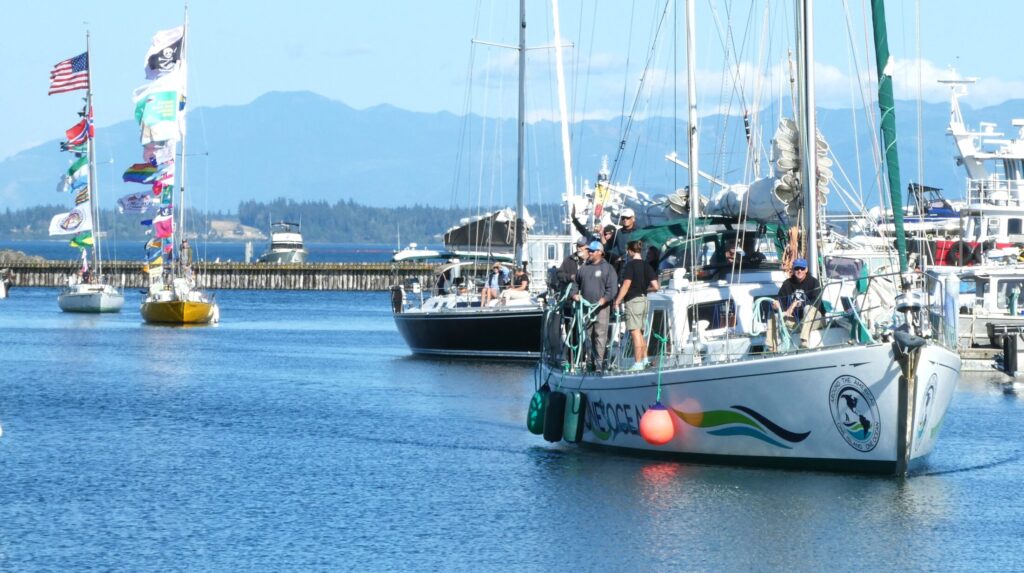
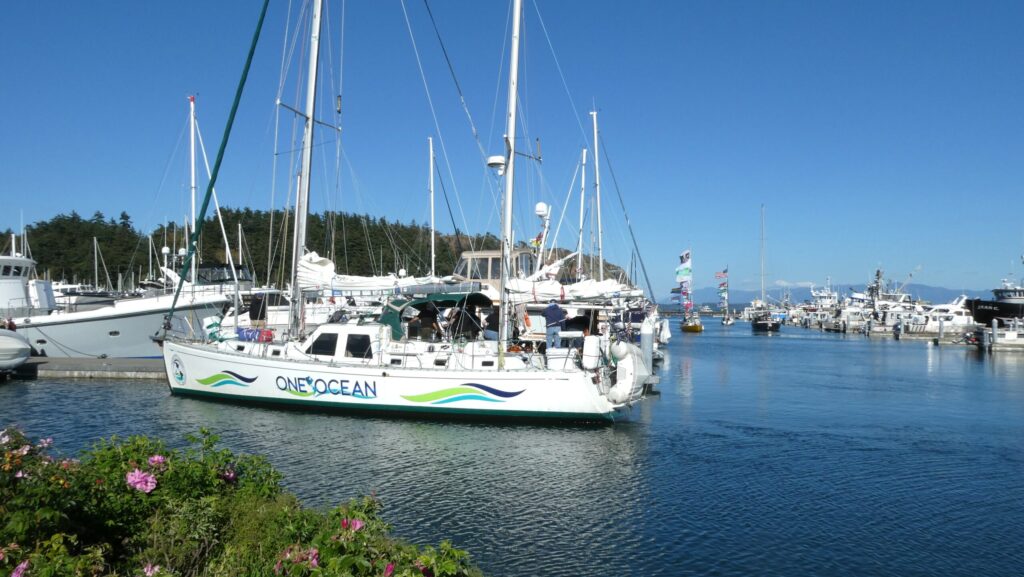
 The Crew of s/v One Ocean received a warm welcome home at Anacortes on August 11th.
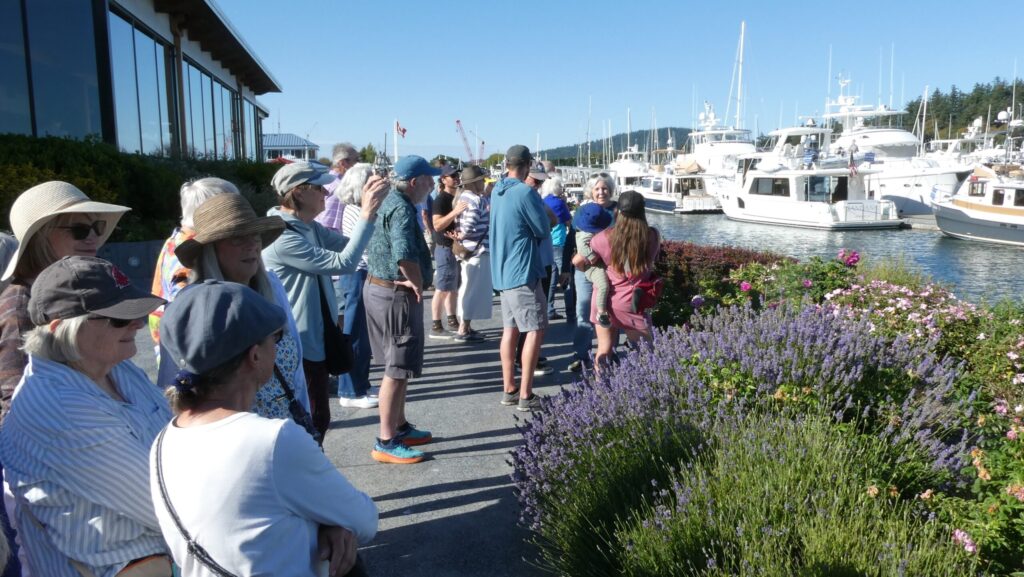
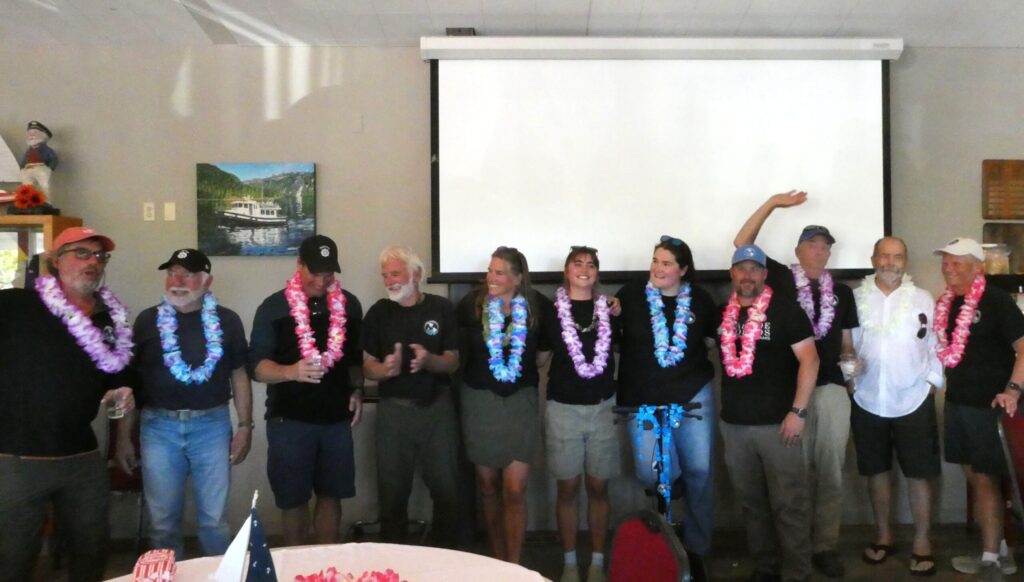
Hugs, congratulations, and cheer resounded at the docks in Cap Sante Marina followed by a reception held at the Anacortes Yacht Club facility with over 100 people in attendance. Challenges the crew overcame are commendable, along with their scientific achievements collecting valuable data for analysis by the University of Washington and the University of Victoria.
Sea conditions, ocean forests, ice pack, the presence of plastics, bleached reefs, and marine life were all noted in their 2025-2026 Expedition and compared to data collected in the 2009-2010 Expedition, also captained by Mark Schrader 15 years earlier.
The following is a summary/excerpt taken from an article written by Grace Dalton, the onboard scientists of s/v One Ocean. You can read her full story HERE.
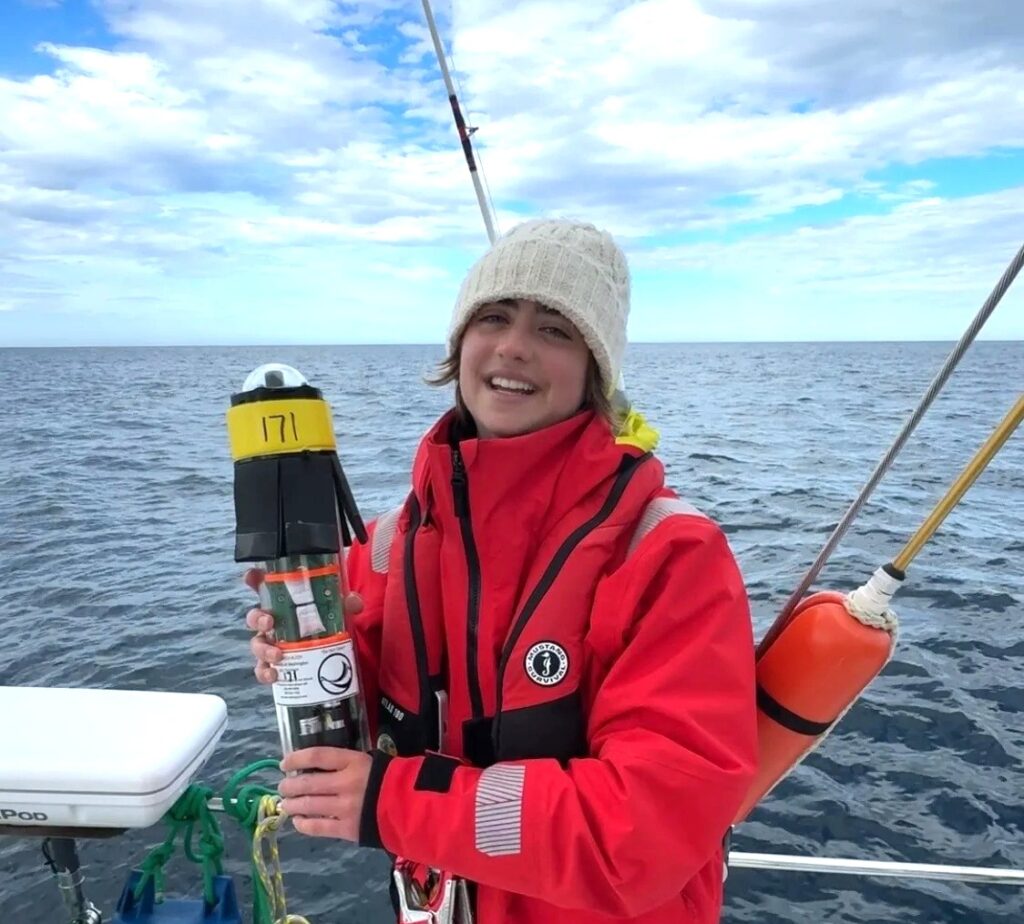
A Warmer Sea. Instruments on s/v One Ocean logged temperatures at the sea surface and the heat passing between the ocean and the air.
- The Northwest Passage reached temperatures as high as 63 Degrees Fahrenheit
- Halifax to Bermuda, the surface climbed to above 80 Degrees Fahrenheit
- The North Atlantic surface averaged close to 73 Degrees Fahrenheit
“Put the two voyages side-by-side and the change is stark. When Schrader sailed around 2010, the world sat roughly 1 Degree Celsius (33.8 Fahrenheit) above pre-industrial levels. It has since passed 1.5, which means the planet warmed by close to half a degree in just the fifteen years between his trip and ours.”
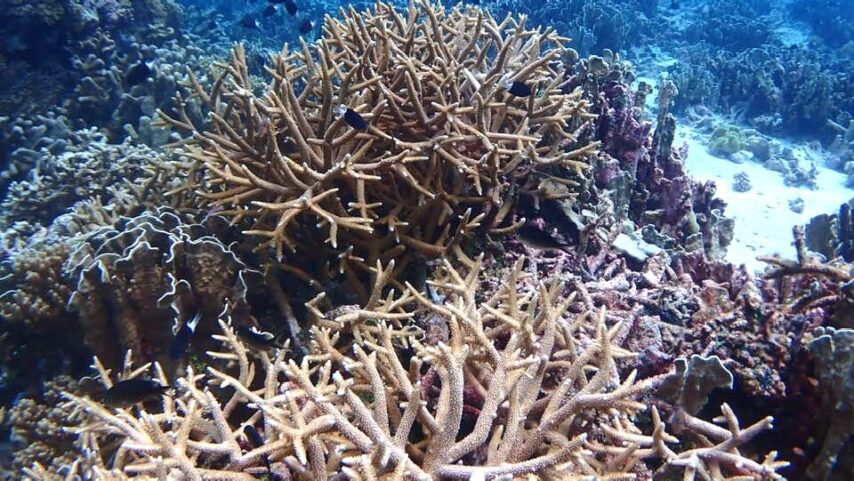
Bleached Reefs. “The clearest fifteen-year marker is written on the coral. Global bleaching . . . from 2023 to 2025 was the largest ever recorded, striking 84% of reefs worldwide.”
- Reefs in Hawaii have been hit hard three times since 2014.
- Carbon dioxide is soaking into the sea, turning it acidic, about 30% more than before the industrial age.
“Carbon dioxide . . .strips out the carbonate that corals, shellfish, and plankton need to build their shells. In the most acidic waters, it is corrosive enough to dissolve shells faster than sea life can rebuild them.”
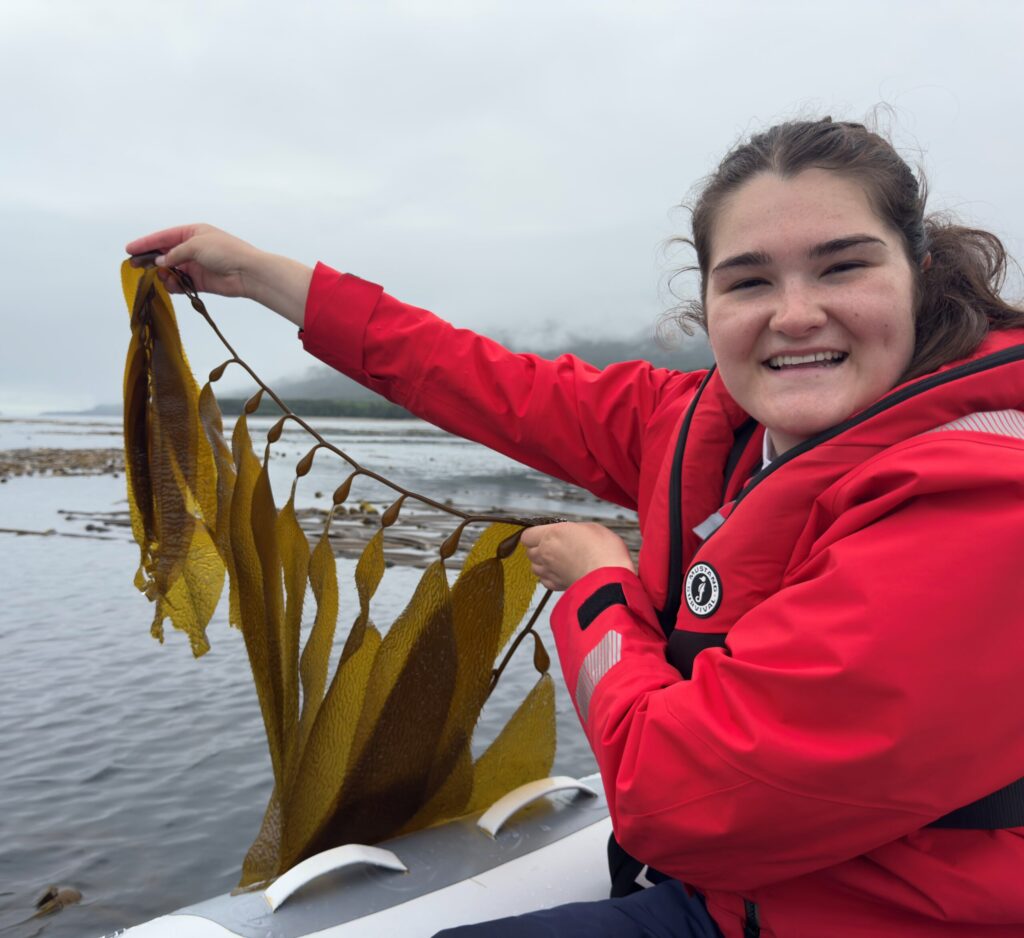
Thinning Ocean Forests. The crew of s/v One Ocean tracked kelp forests from pole-to-pole, gathering data off British Columbia, Alaska, and Chile. “These underwater forests cover more of the planet than the Amazon, and they draw carbon from the water faster than trees do on land . . .”
A marine heatwave between 2014 and 2016, together with an explosion of sea urchings, wiped out more than 95% of the bull kelp off Northern California.
Worldwide, kelp has been vanishing at roughly 1.8% a year, and about 60% of its forests are now in decline.
- Bull kelp from central California northward and giant kelp from Baja down to Peru and northern Chile have thinned or vanished.
- Satellite images tell scientists where kelp is failing, why, and where restoration has the best chance of taking hold
“The hopeful part is that people are fighting to bring it back, clearing urchins by hand and raising young kelp in nurseries, and the first patches are retuning.”
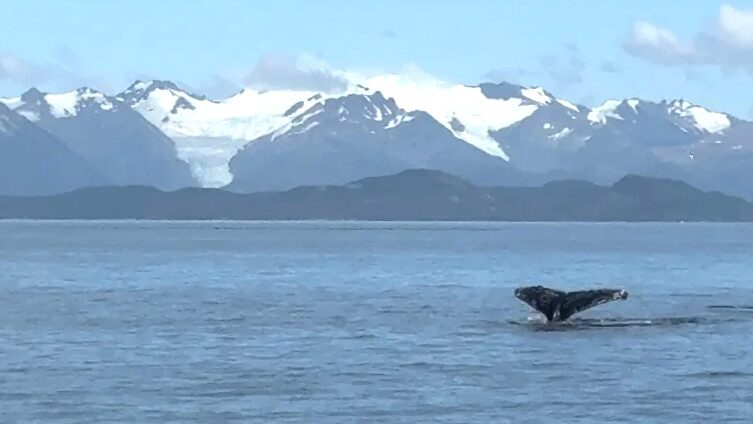
The Status of Whales. “Whales gave us the most mixed logbook of all . . . Humpback whales, the animals at the heart of our research, have recovered so well since the whaling era that most populations are now off the endangered list. The Gray whales, though, are in trouble.”
- Since 2016, gray whale numbers have fallen by roughly half, to about 12,900 since the 1970s
- The warming Arctic starves these whales of food
- This year alone at least 30 have washed up dead on Washington’s shores, about six times the normal annual average
“Protection works when we choose it, and loss is real when we look away.”
Plastic Throughout our Oceans. “There was hardly a stretch of ocean without it. When Schrader first sailed, microplastic was a word few people knew.”
- The world produces more than 450 million tons of plastic a year
- Hawaii is where much of it ends up, its beaches, a gathering of the world’s drifting trash by the tons
- The amount of plastic in the ocean has grown by roughly 42 million tons
- Plastics break into ever smaller pieces that climb the food chain, affecting even humans
- A single piece of plastic can take centuries to break down
- Plastics are set to rise in our oceans by about 70% by 2040
You can watch a video about the Pacific Ocean Garbage Patch HERE.
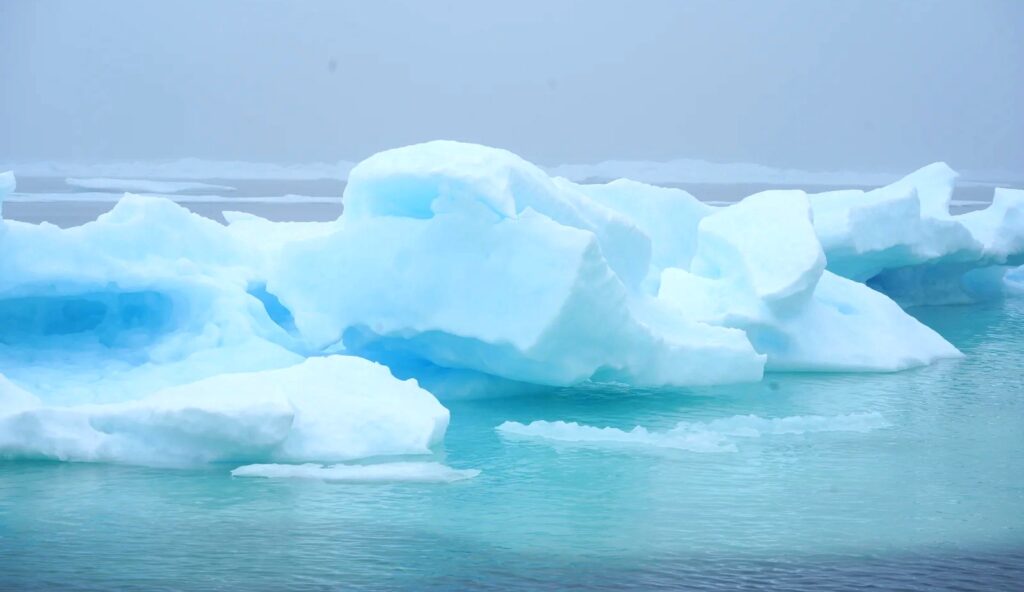
Ice, the Fingerprint of Climate Change. “The starkest change is the one that made our route possible. The Northwest Passage runs through Arctic waters that, within living memory, stayed frozen shut, and we sailed straight through them. We still got stuck by ice here and there and had to wait it out, but this was one of the places where the fingerprints of climate change were hardest to miss . . .”
- The Arctic is now warming about four times faster than the rest of the planet
- Summer sea ice has shrunk by roughly a third since the early 1980s, and what remains is younger and thinner
- Permafrost is thawing, releasing carbon dioxide and methane
- Stronger storms are eating away at newly exposed coastlines
- Native communities that depend on the ice are being pushed to the edge
- Greenlan’s ice is melting into the sea and lifting it
“When Schrader first came through, his was one of only a handful of boats to make it, threading a passage that was just beginning to open. Fifteen years later we had company, part of a surge in traffic that now includes ice-strengthened cargo ships hauling freight from Chine to Canada straight through the passage.”
The Good News. “The ocean’s decline is not fate, it is the sum of our choices, and some of those choices have gone right.”
- A marine reserve created in 2022 in the Galapagos now guards a corridor in the eastern Pacific, where sharks, turtles, and whales travel through
- Around Hawaii lies the conservation area, Papahanaumokuakea, expanded in 2016 in the years between Schrader’s voyage and ours, built up by seven presidents from both parties
- The first treaty to protect the high seas (two-thirds of the ocean that belongs to no country) became law in January 2026
“Fifteen years ago, Captain Schrader came home and asked people to pay attention. We are sailing home with better instruments, harder numbers, and the same request.”
The crew’s last microSWIFT buoy drop to study ocean temperature, wave heights, and salinity was deployed on August 5 and broadcast live on YouTube. Buoy #160 was dedicated to the Skagit Valley College Marine Technology Center, where s/v One Ocean was refit and made ready for the Expedition.
Data and Quotes are from Grace Dalton
s/v One Ocean Scientist Crew Member
Aerial Header Photo: Leonard Landon
Reception Photos: Lorena Landon
Science Report Photos: One Ocean Crew
Coral Photo: Carol Risdall